

1Introduction
In the years before the American Civil War (1861–65), the US Gulf South was part of a circum-Caribbean community of societies driven by a globalized plantation economy. The southern planter elite associated itself with this transnational brotherhood based on slavery and large-scale monocrop agriculture through, for instance, a felt affinity with Cuba, as historian Matthew Pratt Guterl demonstrated a decade ago. He wrote about an “American Mediterranean,” indicating the bonds that existed between the states bordering the Gulf of Mexico and the countries and colonies in and around the Caribbean Sea. But then the Civil War broke out, forcing Confederate southerners to assert their cultural distinctiveness as a nation-state struggling to achieve independence from the Union. It signaled the end of the hybrid cosmopolitanism that characterized the antebellum American Mediterranean, although some slaveholders from the United States tried to recreate in Latin America what they had lost after the fall of the Confederacy.1
Similar redemption efforts developed in the United States after Reconstruction (1865–77), when southern whites reclaimed political power and subsequently instituted a white supremacist social structure: the Jim Crow system. This system was not just political, but also cultural in nature. Through the mythology of the Lost Cause, white southerners glorified the Old South and the Confederacy’s desperate but, in their eyes, honorable struggle for independence and nationhood. The Lost Cause downplayed the central role of slavery in antebellum southern society while it amplified more abstract political ideas such as the states’ rights doctrine as a justification for secession. Jim Crow segregation laws and the Lost Cause myth were “all part of the same worldview that sought to normalize southern civilization as a white-dominated world rooted in the supposed virtues of white Confederates,” historian Charles Reagan Wilson argues.2
The legacy of the Lost Cause continues to affect southern (and US) society to this day. For instance, it reverberates in the regional tourist business, first and foremost plantation tourism. At the same time, plantation blueprints affect other economic activities, such as the oil and gas industry. This essay examines the afterlife of the plantation at tourist and petrochemical sites from a circum-Caribbean perspective, comparing the US Gulf South with parts of the Dutch Caribbean: Aruba and Curaçao, which are now autonomous nations within the Kingdom of the Netherlands. These islands share a history of enslaved labor and plantation farming with the southern United States, although obvious differences existed in the scale and nature of the slavery systems in both regions.3 We are interested in how these histories persist, impacting business practices that do not appear to have a direct link with plantation agriculture at first sight. To what extent do plantation afterlives manifest themselves at sites connected to two economic activities that became important in the southern states, in Aruba, and in Curaçao in the aftermath of slavery, with tourism on the one hand, as represented by hotels and antebellum homes, and oil drilling on the other?
With this essay, we do not only want to discuss the similarities and differences between southern states and the Dutch Caribbean, but also contribute to recent debates regarding the Plantationocene, a theory that emphasizes the harmful impact of large-scale farming (especially plantation agriculture) on the planet and its inhabitants, both human and more-than-human. Although the Plantationocene concept has been fruitfully applied to studies of racialized labor regimes on plantations and the environmental effects of such forms of farming, scholars have paid relatively little attention to the cultural heritage aspects of the Plantationocene, both tangible and intangible. Although more work has been done on the interconnections between the politics of the plantation and the oil industry, we intend to explicate the triangular relation between the plantation, the petrochemical factory, and the tourist site.4 Through an analysis of this triad, we aim to expand the conceptual lens of the Plantationocene and create a better understanding of the racial, environmental, and cultural repercussions of plantation afterlives.
2Life and Leisure in the Plantationocene
What is the Plantationocene? The term emerged during an anthropology roundtable discussion about the Anthropocene at Aarhus University in 2014, which included scholars Anna Tsing and Donna Haraway.5 Haraway later defined the Plantationocene as “the devastating transformation of diverse kinds of human-tended farms, pastures, and forests into extractive and enclosed plantations, relying on slave labor and other forms of exploited, alienated, and usually spatially transported labor.”6 In contrast with the Anthropocene, the Plantationocene specifically emphasizes the role of industrial, plantation-style agriculture in generating human and more-than-human crises, like global warming, environmental destruction, and labor exploitation. As such, it is a more specified model to understand the origins and entanglements of the manifold catastrophes our planet is dealing with today. In environmental humanities and ecocriticism, the Plantationocene has become an important analytical tool, with academic journals devoting special issues to the concept.7
Researchers have demonstrated the continuities between plantation pasts and the industrial present, such as in the petrochemical corridor between Baton Rouge and New Orleans in Louisiana. This stretch along the Mississippi River was once plantation country, but now factories dominate the landscape. The area received the nickname “Cancer Alley” because toxic industrial waste and fumes create serious health crises there, especially in (predominantly Black) communities located close to the factories. In Ecocriticism and the Future of Southern Studies, environmental humanities scholar Delia Byrnes explores how “the plantation past links to the oily present” and what the racialized fallout is of this historical connection. “For the African American victims of the region’s systematic displacement and toxification . . . the plantation repeats itself.”8 Byrnes also notes the shared lineage of the petrochemical plants and the tourist industry on the River Road, the highway adjacent to the Mississippi River. Many old mansions once owned by Louisiana’s planter elite are located there. These homes now serve as heritage tourism sites, bed and breakfasts, and even wedding venues. According to Byrnes, the “peculiar melding of petro-industry, sugarcane fields, and antebellum plantation houses [indicates] that Cancer Alley is inextricable from economies of violence, yet it is also inextricable from our fantasies of luxury, security, and power.”9
Analogous interrelations between plantation pasts and current-day tourism manifest themselves in regions similarly affected by histories of colonization and slavery, including the Caribbean. In his book Paradise and Plantation, Ian Gregory Strachan investigates the formative role of colonial ideologies and economic structures in the manner tourism operates in the Caribbean, in particular the Bahamas. The aim of Strachan’s book is “to understand why the representation of the Caribbean as a paradise has persisted in spite of social, cultural, political, and economic phenomena that clearly embody anything but earthly bliss: the plantation.”10 Strachan argues that the economic model of the plantation laid the groundwork for the ways tourism functions in the region. In that sense, Caribbean tourism constitutes a “neoplantation enterprise,” because of its organization of labor and its continuing political and economic dependency on the metropole.11
This essay builds on Strachan’s theory of paradise and plantation and extends it to two other areas formed by economies of slavery and plantation-style farming: the Dutch Caribbean and the US Gulf South. We chose these two specific regions because they are part of the so-called American Mediterranean, the transnational zone of islands in the Caribbean Sea and states on the Gulf Coast. Like Strachan, we scrutinize “the metaphorical or mythological architecture of paradise and the material building blocks of the plantation that helped erect it.”12 Our analysis rests on a variety of sources and methods, from tourist brochures to websites and from archival research to participant observation.13 As prime tourism destinations, marketing material about the Dutch Caribbean was particularly ubiquitous. We visited sites in two Gulf South states (Mississippi and Louisiana) and on two Leeward Antilles of the Dutch Caribbean: Aruba and Curaçao. These sites include antebellum mansions and plantations, but also hotels, restaurants, and beach resorts. Our approach is historical in the sense that we analyze past developments to understand the current situation regarding oil and tourism in the Greater Caribbean.
To what extent do the afterlives of slavery and the plantation manifest themselves at tourist destinations and sites related to oil production? What are the regional similarities and differences between parts of the southern United States and the Dutch Leeward Antilles and how can we explain them? “The American South, we now should see, is in many ways the northern rim of the Caribbean,” literary scholar John Lowe noted in 2005, indicating how the southern United States should be considered part of a hemispheric and transnational domain bordering the Gulf of Mexico.14 Scholars who employed such an approach predominantly focused on Francophone, Anglophone, and Spanish-speaking societies in the area, such as Jamaica and Cuba.15 By including the Caribbean territories colonized by the Dutch in our analysis, we intend to broaden our understanding of the “American Mediterranean” in the twenty-first-century Plantationocene.
3From Plantation to Oil—and Back
In the spring of 1958, Louisiana chronicler Harnett Kane wrote an essay about the transformation of the state’s sugar industry. Titled “The Land of the Louisiana Sugar Kings,” the article describes the mechanization of the sugarcane harvest. “As a boy I watched big-eyed as bandannaed [sic] Negroes went down the lines, knives flashing in the sun, men grinning as they slashed off the stalk,” Kane recalled.16 But with the introduction of the mechanical harvester, the procedure of cutting and manufacturing the cane underwent a significant change. A single harvester did the work of seventy-five laborers, cutting the stalks that were then gathered by mechanical loaders. The automated processing of the cane happened in factories, where machines and chemicals eventually produced sugar ready for the market. “Everywhere was the hiss and pound of machinery,” Kane recounted the heavily industrialized nature of sugar manufacturing at the end of the 1950s. Yet one thing had not changed: “a smell never forgotten from childhood, the cloying richness of the cane.”17
Kane noted another metamorphosis in Louisiana’s plantation landscape: the emergence of petrochemical factories, a development that started in the early 1900s and accelerated during World War II. “Chemical, manufacturing, and processing establishments occupy mile after mile of Mississippi frontage,” he wrote. “Steel towers rise and derricks dot the levee edge, until the region from New Orleans to Baton Rouge seems one great chemical-industrial plant.”18 Kane’s article shows how the economy of Louisiana had changed by the late 1950s. Sugar still did not “give up his throne completely,” but other economic activities—including oil drilling and the chemical industry—challenged its hegemony.19 While these industries became more prominent, plantations modernized too, confirming their status as factories in the fields.20 The rise of industry in Louisiana, not just in petrochemical production but also in farming, did not dispel the traditional moonlight-and-magnolias portrayal of the plantation that drew tourists to the state, however. “This romantic image of the South in literature remained constant well into the twentieth century,” historian Karen Cox confirms, “as northern tourists sought to come face-to-face with antebellum mansions, where they might imagine chivalrous planters, beautiful belles, and faithful Negroes.”21
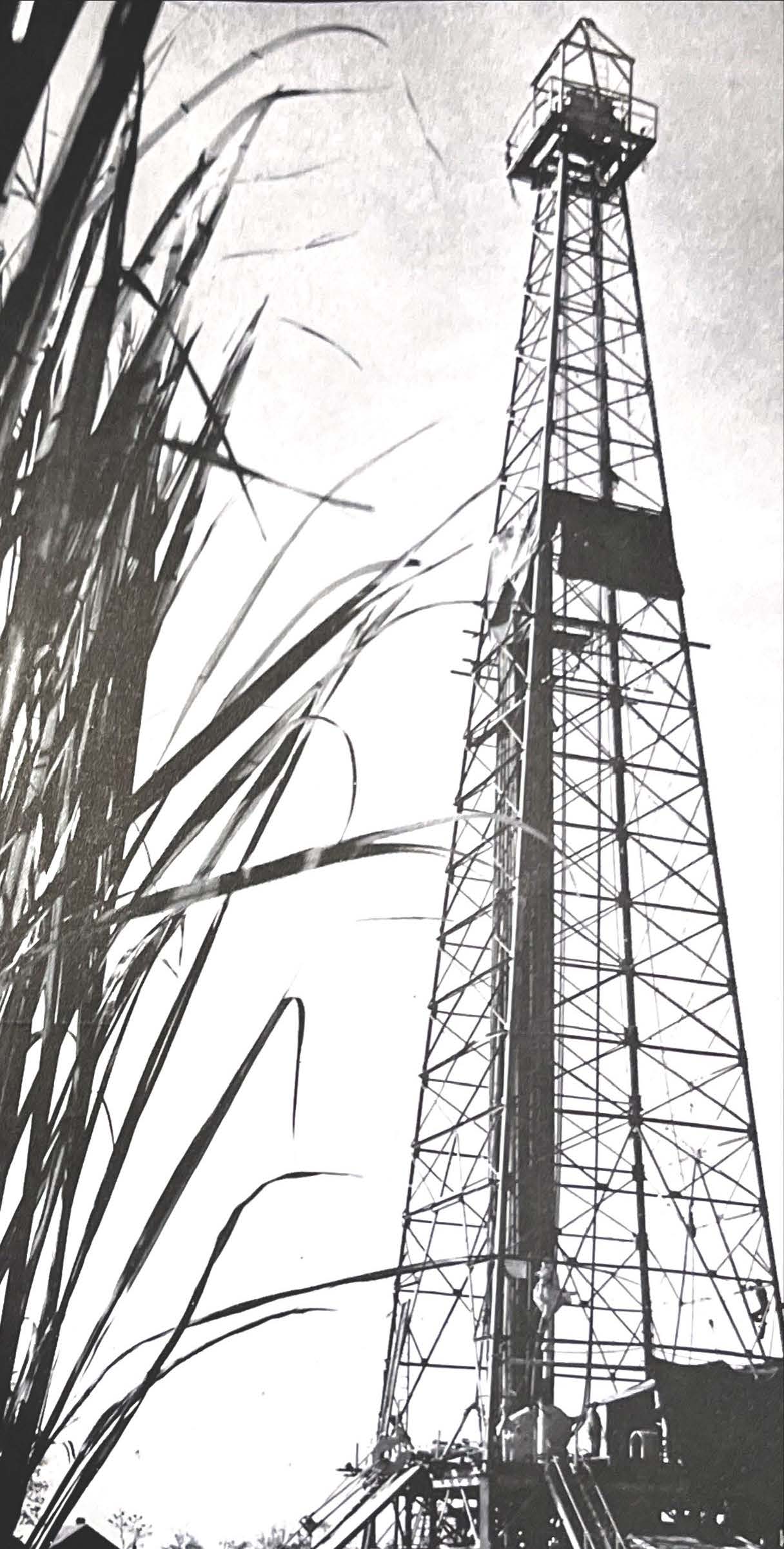
Antebellum homes and petrochemical factories now exist side by side on the banks of the Mississippi River, a visual testimony to the entanglement between plantation and industrial plant. The latter relied on the former in the sense that the plantations cleared the land and created the infrastructure that made the subsequent rise of industry possible, Joy Banner explains. Banner is the cofounder and codirector of the Descendants Project, an organization aimed at fostering intergenerational healing and a prosperous Black descendant community in the river parishes of Louisiana. “Modern-day plants are literally in the footprints of these plantations,” Banner writes, connecting the old plantation country and current-day Cancer Alley.22 The mechanization of plantations that Kane wrote about depended on products manufactured in Louisiana’s petrochemical factories: fuel for the harvesters, pesticides to kill harmful insects like the sugarcane borer, and fertilizer to make the crops grow. International companies arrived in plantation country to purchase land there for their factories. Descendants of enslaved people often lived on or near this land, making them “the fence-line communities of this new industrial development,” according to Ashley Rogers, director of the Whitney Plantation Museum.23
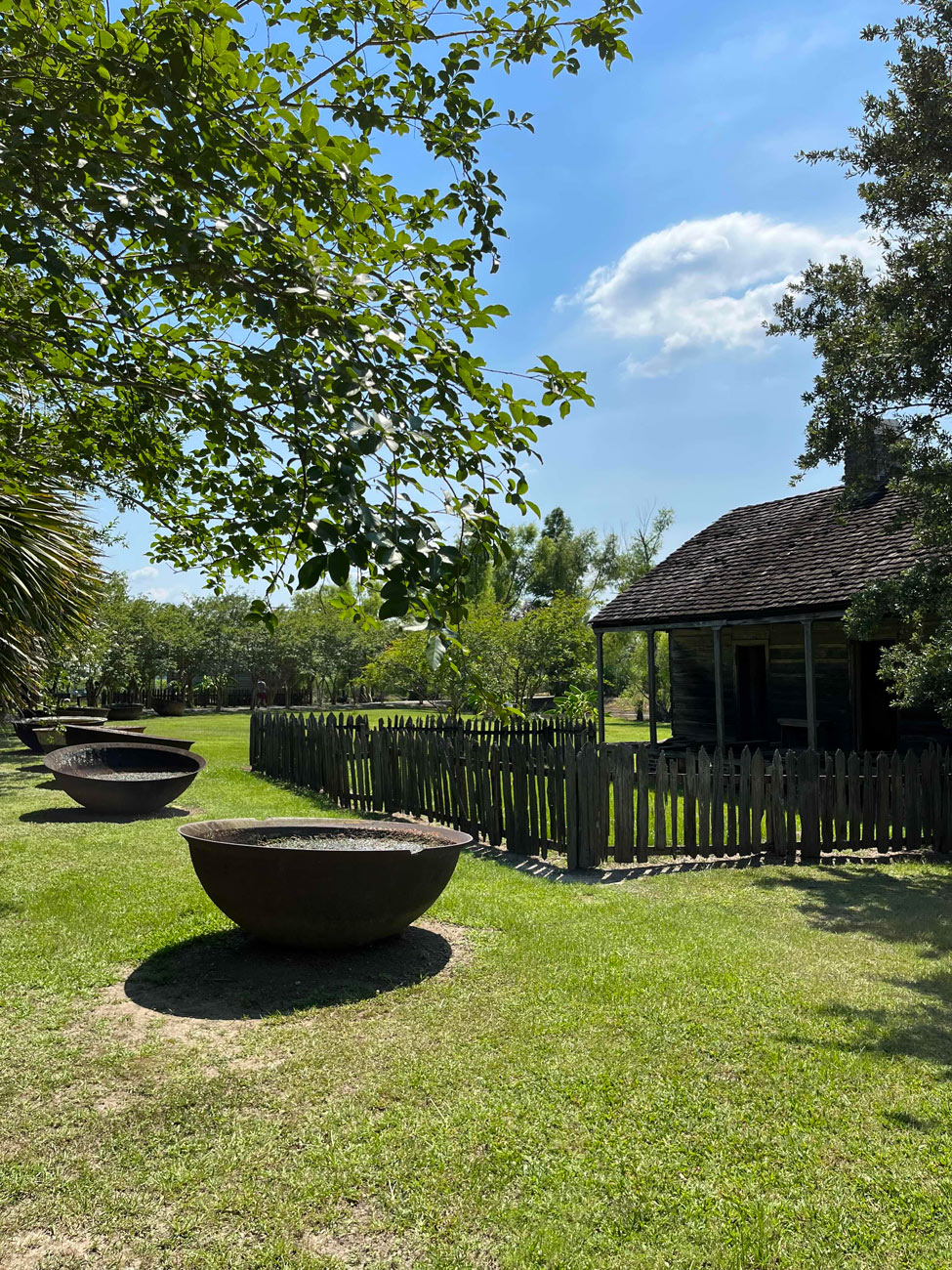
The Whitney Plantation near Wallace, Louisiana, is one of the few plantations that foregrounds the lives of enslaved people who worked on the farm instead of offering a romanticized narrative that is still the standard at many antebellum mansions, not only in Louisiana but also in other parts of the South. Just across the river in neighboring Mississippi for instance, the city of Natchez is well known for its Old South heritage tourism. The tourists visiting Natchez contribute significantly to the local and regional economy. “By the 1950s, historical tourism as an industry rivaled agriculture, manufacturing, and oil,” historian Jack E. Davis concludes. Half a million tourists per year came to the small town by the 1980s, spending $10 million.24 Despite efforts to make the Natchez tourist industry more inclusive, the Lost Cause continues to reverberate strongly in its stately homes. House tours focus on the lives of the rich white owners, their furniture, and other antiques. If tour guides mention the enslaved people working in the mansion, they are generally referred to as “servants.” The Melrose Estate, owned by the National Park Service, is one of the few sites in Natchez where tourists can visit slave quarters, although this tour is self-guided. At other homes, the quarters have been demolished to make space for parking lots or they serve as a storage room.25
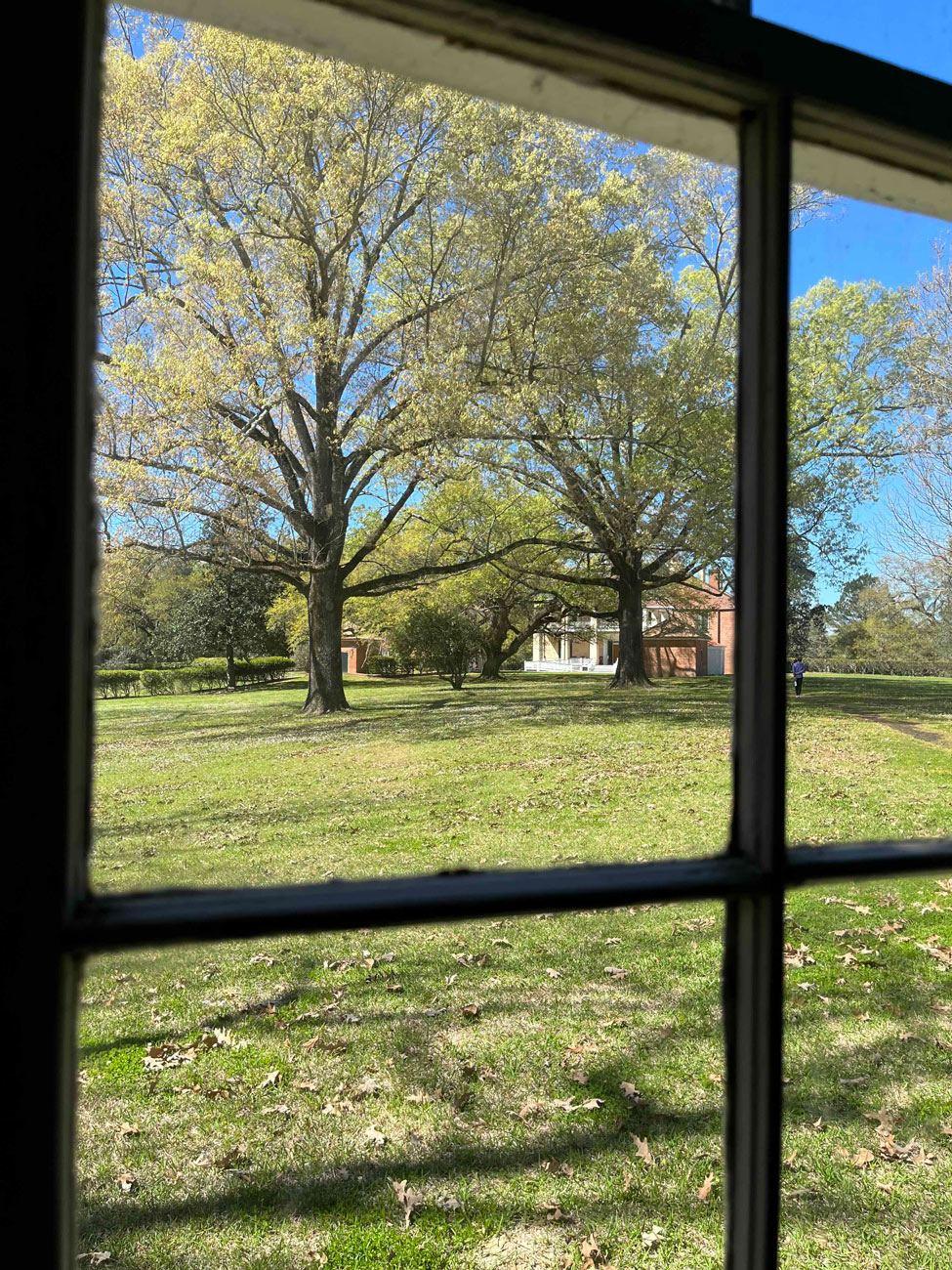
Although the Natchez mansions are situated in an urban setting and are therefore not plantation houses per se, their residents were fully immersed in the surrounding plantation economy. One of them was John Quitman, who was born in New York in 1798 but moved to Natchez to work there as a lawyer. He married Eliza Turner, member of a prominent family in town, and they purchased the Monmouth mansion in 1826. Besides this main residence in Natchez, Quitman eventually acquired four plantations in Mississippi and Louisiana, managed by overseers. As planter-enslaver, Quitman was very interested in expanding the institution of slavery, even becoming involved in efforts to invade and occupy the Spanish colony of Cuba during the 1850s. “We claim the right of expansion as essential to our future security and prosperity,” he wrote in 1856. The slaveholding South required “more elbow room, to guard against the possibility that a system of labor now so beneficent and productive might, from a redundant slave population confined to a narrow limits, become an ultimate evil.”26
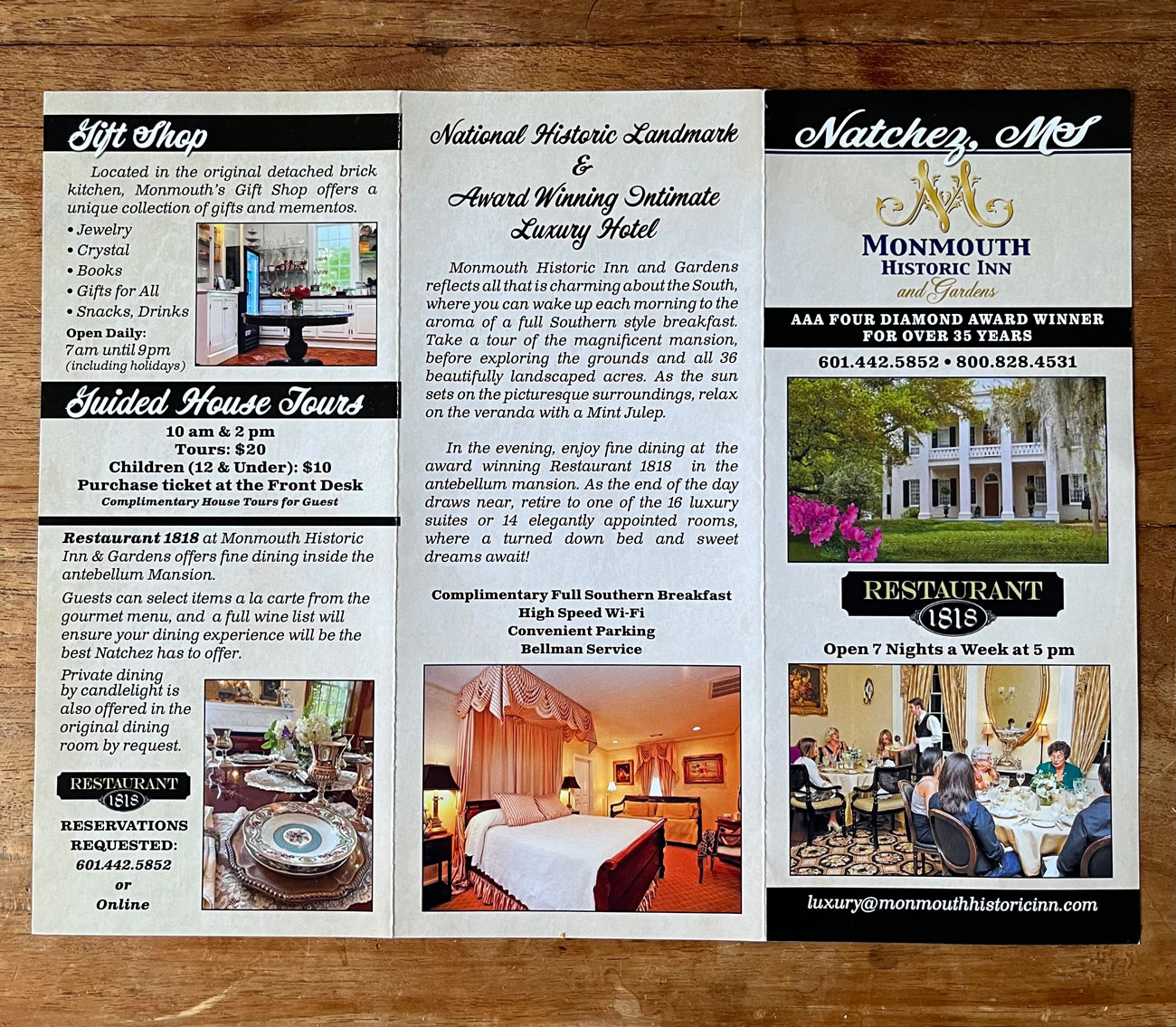
Quitman’s mansion currently serves as a luxury hotel and fine dining restaurant and offers house tours. “Monmouth Historic Inn and Gardens reflects all that is charming about the South,” one of its brochures reads.27 The Monmouth website similarly emphasizes “an ambiance reminiscent of a bygone age,” although the History section on the site does mention the presence of enslaved workers, recounting that the house “witnessed generations of births and deaths, as the home and workplace of slaves, tenant farmers, American statesmen, businessmen, and enterprising housewives, all contributing to its historic saga as one generation passed from view and the next took its place.” The online text also includes a reference to the “hundreds of enslaved individuals” who worked on the four plantations owned by Quitman. When Quitman died in 1858, his wife, Eliza, assumed the “great responsibility” to oversee this labor force, in addition to her household obligations.28
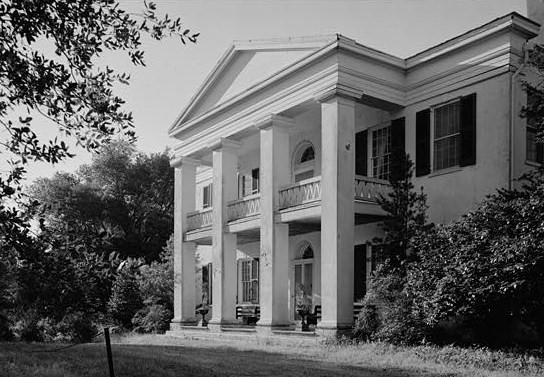
House tours do not completely disregard the history of slavery at Monmouth either, yet they fail to address the specific historic significance of the mansion as a site located at the nexus between the US Gulf South and the Caribbean through the expansionist mindset of the American planter elite, personified by John Quitman. His life demonstrates how the US North and South were interlinked in the business of slavery and offers insights into the expansionist circum-Caribbean mindset of the southern planter class. How does the plantation intersect with tourism in other parts of the American Mediterranean, particularly the Dutch Caribbean islands of Curaçao and Aruba? Which stories are being told there, which are distorted or forgotten? And what is the connection between the oil and tourist industry in the context of the Plantationocene?
4The Spatial Legacies of the Plantation on Curaçao
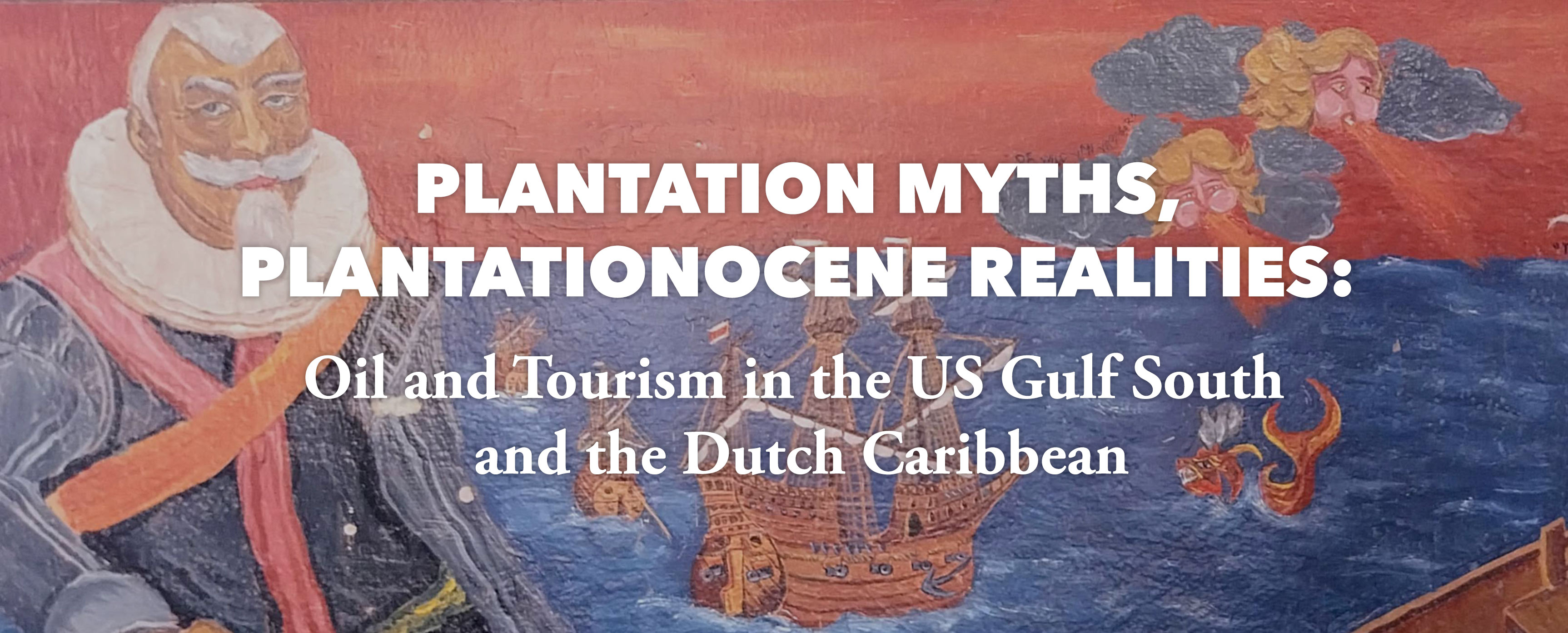
In 2005, restaurant Gouverneur de Rouville opened its doors in Willemstad, the capital of Curaçao. The restaurant, housed in a former colonial warehouse, was named after Abraham de Rouville, Dutch governor of Curaçao between 1856 and 1871. Its interiors are decorated with dark wooden furniture, faux chandeliers, and a sprawling mural that bedecks the walls of the restaurant’s main dining room. The mural depicts Curaçao, albeit as a fictitious space where times and places converge: Dutch colonial rulers appear alongside Indigenous people and figures with baskets of fruit stand next to naked, dark-skinned fieldworkers who seem to represent the formerly enslaved population. Amid cacti, blue waves, and equally blue skies, a group of men hunch over a game of dominos. The murals celebrate Curaçaoan history through a pantheon of people, events, and environments.
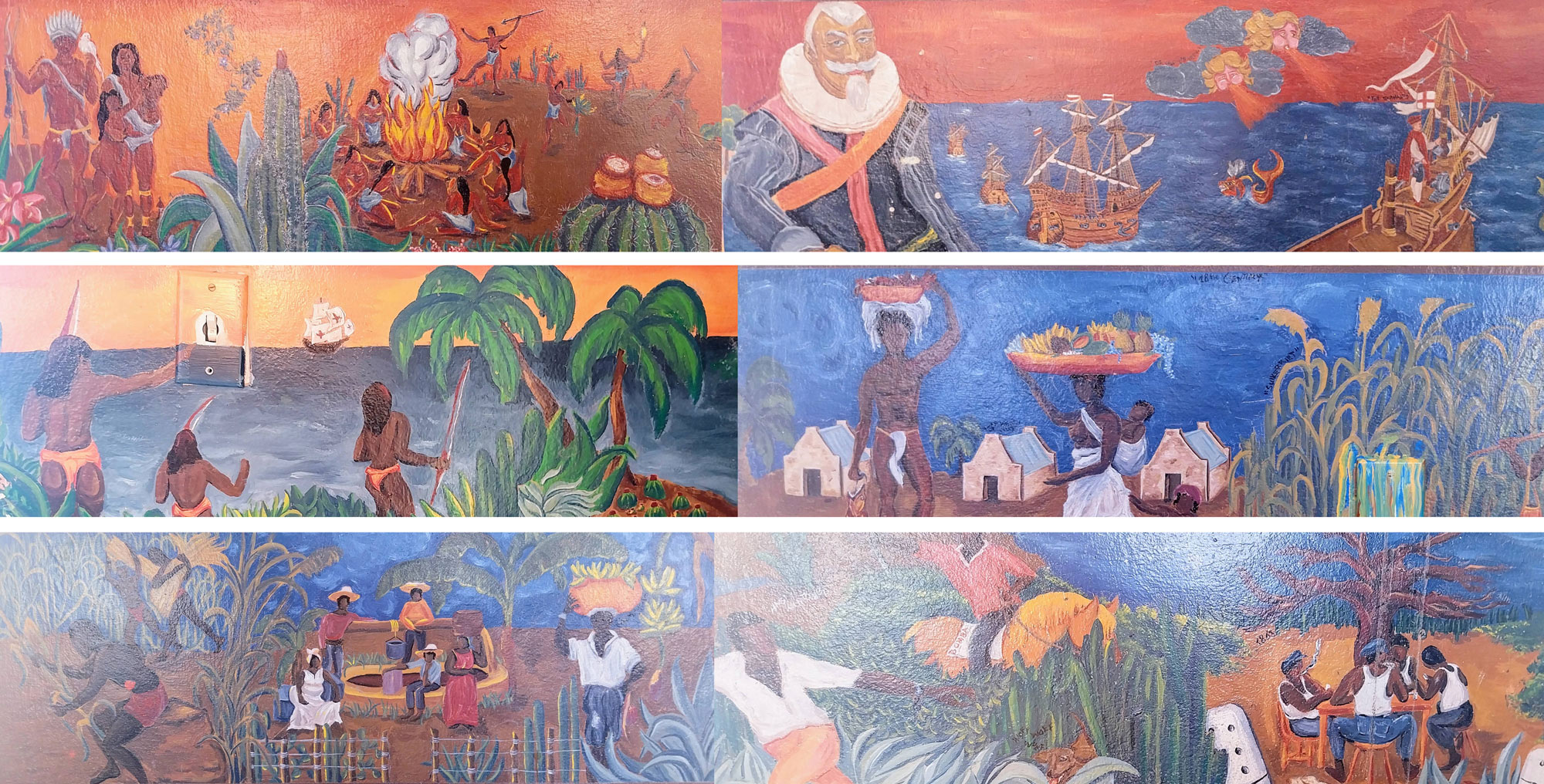
However, to accommodate the romantic “journey to another world” that the restaurant wants to offer its guests, certain histories have been omitted from the mural’s assemblage of images.29 The luscious greens and untainted skylines of the paintings contrast starkly with the historical conditions of enslaved populations, and the real-life steel construction of the Isla refinery that looms over the island’s Schottegat Bay, just over a mile from the Gouverneur. In the imaginary world of the murals, the Curaçaoan oil boom (the island’s primary source of income for most of the twentieth century) never happened. The images exemplify what anthropologist Rivke Jaffe describes as the fundamental contradiction between the colonial Western gaze of tourist discourse, which romanticizes the Caribbean as an “untouched paradise,” and the actual industrialized and urbanized character of islands such as Curaçao.30
Anthropologist Gloria Wekker argues that the Dutch collective consciousness is paradoxically marked by a denial of colonial history and a simultaneous everyday perpetuation of colonial tendencies.31 A comparable dualistic dynamic applies to the treatment of space and labor in the Curaçaoan economy. As Jaffe points out, the popular depiction of Curaçao as a convivial “terra nullius” obscures the industrialized realities of the island.32 But it also erases something else: the fact that the island’s contemporary tourism industry directly reproduces strategies of spatial demarcation and labor subjugation introduced during slavery, which further developed during the oil boom. Assessing how treatment of space and labor by the Curaçaoan oil industry is situated between the island’s early modern plantation economy and its more recent tourist industry thus provides a starting point to illuminate the structural and popularly neglected impact of the Plantationocene on Curaçao’s economy and culture.
5Place-Fixing in Plantationocene Geographies
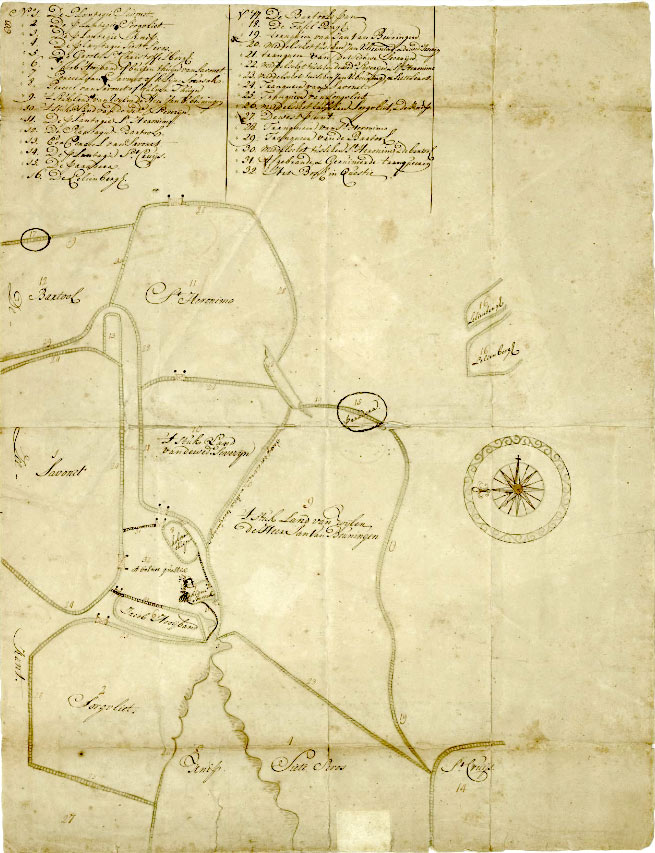
Spanish colonists were quick to dismiss Aruba, Bonaire, and Curaçao as islas inútiles—useless islands—in the sixteenth century. They concluded that the islands were not profitable due to the scarcity of gold and silver. When the Dutch took over colonial rule in later centuries, those islands did not quickly shed this reputation. The climate was considered too arid for large-scale plantations. Curaçao lost some of its perceived uselessness when the Dutch West India Company, which took control of Curaçao in 1634, used the island as a transit port. Initially, enslaved Africans passed through. After becoming a vrijhaven or free port accessible to all traders, the island turned into a pit stop for ships carrying globally circulating commodities.33 In spite of the island’s dry climate, plantations and salt mines using enslaved labor gradually emerged across the island. Curaçaoan plantations were smaller and substantially less lucrative than Dutch plantations in Suriname. Instead of large-scale agricultural enterprises dedicated to a particular monocrop, the island hosted a range of smaller agricultural estates that, apart from their reliance on slave labor, differed little from farms.
Nevertheless, the arrival of these small-scale plantations fundamentally restructured the island’s landscape. The countryside was divided into strictly partitioned parcels of land, and ownership rights were harshly enforced through lawsuits and demarcations, such as walls and fences.34 Labor was subjected to the processes that International studies scholars Heidi Nast and Michael McIntyre refer to as place-fixing: Enslaved people were allocated to guarded barracks or locked into warehouses in the port of Willemstad.35 Spatial transgressions meant severe punishments. In the colonial plantation system of early-modern Curaçao, partitioning and place-fixing were fundamental. After slavery was abolished on Curaçao in 1863, this system survived. The island’s exhausted plantations and mines were still a primary source of income by 1903.36 Historian René Römer classifies turn-of-the-century Curaçao as a society that resembled the sharecropping economy of the US South.37 Most descendants of enslaved Curaçaoans were housed on the island’s plantations, where they paid for rent with labor. Through continued place-fixing, economic dependence, and pervasive racism, the plantation system persisted.38
Then oil was discovered on the northern coast of South America in 1911. Curaçao, which benefited from connections to Europe, New York, and South American shores, became an important transit port for rough oil from Venezuela and Colombia. After the Royal Dutch Petrol Company (Koninlijke Nederlandse Petroleum Maatschappij or KNPM) opened the Isla refinery (at that moment the world’s largest oil refinery) on Curaçao in 1918, the island emerged as a vital link in transnational oil production. By 1929, the refinery processed three hundred thousand tons of oil a month.39 The KNPM—renamed Curaçao Petrol Industry Company (Curaçaose Petroleum Industrie Maatschappij or CPIM) in 1925—struck a deal with Venezuelan dictator Vicente Gómez, granting his government fifty percent of the refinery’s profits in exchange for exclusive import rights. The island’s fuel stocks turned Curaçao into an attractive stopover for liners that carried people and commodities.40
The oil boom kickstarted a dual development with regard to the politics of space and labor on the island. On the one hand, industrialization provided lower-class Curaçaoans with increased access to mobility, representing a strong break with the dynamics of place-fixing that marked the plantation economy. Large numbers of Afro-Curaçaoans took to seafaring. Higher wages were an important motive, but maritime labor also presented an escape from the spatial bondage of the plantation, the racialized hierarchy of the colony, and the strict values and rules imposed by the church and the colonial government.41
These conditions contrast starkly with the experiences of refinery workers. The refinery’s labor force, initially composed primarily of lower-class Afro-Curaçaoans, rapidly diversified. Venezuelan refugees were brought in, as were workers from Jamaica, Dominica, the Guianas, and Trinidad.42 By 1928, “nearly nine thousand workers of different nationalities” labored in the refinery.43 Although far from agricultural, the Isla refinery mirrored the dynamics of the plantation. Partitioning played a large role in organizing the refinery. Located several miles from Willemstad, it was cut off from the outside world by high metal fences and gates, which were closed during workdays. In the late 1920s, the refinery resembled an open-air prison. Conditions were harsh and workers endured violence.44 “Slavery and forced labor,” visiting Venezuelan communist organizer Gustavo Machado wrote, “have not been abolished by any means.”45
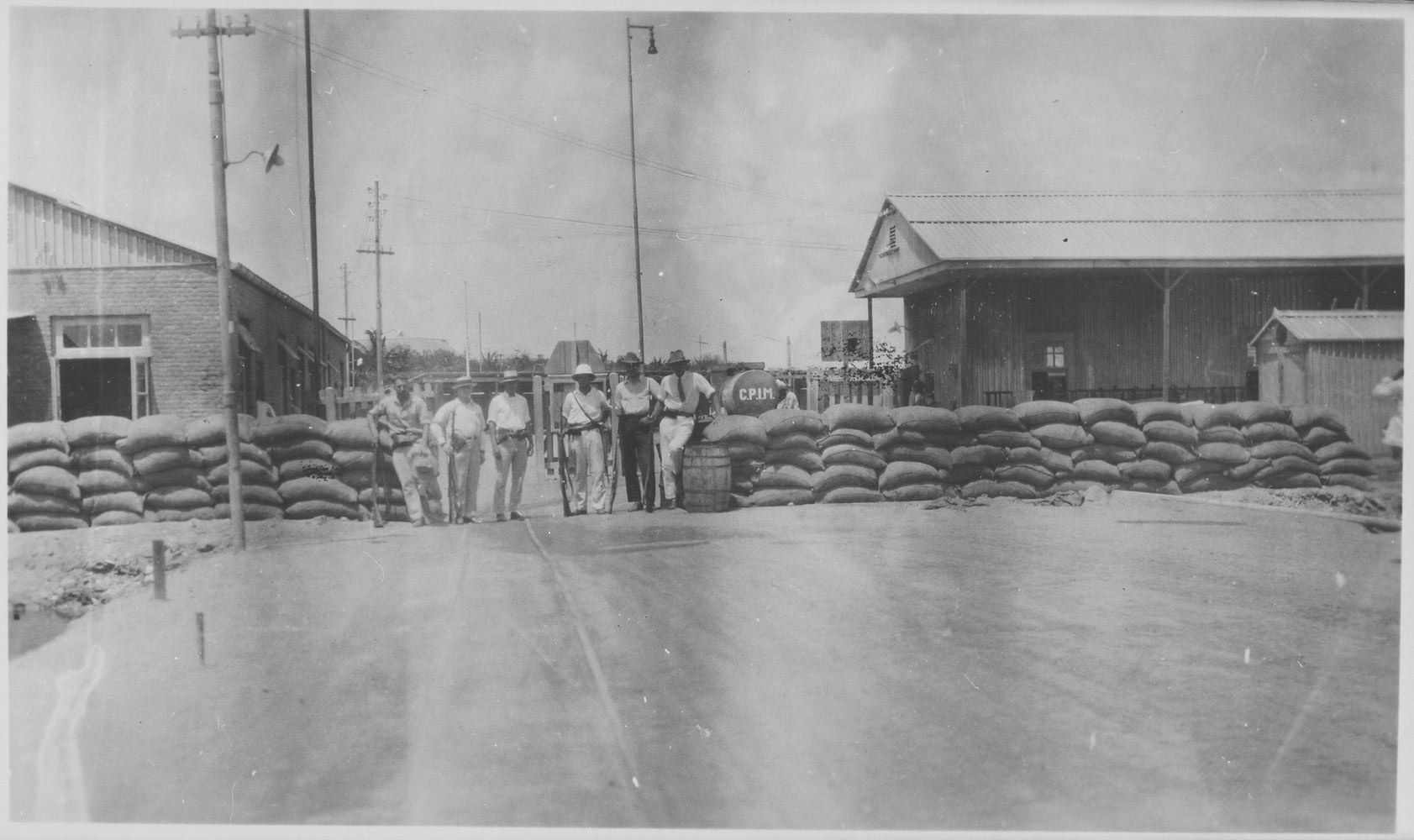
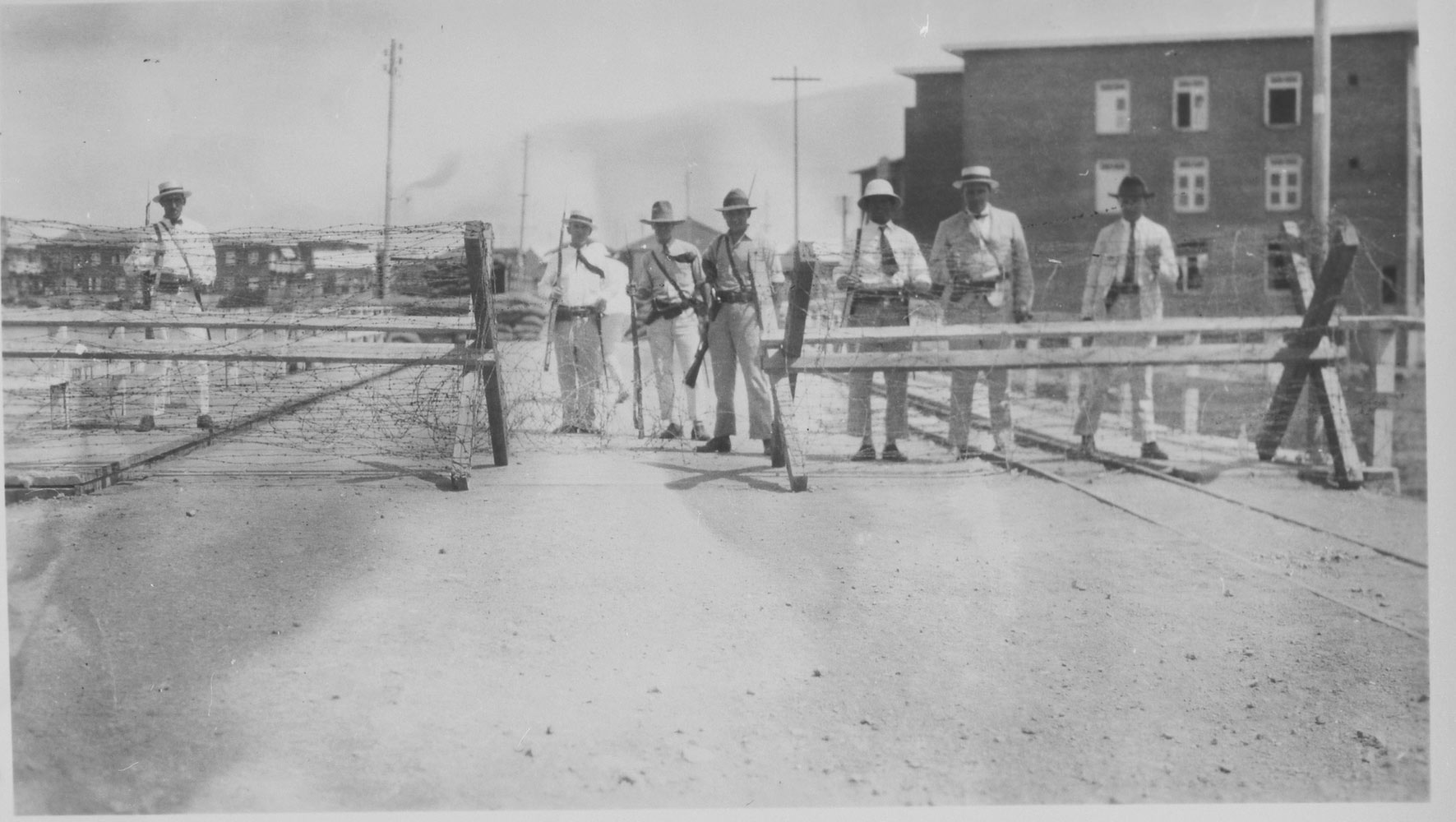
The disciplining and constraining of oil workers not only resembled the island’s plantation system in an abstract, or metaphorical, sense. The spatial divisions introduced to implement the island’s plantation system were directly reused to organize the oil industry. Rio Canaria and Suffisant, two former plantations, transformed into worker camps and oil laborers with their families were housed in guarded barracks on these enclosed sites.46 Camps were strictly segregated: Venezuelan migrant laborers were isolated in their own camp, away from Willemstad. Local Curaçaoan workers from the island’s countryside had housing a mile away, in the gated Negropont camp.47
Dutch colonial authorities actively promoted racialized divisions in the island’s labor force, thereby perpetuating the hierarchies of race that had marked the plantation economy. Black workers, writes an anonymous, self-described “Hollandse” (i.e., white) refinery laborer, functioned as the overseers of Venezuelan workers, thereby exacerbating racialized tensions and limiting opportunities for the formation of unions or the cultivation of working-class solidarity.48 In addition, Machado found out that “the authorities circulated alarming reports about alleged atrocities committed by black people” to stir fear and negative attitudes towards Afro-Curaçaoans.49
The tactics employed by the KNPM and Dutch authorities divided the island’s workforce and reinforced an ominous, xenophobic representation of labor migrants and Black workers alike. In doing so, authorities continued the tendencies of early-modern elites to depict Caribbean migrant and maritime laborers as a monstrous “many-headed hydra,” in the words of historians Marcus Rediker and Peter Linebaugh.50 Such discursive strategies served an economic function. By deepening tensions and isolating groups of workers, administrators and employers could “cheapen” labor and keep prices low.51 Curaçao’s entry into industrial capitalism thus came with a dual tendency: new possibilities for escape via the island’s maritime pathways on the one hand, and a further entrenchment of Plantationocene trends in the island’s economic fabric and landscape on the other.
6Plantationocene Tourism on Curaçao
Curaçao’s tourism industry emerged while the oil boom was in full throttle. As the island integrated further into maritime networks, passengers sat out layovers on Curaçao, becoming a source of income for local merchants. The increase of cruise ship travel in the early 1900s provided a further impulse to tourism.52 Due to two major developments, the 1970s represented a turning point in the island’s switch from oil to tourism. First, the KNPM, which had by then evolved into Shell, lost its exclusive access to Venezuelan oil after president Gómez died in 1935. Shell founded a new refinery in Venezuela and allocated part of the production to the Isla refinery. After Venezuela nationalized its oil industry in 1976, Isla’s production dwindled. In 1985, Shell sold it to the Curaçaoan state, but in the face of stark oil competition and a series of environmental court cases, production stopped indefinitely in the 2000s. Secondly, Curaçao, along with the other five Dutch Caribbean islands, received more autonomy within the Kingdom of the Netherlands in 1954. Together, they formed the Netherlands Antilles, an autonomous country within the Kingdom. In 2010, the Antilles were dismantled and Curaçao itself became autonomous within the Kingdom. Curaçao therefore required new sources of income to steady its economy.53
Two tendencies might be highlighted here to demonstrate the spatial legacies of the Plantationocene in Curaçao’s tourism economy. The first one is the refurbishing of former colonial sites for tourist purposes. Colonial mansions, offices, and warehouses began to function as exclusive hotels and restaurants, blocking these sites from public use. Former plantations currently operate as gated resorts. Santa Barbara plantation, for instance, now welcomes tourism as the “Plantage Boutique Resort.”54 Tourists from Europe and the United States are primary users of such sites.55 Like the US South, romanticized memories of colonialism are used to promote these spaces. The Baoase Luxury Resort, mirroring the colonial fantasies that, according to Jaffe, dominate Caribbean tourist discourse, boasts “beautiful colonial rooms” and “private islands” that serve as a “personal oasis to relax and unwind.”56 Curaçao’s Harbor Hotel similarly invites guests to “appreciate the colonial architecture in Otrobanda” and “idyllic white sandy beaches.”57 Dutch airline KLM suggests visiting Curaçao’s “romantic plantations” in its travel guide. Although “plantation owner Jan Kok was notorious for the cruel treatment of his slaves,” the guide notes that the “patio offers a lovely view,” and that “today, pink flamingos have taken the place of the downtrodden slaves.”58 By privatizing such spaces for tourist purposes, spatial partitioning implemented under colonial rule reproduces itself.
A second tendency relates to the privatization of beaches and the natural environment. Here, the Curaçaoan tourist industry goes beyond simply reproducing pre-existing demarcations. The Plantationocene in fact expands and extends to beaches and natural areas that used to be publicly accessible. Along the edges of Willemstad, beaches have been obstructed from view and public use by walled-off hotels. Further along the coastline, popular diving areas are subject to similar processes. The ongoing privatization of public space on Curaçao has exacerbated class divisions on the island, geographer David Koren argues.59 Such divisions deepen through an adverse by-product of tourism: pollution across the entirety of Curaçao. Where sustainability guidelines and waste reduction policies are vigorously implemented at privatized spaces, elsewhere on the island such policies fall short.60 Resistance against recent neoliberal reiterations of the Plantationocene have increasingly emerged, however: In recent decades, local people organized waste reduction protest marches and petitions in the working-class suburbs of Willemstad.61 Moreover, Curaçaoan communities and the Curaçaoan-Dutch diaspora have voiced their concerns over the ongoing enclosure of spaces that used to be public.62

Heritage initiatives on Curaçao also push back against Plantationocene dynamics and actively resist the romanticized colonial visions of popular tourist hotspots by highlighting power dynamics in Curaçao’s history. The Fundashon Museo Tula, a notable example of this resistance, dedicates its three museums to the history of “African people in Curaçao,” aiming for experiences that “both local and international visitors may enjoy.”63 Through its museums, the foundation explicitly seeks to preserve sites in the Kenepa area of the island and keep them in the public sphere by claiming monumental status for these places. Furthermore, it invests part of its profits in “sustainable and durable” farming and livestock breeding projects in the areas adjacent to its museums. By tapping into tourist interest in remnants of Curaçao’s colonial past, then, initiatives like Fundashon Museo Tula present an alternative model of heritage management that aims to expose the enduring impact of the Plantationocene while subversively latching on to the island’s tourist industry. In this light, the murals on the walls of the Gouverneur restaurant become even more paradoxical: Not only do they obscure the industrial history of the island, but they also neglect and downplay the damage that Plantationocene tourism inflicts on the very natural environment necessary to draw tourists to the island. The Plantationocene, as a structure that connects the plantation, the oil economy, and contemporary tourism, offers an important lens to understand the long-term processes behind such recent developments.
7Plantationocene Dynamics in the Oil and Tourist Industry on Aruba
The system of bondage and labor on Aruba shows a stark contrast with that of Curaçao. Slavery on Aruba has been characterized by historian Luc Alofs as a system of “enslaved without plantations.” The arid island did not have large-scale plantation estates, nor did it serve as a regional transit port like Curaçao.64 While Aruba under colonial rule did not rely as much on plantations and enslaved labor, Plantationocene dynamics are still visible in Aruba’s history, economy, and culture. This started becoming explicit from the beginning of the twentieth century, when Aruba shed its status as an isla inútil and became “useful,” at least from a colonial and capitalist perspective.65 In 1924, a few years later than Curaçao, Aruba’s oil era began, when the Lago Oil and Transport Company decided that the eastern town of San Nicolas would be a good location to refine and process crude oil brought in from Lake Maracaibo in Venezuela. The settlement of the Lago marked the end of a period of isolation and started an era of growth, both economically and demographically. Because the Lago chose English as its official company language, it largely recruited laborers from the Anglophone Caribbean. While Arubans also found work in the refinery, Anglophone Caribbean migrants formed almost half of the Lago workforce between the 1930s and the 1950s.66 The higher managerial jobs were filled by white Americans and Europeans, who lived segregated from the laborers and native population in a company village called The Colony.67
The arrival of the Lago caused the Aruban population to grow from 8,265 in 1920 to 51,110 in 1948.68 By 1934, the Lago had the largest capacity in the world, surpassing Curaçao’s Isla refinery, and later played a crucial role in supplying oil to the Allied Forces during World War II.69 Due to its size and influence, the Lago became an essential part of the political makeup of the island, especially in its first decades. While Aruba was primarily governed from Curaçao, the Dutch colonial “main island,” the Lago created infrastructure, built hospitals, and opened educational institutions. “The Lago was the government. They made no attempt to hide that,” a journalist reported to anthropologist Florence Kalm in the 1970s.70 From the 1950s onward, however, the number of Lago employees gradually declined and the refinery eventually closed its doors in 1985, on the eve of Aruba leaving the Netherlands Antilles and becoming an autonomous nation within the Kingdom of the Netherlands. While oil refining companies came and went in the years after, none would be as influential and long-lasting as the Lago. At this moment, no company is operating the oil refinery and many parts of the formerly thriving refinery towns are deserted.
The oil refining industry on Aruba shows aspects of a Plantationocene logic that later reappeared in the tourism industry. Similar to plantation societies throughout the Americas, Aruba had a near-total reliance on one single industry: the oil-refining companies. This dependence was so strong that people wondered whether there was “life after the Lago” when the refinery closed its doors.71 Apparently, no alternative seemed to exist for Arubans at that moment. As was the case with Curaçao, there was a strong presence of “exploited, alienated, and usually spatially transported labor,” as the Lago workforce largely consisted of Black working-class labor migrants, who carried out hard and unsafe physical labor.72 As Anglophone migrants who primarily remained in the Lago-controlled town of San Nicolas, they were alienated from the rest of the Papiamento-speaking Aruban society. Just like these “spatially transported” laborers, the capital and raw materials of the Lago did not originate from Aruba. The small Caribbean island functioned as a space where foreign companies refined foreign oil with foreign labor, primarily for foreign consumers. While Aruba experienced increased prosperity, most of the wealth flowed to distant shores.

Those who wondered whether there was “life after the Lago” got an answer shortly after its closure, when the Aruban economy turned strongly to tourism. While it had already been the second-largest sector of the Aruban economy, Lago’s closure forced Aruba to go “all in” on developing a large-scale tourist industry. According to economist Arjen Alberts, the Aruban government set out on “a crash programme of hotel construction, actively and purposefully aided by government stimuli.”73 Between 1985 and 2007, fifteen large-scale multinational hotels were built on a strip of barely seven miles of shoreline along the southern coast of the island.74 This construction spree amounted to an increase of total hotel rooms from 2,400 in 1985 to 12,102 in 2010.75
Labor was needed to build, maintain, and run these hotels, marking the second great population surge on Aruba. While the oil refinery largely sought migrants from English-speaking territories, the jobs created in the tourism industry were filled by a more diverse workforce but with a focus on Caribbean islands and South American countries. Between 1987 and 1992, 15,691 migrants settled on Aruba, more than 25 percent of the island’s population in 1981.76 As of 2019, Aruba had 1.1 million stay-over tourists annually on a population of around 107,000, and tourism-related jobs amounted to more than 80 percent of total employment.77
The focus of Aruba’s Plantationocene economy thus shifted from the oil industry to the tourism industry. We see, for instance, a continuation of near-total reliance on a single economic activity. The economic dependence on tourism is even larger than was the case with the oil industry, as tourism functioned as an economic back-up in the heydays of the refinery. This reliance became painfully clear when Covid-related travel restrictions shut down tourism.78 Although the pandemic prompted government and local businesses to rethink their economic model, this reflection was short-lived as a result of the lift of travel bans. Apparently, in the case of tourism, there truly is no alternative. Secondly, as was the case with the oil industry, the island continues to rely on spatially transported labor to deal with local labor-market demands. Labor migrants of color cater to a collective of tourists, overwhelmingly from majority-white and “Global North” countries.79 The Plantationocene focus on foreign markets and consumers is clearly visible: Labor migrants work in multinational companies to serve foreign tourists. Tourism thus functions as an export industry similar to cash crops and refined oil.80 Once again, Aruba operates as a vessel for the demands of foreign consumers and the development of foreign capital.
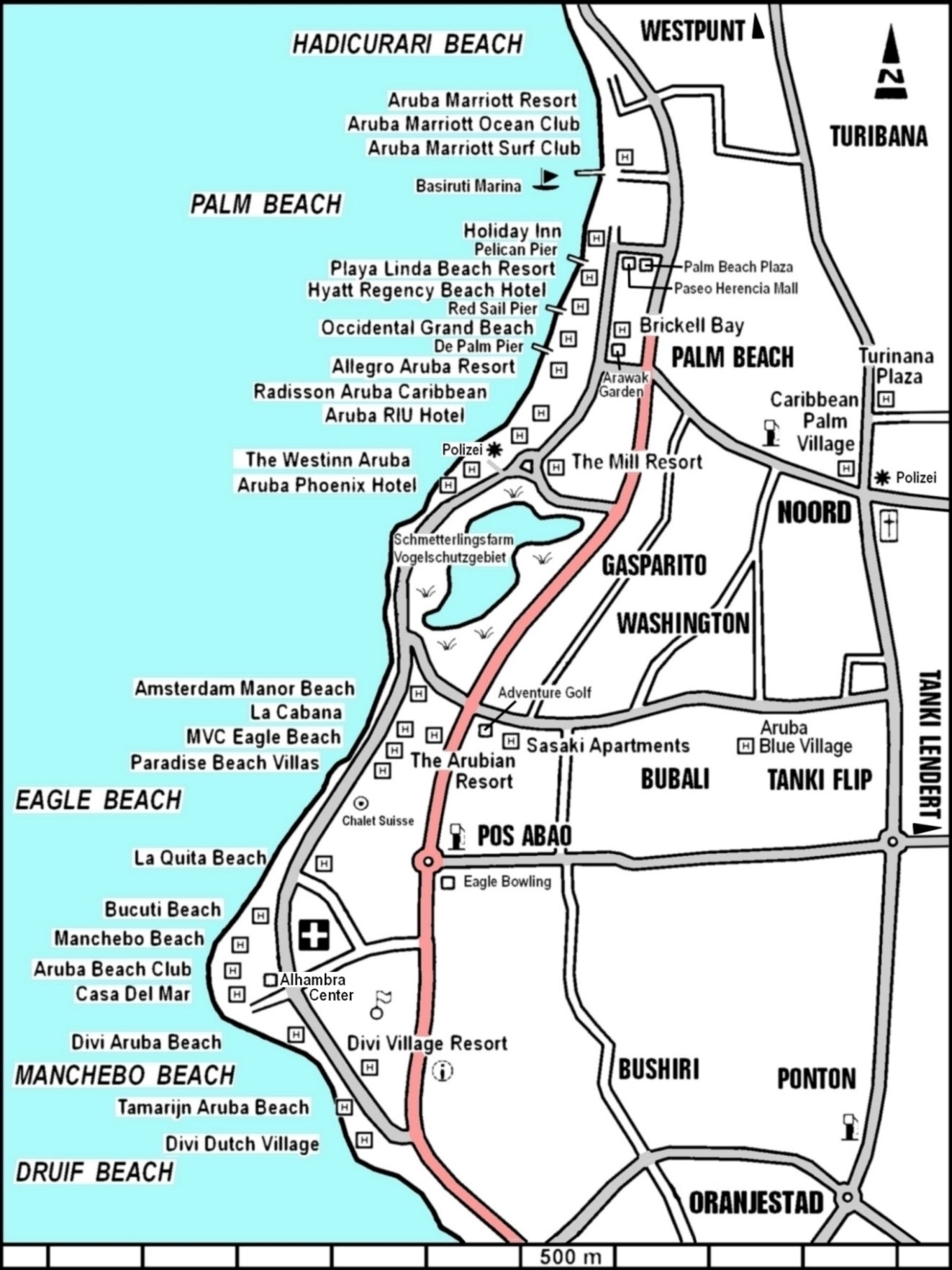
Thirdly, environmental degradation and pollution are central components of both the oil and the tourist industry. Besides the highly polluting nature of oil processing itself, the Lago used surrounding areas as a landfill.81 The hotel industry works in comparable ways: In order to construct hotels and other tourist infrastructure, it uses large chunks of natural (coastal) land, cutting down trees, polluting the sea, and decimating wildlife in the process. Strachan’s analysis that, not unlike plantations, hotels operate as “monopolizer[s] of land” clearly manifests itself on Aruba.82 Anthropologist Victoria Razak explains how hotels on the island occupied land, altering both the natural and built environment in order to attract tourist interest. Although Aruba already had the tourist prerequisites of sun, sea, and sand, much still had to change:
Palms were planted all along the coastline, hotel gardens and rural restaurants became tropical paradises with grass, shrubs and trees imported from Miami, and exotic birds brought from the rain forests of South America. Land was cleared, re-zoned and appropriated for high rise hotels, timeshare apartments and supermarkets. In short, Aruba was reconstructed, its new aesthetic shape exploitable as an economic resource. Taco Bell and Pizza Hut arrived on cue, as did a bowling alley, several casinos, and most recently [in 1995], an eighteen-hole golf course.83
While representatives of the Aruban tourism industry indicate that they want to make the sector more sustainable, it is unlikely that a fundamentally unsustainable industry can achieve that goal.84
8Discursive Plantations in Aruba’s Tourism
In line with environmental, economic, and demographic changes, the tourism boom gave Aruba a discursive makeover. The “Aruba” brand transformed in tandem with the tourist-induced reconstruction of the landscape and environment. Analysis of Aruba.com, Aruba’s destination marketing website, helps to uncover the discursive plantation in Aruba’s tourism. As we have seen, Strachan argues that tourism in the Caribbean is marketed as “paradise” but shows more similarities with plantations in the way it operates. Under the discourse of “paradise” linger dynamics of economic dependence, environmental degradation, and (racialized) labor exploitation. According to Strachan, the “Caribbean finds itself again coveted for its natural resources—this time, though, not for gold, silver, pearls, tobacco, cotton, or sugar but for sun, sand, and sea.”85 Strachan suggests that we read the tourist brochure as a historical text worthy of discursive analysis. Aruba’s official branding slogan—“One Happy Island”—stands in a Caribbean tradition of marketing islands according to general traits that are considered positive and somewhat exotic: The Bahamas boasts “pride-and-joy” as their unique feature, and Jamaica has the “cult of the Jamaican welcome.”86

“One Happy Island” materialized as Aruba’s marketing motto in 1982, shortly before the start of the tourist boom. It quickly found its way to the lives of practically every Aruban: In 1983, these words replaced the old slogan “Isla di Carnaval” (Papiamento for “Island of Carnival”) on Aruban license plates.87 Since then, “happiness” was what Aruba had to offer. Tourists became active consumers of this new natural resource of sorts, a resource provided by the local population: “Aruba’s people are the heart and soul of the One Happy Island,” Aruba.com tells us.88 The “warmth and friendliness” of Arubans, in combination with them being “naturally welcoming and always ready to lend a helping hand,” deliver tourists the happiness that they paid for and expected when they booked their tickets.89
Happiness is marketed as inextricably linked to Aruba’s history and culture. Tourists can, for instance, “explore the origins of our One happy island” in museums that deal with the island’s past, including histories of colonialism and slavery.90 When tourists visit cultural events such as the annual carnival parades, they “see the creative costumes and hear the catchy music” and then “instantly understand why this is the happiest island on earth.”91 Ironically, however, Aruba was no longer the “Island of Carnival” once it became “One Happy Island.”
Aruban destination marketing uses “happiness” as the catch-all phrase to refer to any reason tourists might want to visit the island, offering visitors the commodity of “happiness.” The island, for instance, has “just the right amount of sand, sunshine, and water to send you home with a happy afterglow that never fades.”92 People can get happily married on Aruba, and newlyweds can spend their “Happy Honeymoon” on the island.93 For information, visitors can always speak to one of the “Happy Information Officers” at tourist hotspots.94 During the Covid-pandemic, Aruba offered “Health & Happiness Code” certificates to businesses that complied with pandemic-related restrictions.95 In the words of Strachan, locals are encouraged “to work intensely [. . .] at providing for visitors a lifestyle that flies in the face of the lived experience for the majority of Caribbeans.”96 Arubans have to fulfill tourists’ expectations of happiness—it is, after all, what these travelers paid for. Although the exploitative dynamics of the Plantationocene dictate the material reality of Aruban tourism, the image created of the island is one of near-total happiness.
9Conclusion
Mythologies of luxury, joy, and paradise sustain Plantationocene tourism in the Greater Caribbean. These myths obscure how the tourist industry connects to power and labor dynamics created on plantations and in the petrochemical industry, such as the organization and subjugation of labor: both the US Gulf South and the Dutch Caribbean were marked by intense, top-down processes of disciplining, racializing, and spatially constraining labor. The Plantationocene similarly echoes in the way the natural environment of Gulf South states and the Leeward Antilles has been structured. In all three contexts (the plantation economy, the oil industry, and the tourism business), the natural environment was cut into demarcated, privatized sections, and in all three contexts, nature served as a resource to be exploited for economic use, no matter the environmental effects. Finally, the Plantationocene left a strong cultural imprint on all of these regions—an imprint that legitimizes and helps construct new iterations of Plantationocene economies.
In the US South, the Lost Cause and the attendant Plantation Myth determine much of the region’s heritage tourism related to antebellum houses. These romanticized tales picture the plantation as paradise in the sense that they emphasize the botanical and architectural beauty of plantation homes: the pretty gardens, the columned mansions, and the refined furniture. The rural idyll is an important aspect of the Plantation Myth. It asserts “that the antebellum South was a picturesque, agrarian region untouched by the evils of industrial capitalism,” historian Tyler D. Parry writes. “In this idyllic past, enslaved people were content in their bondage and enjoyed the benefits of white Christian civilization under the careful tutelage of the master class.”97 In combination with this historical narrative, the buildings and grounds of many plantations in the southern United States offer an escape from reality into a pleasant fantasy world where slavery is not a brutal system, but an organic relationship between the planter, the plantation mistress, the enslaved workers, and the plants, trees, and flowers growing in the estate’s fields and gardens.
A similar dynamic exists on the Dutch Caribbean islands of Curaçao and Aruba. Just like in the United States, former plantations morphed into luxury resorts where tourists can enjoy paradise to the fullest. With colonial-style rooms, high-end hotels and restaurants offer a Caribbean version of the Plantation Myth, which presents an uncomplicated past based on grandeur and adventure. Sun, sea, and sand—the typical elements of Caribbean paradise—further obfuscate histories and afterlives of slavery. In that sense, the tropical beach plays a similar role as the botanical beauty of plantation gardens in the US South. Yet there are also differences: In the Dutch Caribbean, colonial plantation nostalgia, although present, forms more of an undercurrent than an explicit focus. To understand, critically assess, and address the effects of these various cultural narratives, however, it is vital to interpret them in connection with the regions’ histories of economic exploitation. The concept of the Plantationocene serves as a fruitful starting point to do so, and simultaneously functions as an important tool to connect the histories of diverse areas in the circum-Caribbean (ranging from Aruba and Curaçao to the US Gulf South) on both cultural and economic levels.
Notes
- Matthew Pratt Guterl, American Mediterranean: Southern Slaveholders in the Age of Emancipation (Harvard University Press, 2008), 6–8.
- Charles Reagan Wilson, The Southern Way of Life: Meanings of Culture and Civilization in the American South (University of North Carolina Press, 2022), 59.
- In contrast with other Caribbean islands, the US South, and South American countries, Curaçaoan and Aruban slavery was not characterized by large-scale agricultural plantations. Aruba and Curaçao were nonetheless part of a colonial enterprise and a globalized plantation economy structured by a racist economic and cultural system.
- For a similar approach, see Jessica K. Rapson, “Refining Memory: Sugar, Oil, and Plantation Tourism on Louisiana’s River Road,” Memory Studies 13, no. 4 (2020): 752–66.
- Donna Haraway et. al., “Anthropologists Are Talking—About the Anthropocene,” Ethnos: Journal of Anthropology 81, no. 3 (2016): 535–64, https://doi.org/10.1080/00141844.2015.1105838.
- Donna Haraway, “Anthropocene, Capitalocene, Plantationocene, Chthulucene: Making Kin,” Environmental Humanities 6, no. 1 (2015): 162n5, https://doi.org/10.1215/22011919-3615934.
- See, for instance, The Global South 16, no 2 (2023), a special issue titled “The Plantationocene and/in the Global South.”
- Delia Byrnes, “Energy Culture, the Gulf Coast, and Petrochemical America,” in Ecocriticism and the Future of Southern Studies, ed., Zackary Vernon (Louisiana State University Press, 2019), 45, 49.
- Byrnes, “Energy Culture, the Gulf Coast, and Petrochemical America,” 44, 46.
- Ian Gregory Strachan, Paradise and Plantation: Tourism and Culture in the Anglophone Caribbean (University of Virginia Press, 2002), 3. Emphasis ours.
- Strachan, Paradise and Plantation, 9.
- Strachan, Paradise and Plantation, 7.
- Kathleen Musante (DeWalt), “Participant Observation,” in Handbook of Methods in Cultural Anthropology, ed., H. Russell Bernard and Clarence C. Cravlee, rev. ed. (AltaMira Press, 1998; Rowman and Littlefield, 2015), 262–65. Citations refer to the Rowman and Littlefield edition.
- John W. Lowe, “‘Calypso Magnolia’: The Caribbean Side of the South,” South Central Review 22, no. 1 (2005): 54. Lowe sees “especially the coastal states of Texas, Louisiana, and Florida” as part of this Caribbean northern rim.
- See, for example, Gerald Horne, Race to Revolution: The United States and Cuba During Slavery and Jim Crow (Monthly Review Press, 2014); Celia E. Naylor, Unsilencing Slavery: Telling Truths About Rose Hall Plantation, Jamaica (University of Georgia Press, 2022); Cécile Vidal, Caribbean New Orleans: Empire, Race, and the Making a Slave Society (University of North Carolina Press, 2019).
- Harnett T. Kane and Willard R. Culver, “Land of Louisiana Sugar Kings,” National Geographic Magazine CXIII, no. 4 (April 1958), 565.
- Kane and Culver, “Land of Louisiana Sugar Kings.”
- Kane and Culver, “Land of Louisiana Sugar Kings.”
- Kane and Culver, “Land of Louisiana Sugar Kings.”
- Sidney Mintz, Sweetness and Power: The Place of Sugar in Modern History (Viking Penguin, 1985), 50–52.
- Karen L. Cox, Dreaming of Dixie: How the South Was Created in American Popular Culture (University of North Carolina Press, 2011), 120.
- Dana Drugmand, “From Plantations to Petrochemicals: The Historical Roots of Louisiana’s Cancer Alley Can Be Found in Slavery,” Sierra: The Magazine of the Sierra Club, June 19, 2023, accessed August 7, 2024, https://www.sierraclub.org/sierra/plantations-petrochemicals-juneteenth.
- Drugmand, “From Plantations to Petrochemicals.” For the connection between petrochemical factories and plantations, see also Maarten Zwiers, “Plantationocene Geographies: Petro-Multinationals, Agribusiness, and the Racial Ecology of the Cold War Mississippi Delta,” Global South 16, no. 2 (2023): 59–60, https://doi.org/10.2979/gbs.2023.a908602.
- Jack E. Davis, “A Struggle for Public History: Black and White Claims to Natchez’s Past,” Public Historian 22, no. 1 (2000): 52–53.
- These observations are based on visits to Natchez in October 2022 and March 2023. In contrast with the slave quarters, the tour of the big house at the Melrose Estate is with a tour guide.
- “Speech of John A. Quitman, of Mississippi, on the Powers of the Federal Government with Regard to the Territories: Delivered During the Debate on the President’s Annual Message, in the House of Representatives, December 18, 1856,” in Life and Correspondence of John A. Quitman, ed., J. F. H. Clairborne (Harper & Brothers, 1860), 2:333.
- “Monmouth Historic Inn and Gardens,” flyer acquired during house visit on March 4, 2023.
- “History,” Monmouth Historic Inn and Gardens, accessed April 11, 2025, https://www.monmouthhistoricinn.com/history.
- Restaurant Gouverneur de Rouville, “History,” de-gouverneur.com, accessed November 12, 2024, https://de-gouverneur.com/history.
- Bethanie G. Aggett and Walter Van De Leur, “‘Building on the Power of the Past:’ The Production and Politics of Heritage on a Dutch Caribbean Island,” International Journal of Heritage Studies 26, no. 6 (2020): 593; Rivke Jaffe, “Global Environmental Ideoscapes, Blighted Cityscapes: City, Island and Environment in Jamaica and Curaçao,” Etnofoor 19, no. 2 (2006): 113–30.
- Gloria Wekker, White Innocence: Paradoxes of Colonialism and Race (Duke University Press, 2016), 1–2.
- Jaffe, “Global Environmental Ideoscapes, Blighted Cityscapes,” 113–30; Aggett and Van De Leur, “Building on the Power of the Past,” 593–94.
- Linda Marguerite Rupert, Creolization and Contraband: Curaçao in the Early Modern Atlantic World (University of Georgia Press, 2012), 3.
- Jaap van Soest, “Curacao and Its Economy at the Turn of the Century,” Social and Economic Studies 26, no. 1 (1977): 44.
- Michael McIntyre and Heidi J. Nast, “Bio(Necro)Polis: Marx, Surplus Populations, and the Spatial Dialectics of Reproduction and ‘Race,’” Antipode 43, no. 5 (2011): 1465–88.
- Henri Hubert Van Kol, “Stukken Betreffende Een Reis Naar West-Indië,” 1903, International Institute for Social History, Amsterdam, the Netherlands.
- Rene Römer, De Curaçaose Samenleving (Amigoe N.V., 3rd ed., 2000), 34.
- Rose Mary Allen, “Learning to Be a Man: Afro-Caribbean Seamen and Maritime Workers from Curaçao at the Beginning of the Twentieth Century,” Caribbean Studies 39, no. 1–2 (January–December 2011): 50; McIntyre and Nast, “Bio(Necro)Polis,”1477.
- “Vast Oil Plants Boom Dutch Isle,” Evening Star, December 26, 1929, 15.
- Jaap van Soest, Olie als Water: De Curaçaose Economie in de Eerste Helft van de Twintigste Eeuw (Walburg Pers, 1977), 204–5; Elizabeth U. Dunbar, “What Oil Did to Curaçao,” Journal of Geography 33, no. 9 (1934): 342.
- Allen, 51.
- Gustavo Machado, El Asalto a Curazao (Myria, 1930), 48–50.
- Machado, El Asalto a Curazao, 41.
- Machado, El Asalto a Curazao, 53–55.
- Translated by the authors from: “la esclavitud y el trabajo forzado [. . .] no han sido abolidos ni mucho menos,” in Machado, El Asalto a Curazao, 8.
- “Stuk Met Vragen van IJzerman Aan Minister van Koloniën,” Het Volk (October 3, 1930); Tankbouwer, “Brief van T.B. Aan Het Volk, Willemstad,” July 1, 1929, ARCH01576, Het Volk Archives, International Institute for Social History, Amsterdam, the Netherlands.
- Tankbouwer, “Brief van T.B. Aan Het Volk, Willemstad.”
- Tankbouwer, “Brief van ‘Tankbouwer’ Naar Het Volk, Geschreven in Willemstad,” June 26, 1929, ARCH01576, Het Volk Archives, International Institute for Social History, Amsterdam, the Netherlands; Tankbouwer, “Brief van T.B. Aan Het Volk, Willemstad.”
- Machado, El Asalto a Curazao, 58.
- Peter Linebaugh and Marcus Rediker, The Many-Headed Hydra: Sailors, Slaves, Commoners, and the Hidden History of the Revolutionary Atlantic (2000; repr., Beacon Press, 2013).
- McIntyre and Nast, “Bio(Necro)Polis,” 1476–77; Joshua Clover, Riot. Strike. Riot: The New Era of Uprisings (Verso, 2019), 161.
- Jaap van Soest, “Curacao and Its Economy at the Turn of the Century,” Social and Economic Studies 26, no. 1 (1977): 53.
- Linda Marguerite Rupert, Roots of Our Future: A Commercial History of Curaçao (Curaçao Chamber of Commerce & Industry, 1999), 233–34.
- Dolfijn, “De Plantage Boutique Resort,” dolfijngo.com, accessed November 12, 2024, https://dolfijngo.com/travel/de-plantage-boutique-resort/; Coral Estate Rentals Curaçao, “Geschiedenis,” coralestaterentals.com, accessed November 12, 2024, https://www.coralestaterentals.com/nl/geschiedenis.
- Robertico Croes and Semrad Kelly, “Perceptions, Behaviors, and the Economic Impact of Tourism on Curaçao,” Dick Pope Sr. Institute Publications 9 (2011), 22.
- Baoase Luxury Resort Curaçao, “Your Own Hidden Oasis,” Baoase.com, accessed November 12, 2024, https://baoase.com/accommodations/.
- Harbor Hotel Curaçao, “Discover Willemstad,” harborhotelcuracao.com, accessed November 12, 2024, https://www.harborhotelcuracao.com/discover-willemstad.
- KLM, “Curaçao’s Romantic Plantation Estates,” klm.nl/en/travelguide, accessed November 12, 2024, https://www.klm.nl/en/travel-guide/inspiration/curacao-s-romantic-plantation-estates.
- David Koren, “Een Eeuwenlange Strijd Tegen Droogte en Teloorgang: Waarden en Betekenissen van het Curaçaose Plantagelandschap,” Tijdschrift voor Historische Geografie 5, no. 3 (January 1, 2020): 131–51, accessed July 8, 2025, https://doi.org/10.5117/THG2020.3.001.KORE.
- Valentina Dinica, “Tourism on Curaçao: Explaining the Shortage of Sustainability Legislation from Game Theory Perspective,” Journal of Environmental Policy and Planning 14, no. 2 (June 2012): 161–88, accessed July 8, 2025, https://doi.org/10.1080/1523908X.2012.681121; Rivke Jaffe, “Conflicting Environments: Negotiating Social and Ecological Vulnerabilities in Urban Jamaica and Curaçao,” in Global Change and Caribbean Vulnerability: Environment, Economy and Society at Risk, ed., Duncan McGregor, David Dodman, and David Baker (University of the West Indies Press, 2009), 329.
- Jaffe, “Conflicting Environments,” 329.
- R. Maduro and L.E. Kok-Paci, “Akshon Ban Bok’I Playa,” Progreso 14, no. 2 (1990): 22–23; Kim Hendriksen, “Resistance in Curacao Against ‘Modernization of Authentic Beaches,’” Caribisch Netwerk, October 11, 2024, https://caribischnetwerk.ntr.nl/2024/10/11/verzet-op-curacao-tegen-modernisering-van-authentieke-stranden/.
- Fundashon Museo Tula, “About Us,” fundashonmuseotula.com, accessed April 1, 2025, https://fundashonmuseotula.com/about_us/.
- Luc Alofs, Slaven Zonder Plantage: (Kinder)Slavernij en Emancipatie op Aruba (Charuba, 2013).
- Luc Alofs and Leontine Merkies, Ken ta Arubiano? Sociale Integratie en Natievorming op Aruba, 1924–2001 (VAD/De Wit Stores, 2001), 48.
- Alofs and Merkies, Ken ta Arubiano?, 57.
- Alofs and Merkies, Ken ta Arubiano?, 49.
- Luc Alofs, Onderhorigheid en Separatisme: Koloniaal Bestuur en Lokale Politiek op Aruba, 1816–1955 (UNOCA, 2012), 148.
- Alofs and Merkies, Ken ta Arubiano?, 50.
- Florence Kalm “The Dispersive and Reintegrating Nature of Population Segments of a Third World Society: Aruba, Netherlands Antilles.” (PhD diss., City University of New York, 1975), 205.
- Alofs and Merkies, Ken ta Arubiano?, 200.
- Haraway, “Anthropocene, Capitalocene, Plantationocene, Chthulucene: Making Kin,” 162n5.
- Arjen Alberts, “Immigration-Dependent Extensive Growth in Small Island Tourism Economies: The Cases of Aruba and Sint Maarten,” International Development Planning Review 38, no. 1 (2016): 77, accessed July 8, 2025, https://doi.org/10.3828/idpr.2016.4.
- Albert Postma, “‘When the Tourists Flew In’: Critical Encounters in the Development of Tourism” (PhD diss., University of Groningen, 2013), 106–7,
- 110.
- Central Bureau of Statistics Aruba, Double or Quits: A Study on Recent Migration to Aruba 1993–2003 (Central Bureau of Statistics), 33–34.
- Sharona S. Jurgens, Eric Mijts, and Anton Van Rompaey, “Are There Limits to Growth of Tourism on the Caribbean Islands?” Frontiers in Sustainable Tourism 3 (2024): 1, accessed July 8, 2025, https://doi.org/10.3389/frsut.2024.1292383; Ryan R. Peterson, “Aruba,” in The SAGE International Encyclopedia of Travel and Tourism, ed., Linda L. Lowry (SAGE Publications, 2017), 96–97.
- Luc Cohen, “Aruba Looks Towards Long-Idled Oil Refinery, as Tourism Drop Pummels Economy,” Reuters, April 19, 2021, accessed July 8, 2025, https://www.reuters.com/world/americas/aruba-looks-towards-long-idled-oil-refinery-tourism-drop-pummels-economy-2021-04-19/.
- Peterson, “Aruba,” 96–97.
- Strachan, Paradise and Plantation, 8.
- Alofs and Merkies, Ken ta Arubiano?, 50.
- Strachan, Paradise and Plantation, 8-9.
- Victoria Razak, “Culture Under Construction: The Future of Native Aruban Identity,” Futures 27, no. 4 (1995): 449, accessed July 8, 2025, https://doi.org/10.1016/0016-3287(95)00018-R.
- Christopher Elliott, “Aruba’s Visitors Are Loving the Island to Death. Here’s How It Wants to Become Sustainable,” Forbes, April 20, 2024, accessed April 24, 2025, https://www.forbes.com/sites/christopherelliott/2024/04/20/arubas-visitors-are-loving-the-island-to-death-heres-how-it-wants-to-become-sustainable/.
- Strachan, Paradise and Plantation, 2.
- Strachan, Paradise and Plantation, 116; Frank Fonda Taylor, To Hell With Paradise: A History of the Jamaican Tourist Industry (University of Pittsburgh Press, 1993), 93.
- “Aruba als Alternatief,” Amigoe, January 14, 1982; “Happy Island Nummerplaten Nog Niet Aangekomen,” Amigoe, January 4, 1983, (both accessed via Coleccion Aruba, www.coleccion.aw).
- “Aruba Natives,” accessed April 25, 2025, https://www.aruba.com/us/our-island/history-and-culture/people-of-aruba.
- “Aruba Natives,” accessed April 25, 2025, https://www.aruba.com/us/our-island/history-and-culture/people-of-aruba.
- “History,” accessed April 25, 2025, https://www.aruba.com/us/our-island/history-and-culture/history.
- “Carnival in Aruba,” accessed April 25, 2025, https://www.aruba.com/us/our-island/history-and-culture/carnival-in-aruba.
- “Aruba Beaches and Coves,” accessed April 25, 2025, https://www.aruba.com/us/things-to-do/beaches-and-coves.
- “Your Aruba Destination Wedding,” accessed April 25, 2025, https://www.aruba.com/us/weddings; “Aruba: One Happy Island,” Blogs, accessed April 25, 2025, https://www.aruba.com/us/blog/aruba-one-happy-island.
- “Aruba’s Happy Information Officers,” accessed April 25, 2025, https://www.aruba.com/us/organization/arubas-happy-information-officers.
- “Aruba Health and Happiness Code,” accessed April 25, 2025, https://www.aruba.com/us/health-happiness-code.
- Strachan, Paradise and Plantation, 11.
- Tyler D. Parry, “Slavery, the Plantation Myth, and Alternative Facts,” Black Perspectives, December 6, 2017, accessed October 28, 2024, https://www.aaihs.org/slavery-the-plantation-myth-and-alternative-facts/.
© Center for the Study of Southern Culture