


1Introduction
Across disciplines, scholars have long recognized that the U.S. South is not simply discovered but made. Narratives, myths, and counternarratives have shaped its coherence as a region, even as they have contested what that coherence means. Rather than presenting a conventional overview of southern history or culture, the essays gathered here ask readers to reconsider the artifacts and actions through which the South becomes knowable in the first place. They take as their shared concern the practices by which events are registered and memory is curated, and they examine the consequences those practices carry for how region, belonging, and power are imagined and enacted. This cluster of essays, which offers a preview of our forthcoming collection, Record, Document, Archive: Constructing the South Out of Region (LSU Press, 2026), extends that line of inquiry by shifting attention from finished narratives to the processes and materialities that precede, enable, and constrain them. The abridged four essays and afterword we present ask how practices of recording, documenting, and archiving shape what can later be told, known, or contested. They query how these practices distribute power and delineate whose lives register as evidence, whose experiences are legible, and whose presence is rendered absent.
The following essays also preview how our book is organized around three orienting terms—record, document, and archive—which we treat not as fixed categories but as overlapping perspectives. This cluster introduces those vantages in abbreviated form, drawing on adaptations and extensions of selected essays in our collection to illustrate how each term foregrounds different dimensions of memory work. As a preview of a larger project, these essays do not seek to settle debates or offer a definitive framework. Instead, they invite readers into an ongoing conversation about how “the South” is made, remembered, and contested through everyday practices of inscription and preservation, modelling interdisciplinary approaches that resonate beyond the region while remaining grounded in its specific histories and struggles. Ultimately, this work suggests that studying records, documents, and archives is not only about the past, but also about the conditions under which futures become imaginable.
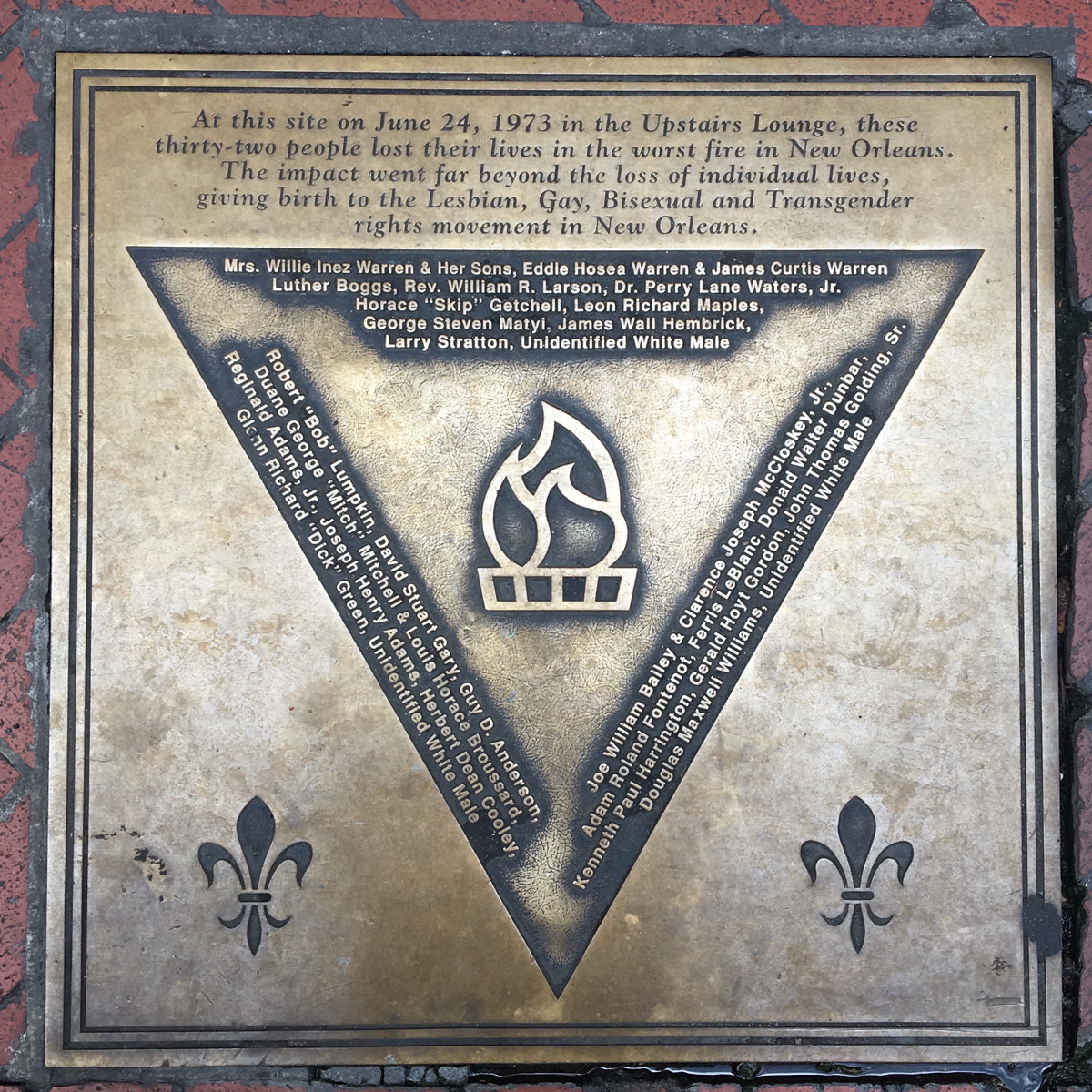
With this framework in place, we turn first to record, the most elemental of the three terms and the one that most immediately foregrounds experience as it is lived, sensed, and registered. Record emphasizes the act of registering experience, whether intentionally or incidentally. We draw from the term’s etymology, which is the oldest of the three terms in our framework and first emerged in verb form, unlike the other two. Derived from the old French recorder (ca. 1050), the earliest documented English denotation of the verb record (ca. 1225) indicated memory exercise: “To learn by heart, to commit to memory, to go over in one’s mind; (also) to repeat or say over as a lesson or portion of memorized text, to recite.”1 At once evoking embodiment, cognition, orality, and action, approaching our investigation through record as vantage point distinctly emphasizes act and artifact as convergence of im/material experience. Whether silent or audible, the sum effect is to store an abstract impression (memory) via concrete material (neurons) within the body.2 This process is reflexive: Someone records something they did within themselves, without necessarily anticipating that an Other—such as an audience, witness, or reader—might access the record in the future.
This understanding of record as an embodied, reflexive act—one that need not presume an audience in advance—clarifies how records can emerge precisely where official documentation fails or refuses to see. When the state withholds, erases, or sanitizes, other forms of recording take shape: improvised, affective, and often resistant.
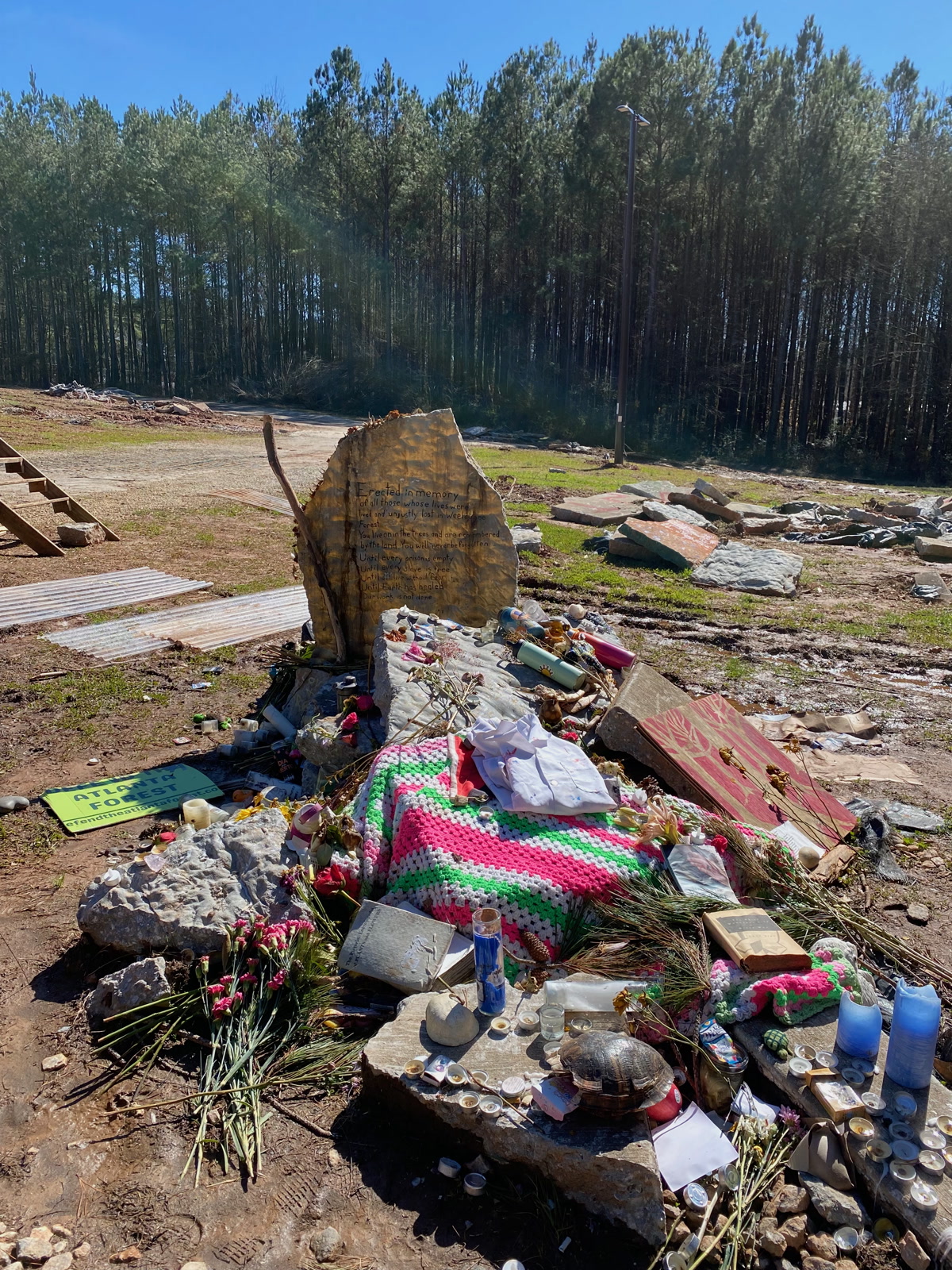
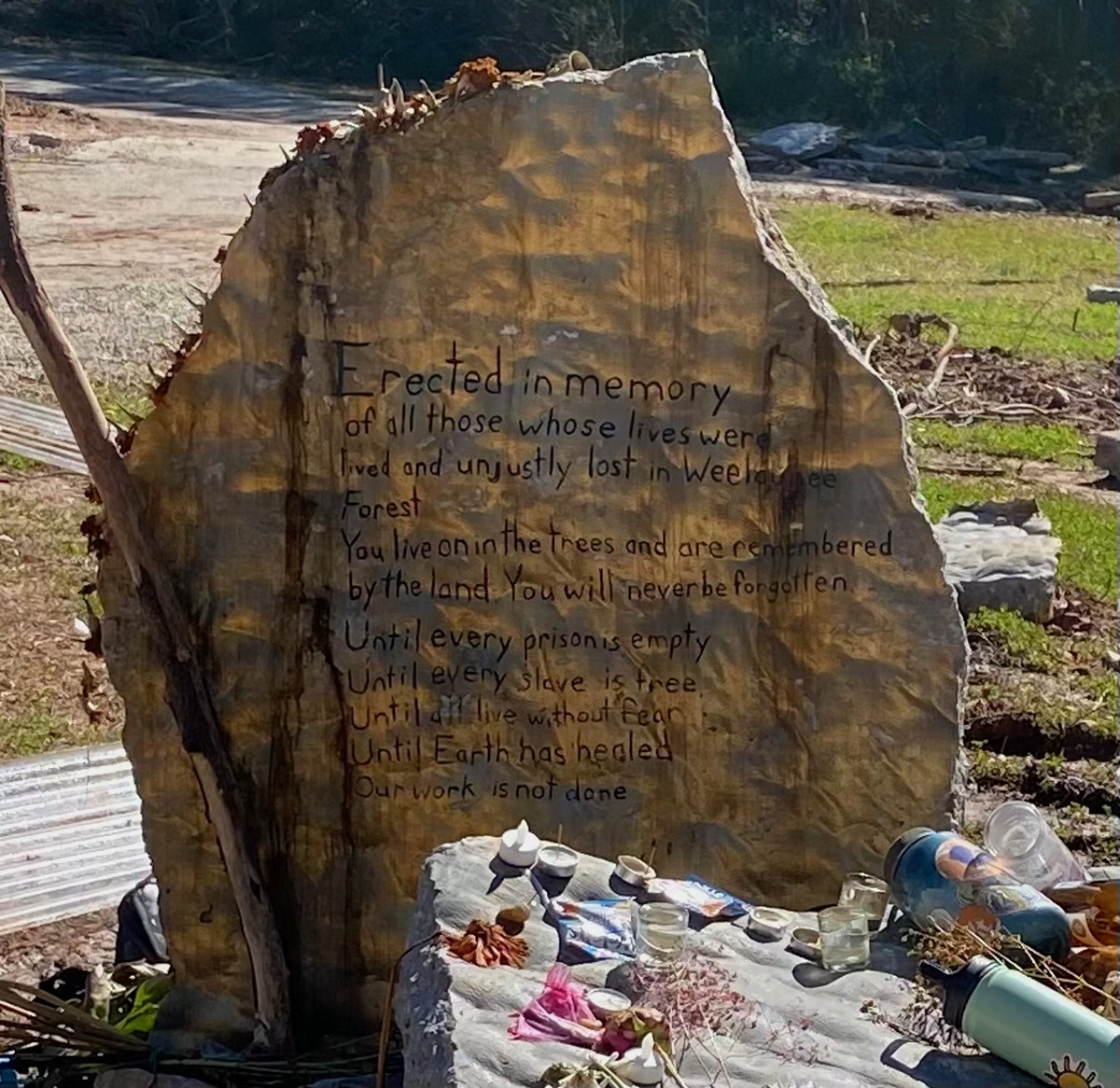
It is within this expanded field of record-making that Katie Owens-Murphy and Kerrigan Casey’s “Developing The Art of Resistance and the Alabama Death Row Archive” situates its intervention, examining how artistic practice bears witness to what carceral power attempts to obscure. Their work examines how art can fill gaps left by the state’s redaction and concealment of death penalty procedures in Alabama. They highlight the role of documentary art in opposing capital punishment, with their project, The Art of Resistance, transforming archival materials into a traveling exhibit that sheds light on the experiences and resistance of people on death row. The Alabama Death Row Archive at the University of North Alabama, founded in 2019, plays a central role by preserving documents related to execution policies and the lived experiences of people on death row. However, the archive’s accessibility to the public is limited, prompting Owens-Murphy and Casey’s development of an art installation as a public-facing medium. This project incorporates legal records, autopsy reports, clemency petitions, and audio interviews, which are transformed into mixed-media artwork to make visible the dignity of people on death row and to challenge the isolation imposed by capital punishment. The exhibit also expands the archive by including new creative works from people on death row, fostering community dialogue, remembrance, and collective activism. Through art, the project connects the public with the human stories behind Alabama’s execution system and represents death row experiences through the lens of empathy, resistance, advocacy, and abolition.
Document foregrounds the social life of evidence. More than record or archive, the document vantage emphasizes the construction of reality in/through legal discourse. Also unlike record, the earliest known English use of the noun document (ca. 1500) preceded its verb form and derived squarely within a discourse of discipline: “teaching, instruction, warning.”3 In the eighteenth century, amid European colonization and Enlightenment, document’s denotation evolved in co-constitution with the Eurocentric epistemology of so-called written proof.4 By 1711, the verb indicated, “To prove or support (something) by documentary evidence,” clearly evoking a judicial context whereby one evaluates the legitimacy of a claim.5 By 1728, the noun designated “something written, inscribed, etc., which furnishes evidence or information upon any subject.”6 Hence, the evolution of document from noun to verb more fully actualized an object’s evidentiary role within a disciplinary regime. To document is to produce a form of human conditioning that could be exported and enacted in absentia: the supposedly authoritative paper document. After all, the seat of colonial law resided in Europe, far removed from the Americas. There, the formulation of “written text” merged with colonial claims to conquest, enslavement, and genocide on foreign lands. In this context, the socio-disciplinary function of document as process and product activates legal frameworks that constitute and condition identity and belonging.
If document has historically functioned as a portable instrument of authority, disciplining subjects and stabilizing regimes through written proof, its power also depends on what counts as evidence and who is authorized to produce it. When documentation exceeds the juridical or the paper-bound, the textual economy begins to fray. Dolores Flores-Silva and Keith Cartwright’s “‘Let’s Play Ball’: Reading a Language of the Underworld Across Gulf Ballgame Cultures” intervenes at this rupture point, expanding documentation beyond human-made repositories to consider how geological and ecological processes themselves inscribe histories that unsettle colonial and legal regimes of proof. Attending to Indigenous subterranean spaces across the Gulf South, the authors theorize the earth itself as a body that, together with its Indigenous stewards, documents memory and history. Their essay challenges anthropocentric and colonial assumptions about what counts as evidence and proposes decolonial methodologies that recognize nonhuman and Indigenous epistemologies as foundational to regional knowledge. It includes discussion of Indigenous underworld ballgame cultures that Flores-Silva and Cartwright read as cultural benefactors of today’s postcolonial SEC ballgame empire. This essay expands upon and complements their contribution to Record, Document, Archive, making their spotlight a critical discursive node in their expansive research on “Dark Zone Writing and Underworld Pilgrimage Across the Gulf Matrix.” Complemented by visual materials, Flores-Silva and Cartwright offer readers new ways to conceptualize the South as an interconnected ecological and cultural system that exceeds political borders and linear historical timelines.
At the convergence of document and archive, Rafael Ramirez Solórzano’s “An Archive of Migrant Refusal: The 2010 Trail of Dreams” immerses readers in his recovery journey recording and archiving digital evidence of undocumented, undocuqueer, and women of color activists who organized the 2010 Trail of Dreams, a migrant march for justice. Over months of digital recording, Ramirez Solórzano successfully preserved records of this historic march—which began in Miami, Florida, and concluded 1,500 miles away in Washington, DC—as it was once hosted on the original website (www.trail2010.org). His exhaustive collection of categorized screenshots perhaps became the only complete archive of the website’s existence and by extension the migrant march itself. Narrativizing this archive through his ethnographic vantage as a social movement historian, Ramirez Solórzano honors members of this Undocumented Youth Movement as agents enacting both political and archival resistance. His work preserves such documentation of undocumented migrant activism, compiling what he calls “an archive of migrant refusal” that “included actions, motivations, thoughts, and feelings against the rise of immigration enforcement.”7 Spanning countless individual files—videos, maps, testimonials, and more—these methods of refusal facilitated the Trail of Dreams through a coalition that at once confronts the socio-disciplinary function of document in Euro-postcoloniality while simultaneously leveraging the power of archive to consolidate place, power, and belonging, as we discuss below. Ramirez Solórzano emphasizes how his recovery of this migrant activist history reveals overlapping geographic resonances with earlier anti-colonial and anti-racist refusals, “slave uprisings, the Seminole Wars, the underground railroad,” and others.8 Thus, the Trail of Dreams’ legacy of coalition among undocumented, undocuqueer, and women of color activists offers a model for the present, as subjects of U.S. empire confront a renewed regime of document-based policing that perpetuates centuries-old violence based upon citizenship status. It builds an archive of activist empowerment.
Archive—in our collection’s construction—centers questions of curation, access, and power. At its most conspicuous, the concern of the archive is access. While the word’s etymology traces back to ancient Greek, the English emergence is relatively recent and, well, not even English. Archive appeared in Anglophone history as a noun (ca. 1603) in Philemon Holland’s first English translation of Plutarch’s Morals from the Greek original; in his process, Holland referenced Jacques Amot’s earlier French translation (ca. 1572).9 In other words, Holland’s not-English “archive” simultaneously: (1) echoed Amot’s French “archif, archive”; (2) denoted Plutarch’s figurative use of the concrete Greek term; and (3) semantically cohered through the Greek word ἀρχεῖον (“magisterial residence, public office,”) and its etymon ἀρχή (“government”).10 The etymology of archive reveals orality, textuality, figuration, denotation, geospatial transmission, and overlapping forms of materiality. Hence, the etymology of archive reveals that its primary function is to assemble and transmit multimodal knowledge. The archive is remediation, par excellence.11
Archive’s etymology reveals how seemingly divergent approaches to “archival studies” have never been about either the theoretical abstraction of power or the information science of “actually existing” catalogues: These are two sides of the same coin.12 Archival systems and sites are active agents in the narrativization of history as they define and regulate access to knowledge in ways that invariably shape their impact. Form is meaning. Inversely, archive as power simply does not signify without its material-spatial referent. Plutarch’s figurative use to describe an individual’s embodied condition relied on the Greek denotation for coherence. When we talk about how to construct access to southern archives, we are simultaneously interrogating how “the South” itself has been constructed.
If the archive is both a material site and an epistemological force—simultaneously shaping what can be known and how that knowing coheres—then archival practice becomes an ethical undertaking rather than a neutral act of preservation. Decisions about recovery and access are never merely technical; they determine which histories remain legible and which risk being reabsorbed into institutional logics of containment. Katherine Adams and Jacquelyne Thoni Howard’s “Curating This Beautiful Sisterhood of Books: Digital Archives for Public Use” engages this tension directly, turning to feminist archival practice in the U.S. South to ask how marginalized histories might be recovered without being stabilized in ways that reinscribe exclusion. Focusing on the recovery and curation of a feminist book collection in New Orleans, the authors reflect on the ethical challenges of preservation: how to recover marginalized histories without fixing them into static or institutionalized forms that reproduce the very exclusions they seek to undo. Their essay foregrounds care and collaboration as archival strategies, offering a model of feminist memory work that resists commodification and prioritizes relational knowledge. The piece speaks directly to ongoing conversations about community archives, women’s history, and the politics of visibility in southern studies.
Concluding this spotlight and Record, Document, Archive itself, Bryan Giemza’s afterword “Black Swans Before Dawn: Toward a New Living Archive” contemplates the methodological ethics and political significance of archival practice here at the event horizon of earth’s looming sixth extinction. His full afterword in the collection thoroughly scaffolds a framework for what he calls “a new living archive,” privileging more-than-human frameworks to situate our deeply human need for ethical, just, and sustainable forms of knowledge preservation and survival. His afterword—together with all of the essays collected in Record, Document, Archive—galvanize us to challenge the function, truth, and use of “region” within ever-escalating scales of death and disaster—perhaps especially at the level of the global.
2Why Records, Documents, and Archives Now
The urgency of this intervention is not merely theoretical. In the contemporary United States, archival management, documentation, and recordkeeping are primary mechanisms through which people’s right to exist in place is affirmed or denied. Legal identity, bodily autonomy, mobility, and safety are contingent on paperwork. Birth certificates, licenses, medical forms, databases, and policies claim to define what is real or permissible. These regimes of documentality naturalize particular ways of knowing—often Eurocentric, bureaucratic, and disembodied—while presenting themselves as objective or inevitable.
Neither incidental nor merely logistical, Eurocentric documentality regulates human life throughout the globe. In the context of the U.S. South, it is perhaps clearest in the national fetishization of the southern border as metonym (and often racist dog whistle) for anti-Latinx immigration policies. As millions of Latin Americans in the hemispheric South have fled crises fueled by the global North, the population of so-called “undocumented” immigrants in the U.S. has tripled. According to the Pew Research Center, the undocumented population increased from 3.5 million in 1990 to 10.5 million in 2021, when more than 70 percent of those undocumented people residing in the U.S. as of November 2023 come from Latin and Central America.13 These undocumented adults and children live across all U.S. states and territories. However, the propagandized specter of the southern border under the forty-fifth/forty-seventh presidencies (“build that wall”)14 together with the xenophobic rise of southern states’ opposition to federal immigration law before 2025 (both constitutional crises resonant of 1860s secession and 1960s “states’ rights” movements) clearly exhibit how the epistemology of “written proof” via documentality continues to shape national, regional, and corporeal boundaries in our neocolonial era.15 Yalidy Matos (2019) explains, “While there is nothing nuevo about Latino/a migration to the American South,” there is indeed something to “what some scholars have called a new immigration federalism, [which indicates] the state and local proliferation of immigration regulation and enforcement.”16 Matos analyzes what was, in 2019, a coordinated project designed to localize federal immigration policy. We read these localizing efforts as they both evince and trouble longstanding scholarship that understands how U.S. nationalism constitutes the South as “an internal other for the nation.”17
On the one hand, document-based, localized policing of racialized bodies clearly evokes legacies of “settler colonialism, the displacement of native peoples, and the African American history of this region” that have distinguished the region within the national imagination, as southern studies scholars have widely examined in recent decades.18 Royal charters, land cessions, freedom papers, black codes: So many forms of written documentation have regulated life over time in this place that it is hard to miss the resonance with new immigration federalism. During the 2010s, states such as Alabama, South Carolina, and Georgia tightened so-called “border security” legislation, policing civilians on the basis of race and documentation.19 Each state passed laws that, as Patricia Ehrkamp and Caroline Nagel (2014) describe, “variably make it a crime to be in the state without proper documentation, give the police broad authority to check individuals’ immigration status during unrelated traffic stops, and criminalize the ‘harboring’ and transportation of undocumented immigrants.”20 These state-level initiatives proliferated after the 2020 U.S. presidential election. Texas Governor Greg Abbot launched “Operation Lone Star,” funding state-controlled anti-immigration operations to the tune of $4 billion and trafficking more than 100,000 migrants crossing the U.S.-Mexico border to Democratic-run metropolises around the nation.21 Not to be outdone, Florida Governor Ron DeSantis arranged a political stunt flying migrants from Texas to Martha’s Vineyard in 2022; sent his state’s National Guard members to the Texas border in 2024; and throughout his tenure in the governor’s office, signed what he called “the most ambitious anti-illegal immigration laws in the country.”22 While in 2024 a federal judge temporarily blocked the most aggressive of DeSantis’s anti-immigration laws—which sought to supersede federal law by “ma[king] it a felony for someone to transport undocumented migrants into the state”—the net result of his anti-immigration policy has seen Latinx populations either leaving the state permanently or withdrawing from public and professional spheres in fear of persecution.23
As Texas and Florida competed on a national stage for the record of “toughest on illegal immigration,” the draconian nature of these document-policing laws and their escalation over the last two decades underscore not a new version of the surveillance state, but rather, a reemergence of old regional forms of racial policing that are dependent on documentality. Matos recalls that the 2011 Alabama law “HB 56 was frequently referred to as Juan Crow legislation. Tapping into southern regional anxiety, the purpose . . . was to target all aspects of life, from schooling to work to merely living as presumably Latino/a.”24 In January 2025, the U.S. Department of Homeland Security issued a statement escalating these measures on a federal scale, revoking Biden-era protections of undocumented immigrants from federal immigration agents when in “‘sensitive’ areas” such as churches and K–12 schools.25 As a result, Latinx families kept their children home from school, prompting a surge in student absenteeism nationwide.26 This legal-geographic-racial landscape forecloses access to school, employment, housing, healthcare, transportation, and so many other standards of life based on one’s citizenship status, and it does so by directly targeting populations on the basis of ethnicity. Starting from today’s racial policing of “belonging in place” on the basis of “showing one’s papers,” one can easily trace a throughline of “documentation” back in time that connects Executive Order 14160, Jim Crow Apartheid, Black Codes of Reconstruction, the Dred Scott decision, the Fugitive Slave Act, and beyond.27
On the other hand, as much as the present anti-Latinx landscape fits uncannily within U.S. southern history, an interesting turn in mainstream rhetoric seems to undermine longstanding frameworks for how the South is evoked in popular national discourse. As has now been widely discussed within the field of southern studies, national mainstream media often evokes the U.S. South in one of roughly two frames, broadly speaking.28 Either, the region is imagined as an ideal of “Americanness” for its traditional, down-home, rural, wholesome myth—one that serves southern hospitality with a slice of pecan pie. Or the South is figured as “an internal other,” a domestic repository for all of the nation’s ills, thereby exonerating non-southern states and people from their culpability in longstanding histories of violence, oppression, anti-democratic politics, and widescale human rights violations. In short, when it’s good, it’s quintessentially American, and when it’s bad, it’s hopelessly southern.
Interestingly, the figure of the southern U.S.-Mexico border and the anti-immigration xenophobia it is made to represent seem to step beyond this dichotomy. Conservative leaders and media behemoths from around the country run a tireless rhetorical campaign characterizing the southern border as un-American and internally destructive to U.S. democracy. Clearly this campaign should fall under the exceptionalist logic that isolates “Bad South” as distinctly not national. Yet in speeches around the U.S., right-wing advocates, GOP candidates, and even the 2023 House of Representatives’ Homeland Security Committee have all declared that “every state is a border state.”29 Such messaging mobilizes new immigration federalism targeting undocumented populations within and beyond the region by conceptually implicating internal states and nonsouthern geographies, indeed spaces not at all geographically proximate to the southern national border. “Bad South,” it seems, is national. This genealogy traces back to at least the Fugitive Slave Act of 1850, which federalized southern constructs of citizenship qua whiteness. With the 2025 revolution, the South’s early-century localization of federal immigration policy flipped. The white supremacist subtext of “states’ rights” attacking safety, citizenship, and belonging for BIPOC populations became federalized once again. Most notably, we’ve seen this with Executive Order 14160 and its now-failed attempt to restore in some measure, as U.S. Supreme Court Chief Justice John Roberts writes for the majority, “the odious decision of Dred Scott v. Sandford” that “imposed the Southern States’ beliefs onto the Nation.”30 Such virulent anti-Latinx rhetoric and governance spatially diffuses the southern border throughout the empire, whipping up xenophobic hysteria in support of the dehumanizing work circumscribing U.S. geopolitical sovereignty in border politics stretching from Mississippi to Minnesota.
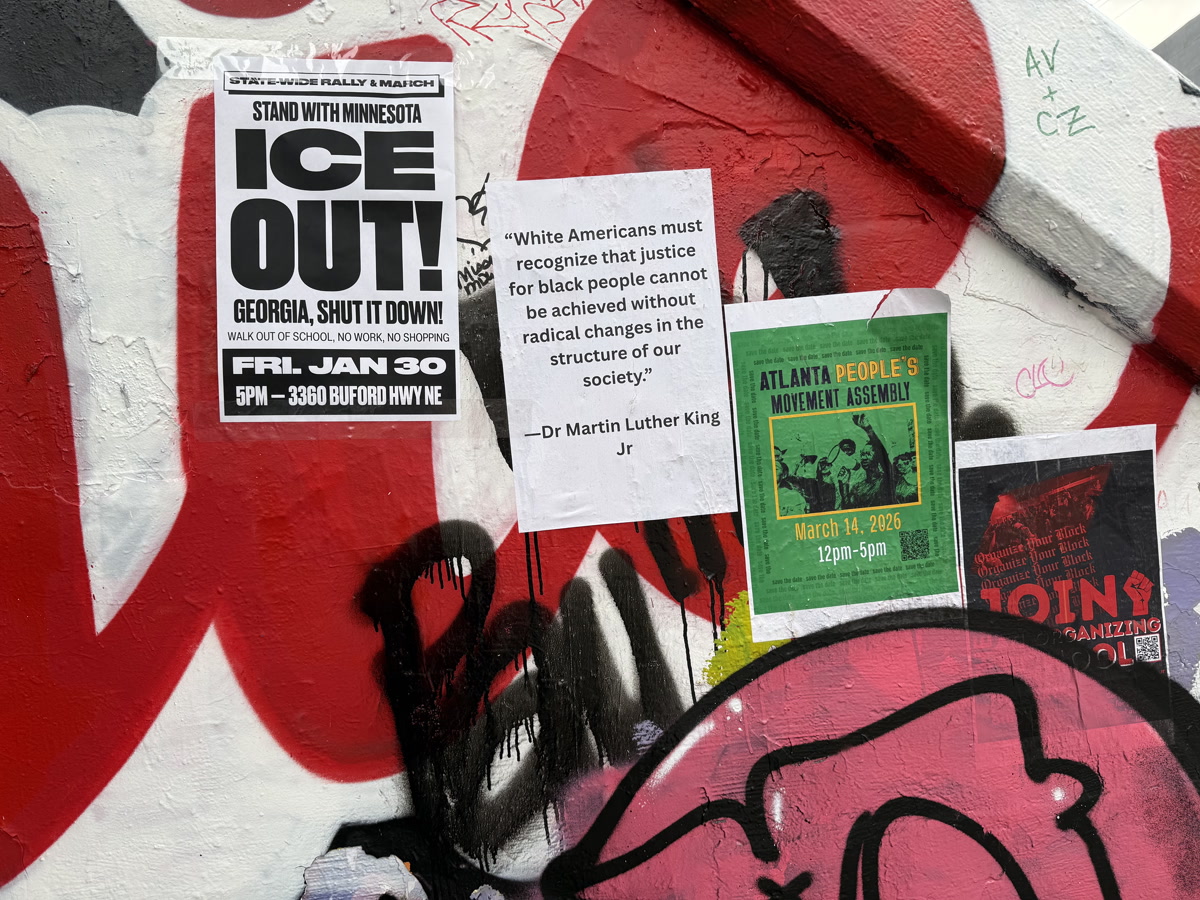
These dynamics make clear that record, document, and archive are not merely analytic tools for studying the South’s past but living mechanisms through which the region’s present is governed and its futures constrained. Racialized regimes of belonging do not operate only through spectacular acts of violence or overt declarations of exclusion; they are enacted through quotidian demands to register and prove, and they manifest through bodies being recorded by the state, documented into legality or illegality, and archived into durable narratives of who belongs where. The contemporary escalation of document-policing regimes reveals how the South’s historical infrastructure of racial governance persists not as residue, but as method.
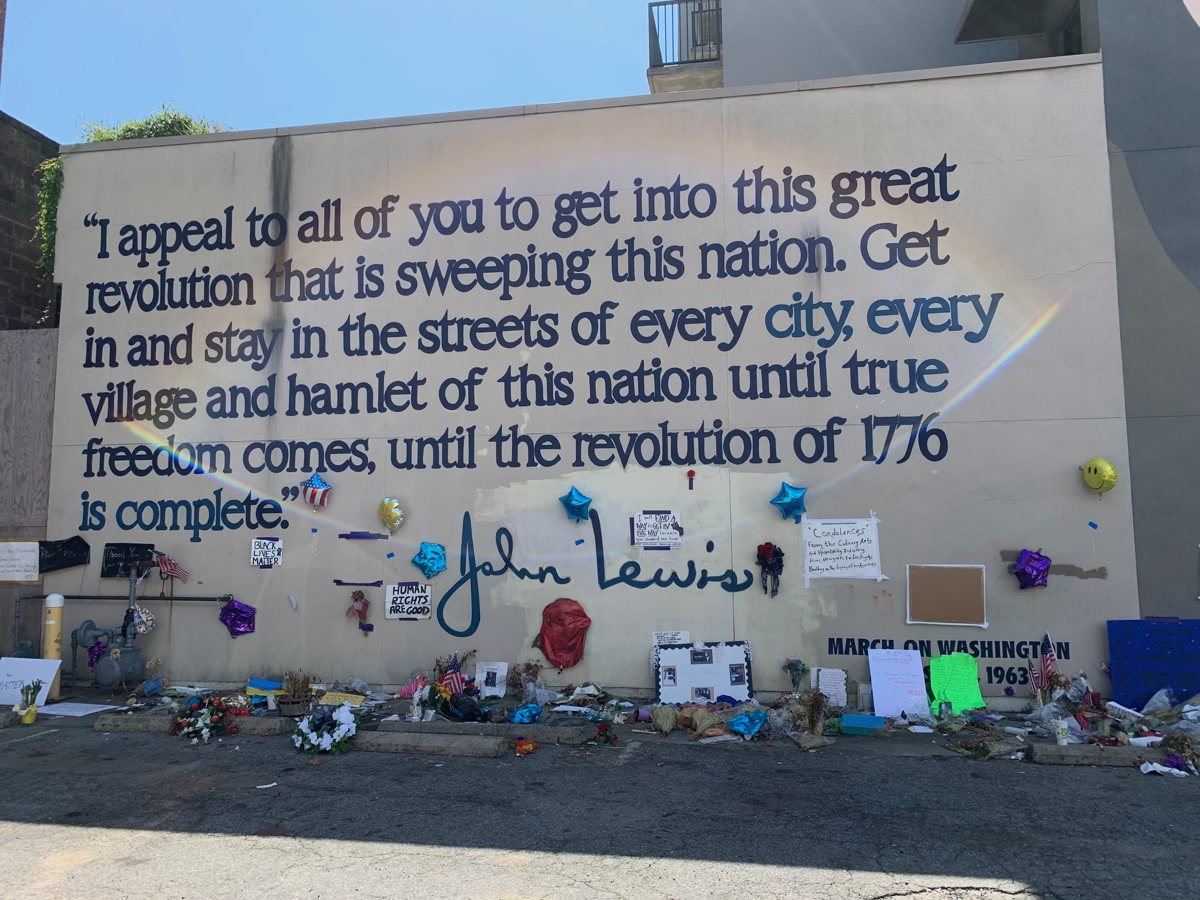
The national diffusion of “Bad South” logics underscores how southern forms of racial control have become generalized techniques of U.S. governance. When every state is framed as a border state, the South no longer functions solely as an exceptional space of oppression but as a testing ground whose documentary regimes are normalized into federal practice. Attending to record, document, and archive thus allows us to trace how embodied experience becomes evidence, how evidence hardens into law, and how law sedimentates into historical norms. In the here and now, these terms help us see the South not as a closed regional past but as an active site where struggles over memory, mobility, and belonging continue to shape the nation at large.
Notes
- OED, s.v. “record (v.).”
- See Zheng et al., “Neurons Detect Cognitive Boundaries”; Josselyn and Tonegawa, “Memory Engrams”; the brain stores the sensory-conceptual experience through structural changes to neurons in the hippocampus and cerebral cortex. Over time, memories in the hippocampus fade (short term memory), but those that develop within the cortex become what we know as “long term memory” (Josselyn and Tonegawa, “Memory Engrams”).
- OED, “document (v.).”
- See Mazama, “The Eurocentric Discourse on Writing” for more on the myth of written “objectivity” as technology of European colonization.
- OED, “document (v.).”
- OED, “document (n.).”
- Ramirez Solórzano, “Archiving a Latinx Movimiento in Movement.”
- Ramirez Solórzano.
- OED, “archive (n.), sense 3.”
- Considine, “Holland”; OED, “archive (n.), etymology.”
- Caison, Rountree, and Hinrichsen, Remediating Region.
- Caswell, Urgent Archives, 15.
- Passel and Krogstad, “What We Know about Unauthorized Immigrants.”
- Santamaría Graff explains, “Our politicians and media have criminalized and marginalized Mexican people since the 1800s [and have] vilified their diverse and rich heritage and undermined significant contributions Mexicans and those of Mexican heritage have made politically, economically, and socially. ‘Build That Wall!’ extends the mythology that we, the American people need to become gatekeepers in deciding—for our own protection—which Mexicans are identified, sorted, and sent back to the other side,” 1000.
- Sullivan, “What to Know About SB 4.”
- Matos, “A Legacy of Exclusion,” 88.
- Greeson, Our South, 1 [emphasis original]. Relatedly, Leigh Anne Duck conceives of regionalism “as a supplement to U.S. nationalism” (The Nation’s Region, 33); one that “mobilizes forms of affiliation that are simultaneously active and disavowed within U.S. nationalism” (31).
- Matos, “A Legacy of Exclusion,” 87.
- Matos, “A Legacy of Exclusion,” 88–89.
- Ehrkamp and Nagel, “Under the Radar,” 320.
- Snow, “Texas, Florida Push Border Laws”; Office of the Texas Governor, “Texas Transports.”
- Fineout, “Federal Judge Blocks Key Part.”
- Bojorquez, “Florida’s Immigration Law”; Grisales, “Sales Are Way Down.”
- Matos, “A Legacy of Exclusion,” 89.
- U.S. Department of Homeland Security, “Statement from a DHS Spokesperson.”
- Garsd, “The Prospect of Immigration,” NPR.
- Matos reports, “The Fugitive Slave Act of 1850 resonates even today as mobility among black and brown communities continues to be monitored or controlled not only by the excessive presence of local law enforcement in predominately black and brown neighborhoods but also by virtue of the disproportionate numbers of black and brown bodies behind bars” (90).
- Tara McPherson might argue through “lenticular logic.” See Reconstructing Dixie (2003), 26–28.
- Matos, “A Legacy of Exclusion,” 90; U.S. House Homeland Security Committee, “Every State.”
- Trump v. Barbara, No. 25-365, slip op. at 7 (U.S. June 30, 2026), www.supremecourt.gov/opinions/25pdf/25-365_4hdj.pdf.
Table of Contents
Record, Document, Archive: Constructing the South Out of Region
Introduction: Southern Elsewheres: Constructing the South Out of Region
Stephanie Rountree, Lisa Hinrichsen, and Gina Caison
I. (To) Record: Legibility and “Legitimacy” in Southern Histories
Lisa Hinrichsen
- Developing The Art of Resistance and the Alabama Death Row Archive
Katie Owens-Murphy and Kerrigan Casey - Hunting Deer in Paper Forests: Tracing Animal Lives in Southern Archives
Drew Swanson - Archival Ecosystems: The Okefenokee Swamp as Living Document
Layla Amar
II. (To) Document Within and Beyond the Narrative Frame
Gina Caison
- Archives of the Earth’s Body: Dark Zone Writing and Underworld Pilgrimage Across the Gulf Matrix
Dolores Flores-Silva and Keith Cartwright - Documenting the Impossible: The Jazz Stylistics of Madeline Anderson’s I Am Somebody (1970)
Elizabeth Rodriguez Fielder - Building an Archive of Lesbian-Feminist Oral Herstories and “Herstoirs”
Julie R. Enszer and Rose Norman - Documenting the U.S. South from the Archives of Northern Mills: Finding Stories in Nineteenth-Century Cotton Manufacturing Data
Bridget M. Marshall
III. (To) Archive and the Access Dilemma
Stephanie Rountree
- Hungry River Collective: Commemorating Goldsboro State Hospital Residents Through Black Feminism, Ethics of Care, and Community-Driven Principles
Brianna McGruder, Chaitra Powell, and Hannah L. Jacobs - An Archive of Migrant Refusal: The 2010 Trail of Dreams
Rafael Ramirez Solórzano - Recovery Without Reification: Curating This Beautiful Sisterhood of Books
Katherine Adams and Jacquelyne Thoni Howard - Archives and Activism: The Case of Wilmington, North Carolina
Qurat Khan, Sarah Gaby, and Allison Harris