

1Introduction / “Something to Say”
During the 1995 Source Awards, held on August 3 at the Paramount Theater in New York City, André 3000 (André Benjamin) and Big Boi (Antwan Patton), the two artists constituting the Atlanta rap duo OutKast, sat unnoticed in the audience, perplexed by their invisibility. Based on the popularity of their debut album, Southernplayalisticadillacmuzik, the performers representing the city once characterized as “too busy to hate” had snagged not only a “Big Apple” invite, but also a “New Artist of the Year” nomination. Nevertheless, few there paid any attention to the southern rappers. While most of those in attendance formed a divide, it was a division based on a fierce conflict between East Coast and West Coast factions battling for commercial and musical supremacy, not on archaic clashes tied to the Mason-Dixon Line. Still, geographical tensions from a southerly direction hung heavily in the air. When the award presenters coolly announced OutKast as the best new artist, the partisan crowd angrily showed its displeasure: The auditorium broke out in thunderous boos. Previously overlooked, the seated Big Boi and André 3000 rose and headed toward the stage. They knew their music mattered, that it spoke to real-life issues that affected their communities. The two also realized that their drawls and adherence to southern musical and cultural traditions stamped them as unwanted interlopers, lowly regarded outsiders forgetting their place. Standing at the podium and feeling that their music and home were being disrespected, André 3000 addressed the thousands of dismissive spectators and the skeptical world beyond, famously declaring, “I’m tired of folks . . . closed-minded folks. . . . The South got something to say.”1
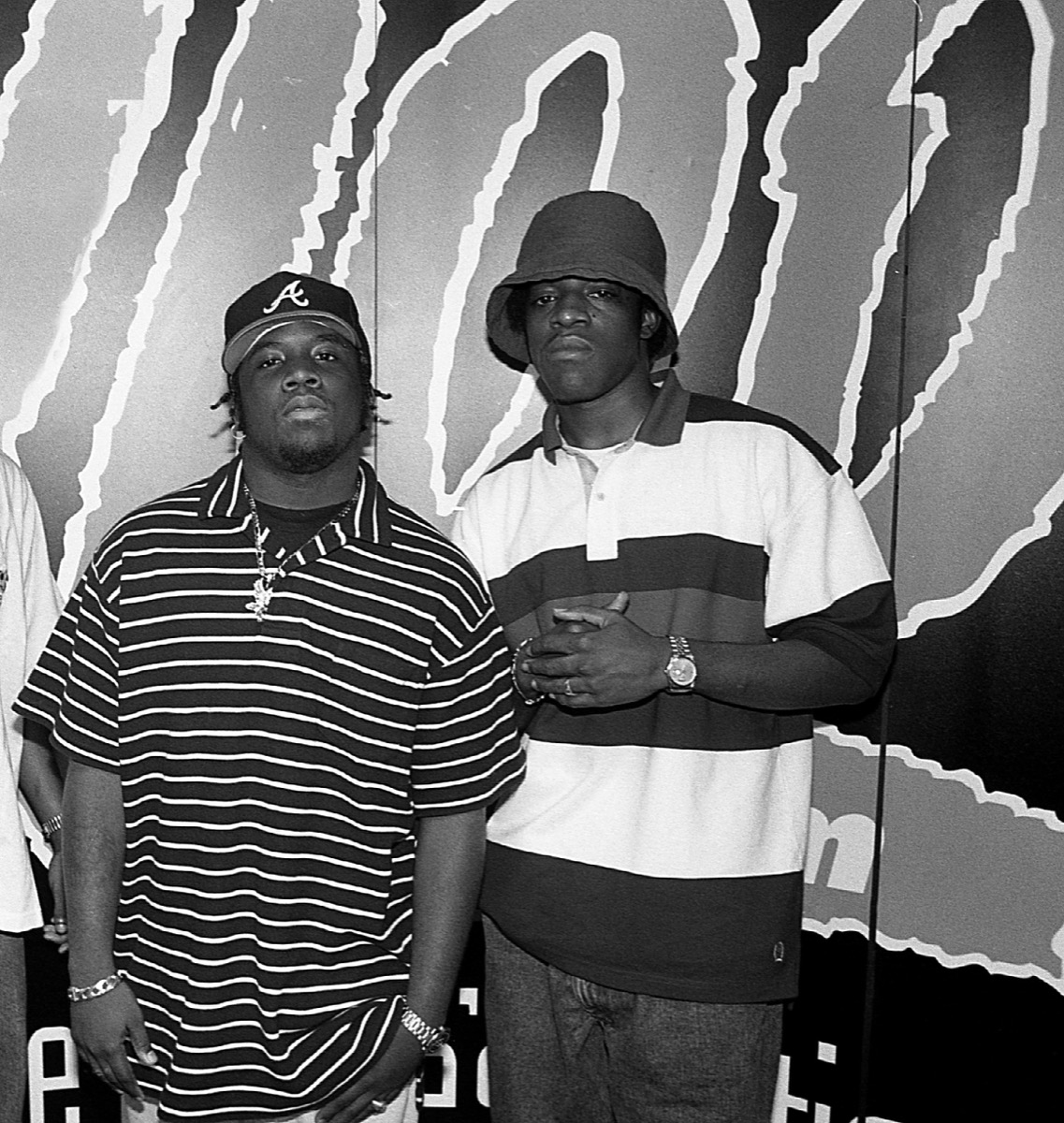
It was an iconic moment that helped put southern hip-hop on the rap map. But the declaration also amplified something larger, a sentiment that went back decades and generations, recalling a regional adherence to various genres and styles of music. Specifically, it spoke to how the South’s working-class Black and white inhabitants, marginalized historical actors rarely accorded an active voice, regularly found expression in commercial music. It likewise served as a reminder that many have not always appreciated or listened closely to what the region’s performers and consumers have expressed. This admonition seems particularly applicable to historians of the American South, academic gatekeepers who routinely adhere to their discipline’s time-tested reading of bygone eras, a protocol that rarely privileges popular music. What follows is a discussion as to why they may not venture from the familiar path and grant OutKast and its musical ancestors and heirs, along with the countless listeners attached to them, entry into this gated community. The intent is to allay apprehensions regarding the incorporation of popular music into the region’s larger historical narrative and recognize its inclusion as necessary for comprehending the southern past. Because yes, the South and its music often have had something very important to say.
Nearly half a century prior to the emergence of OutKast, for instance, the South had let out a yell, a popular music explosion that challenged the region’s racial status quo. Conservative natives fully invested in the culture of segregation responded angrily, intent on strangling the eruption in its cradle. Our appeal begins with this story. It is a compelling episode relatively unknown to the larger public. It has drawn some scholarly interest, but the incident and its implications have never found their way into the overarching chronicle of what Allen Tate once called “Uncle Sam’s Other Province.” The blast and the recoil it provoked nevertheless signified that music mattered to communities comprised of performers and consumers who produced and utilized it and critics who engaged in its assailment and demonization. The actions of these proponents and opponents suggested strongly that popular music was consequential. Their exclusion from the grand picture, however, echoes the philosophical query about the tree that falls in an abandoned forest. If unexamined by historians, do popular music and its associated effects make a sound?; i.e., do historians view popular music as an engine that drives history? Judging by larger historical narratives, the answer is no, and the silence is deafening. As a result, popular music and any greater significance it may possess are forced to retreat into the deeper woods of popular memory, taking with them a missed opportunity to explore “how ordinary people exact agency within economic, political, and ideological constraints.” To such “ordinary people,” the disconnect likely is baffling. Falling trees and popular music, like the working class, always make a sound.2
2Making a Sound
One evening in early April 1956, approximately 150 anxious individuals affiliated with a local and rough-hewn White Citizens’ Council chapter met at a north Alabama gas station. The gathering and anxiety centered on rhythm and blues and rock ’n’ roll, two genres steeped in African American music and culture that as of late were becoming popular among a larger and more diverse audience. Specifically, the filling station congregants were concerned that the music and its assorted vehicles, particularly Black radio programming, were adversely affecting the conventional racial perspectives of the area’s white teenagers. Asa Carter, the leader of the group, explained why this change in musical tastes so upset defenders of jane and jim crow, maintaining that when “young white girls and boys are induced to think as negroes, act as negroes, enjoy with negroes their negroid expressions of baseness and immorality, then they will be easily integrated with the negro.”3
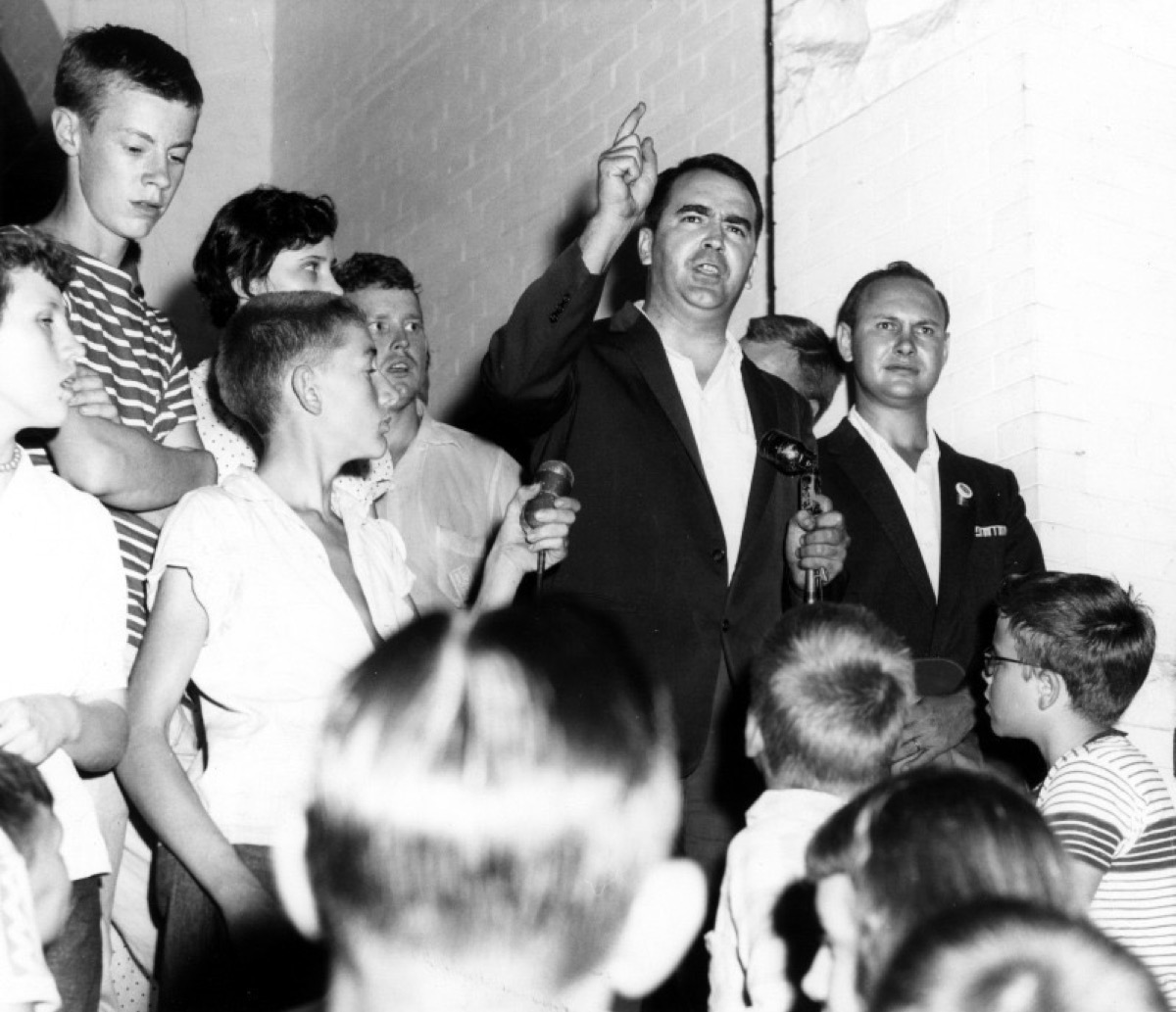
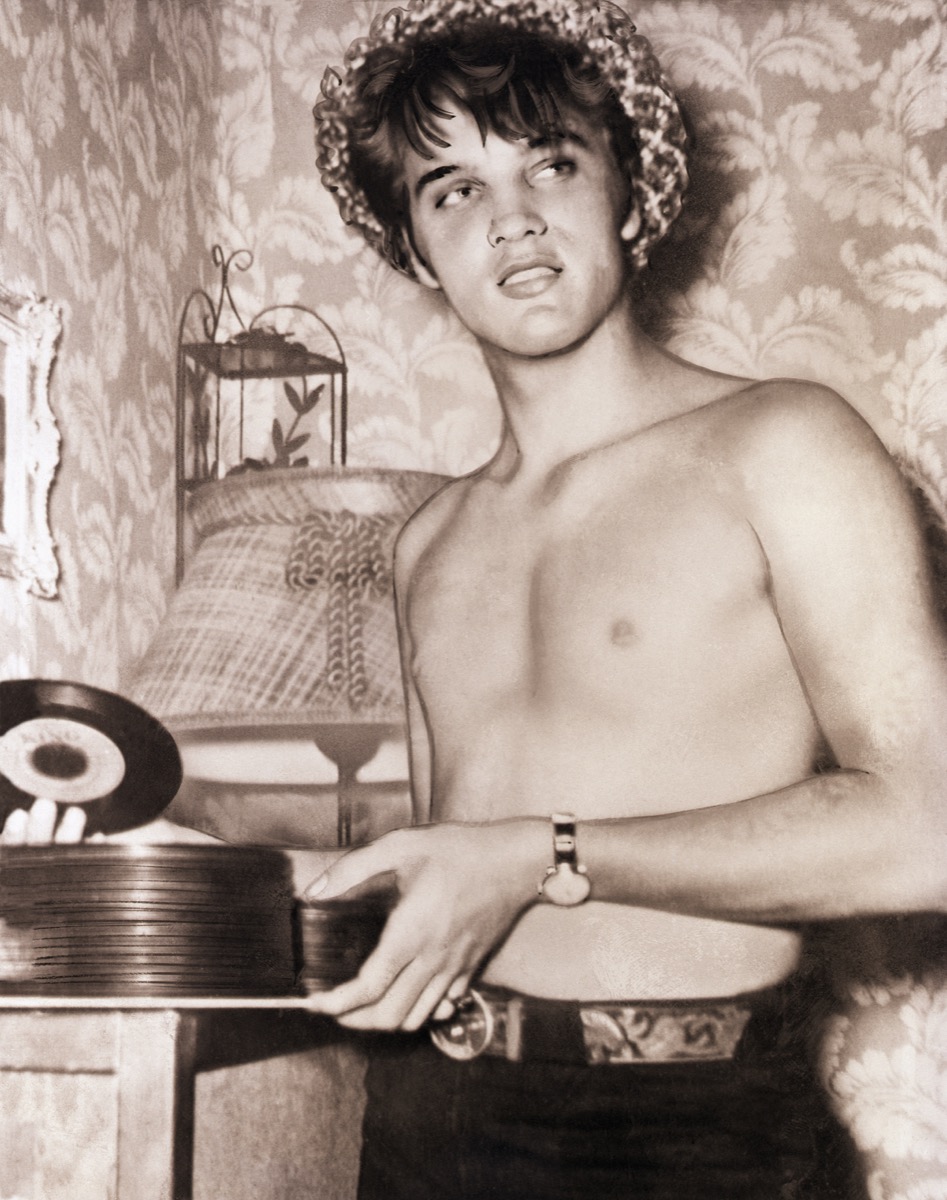
Indeed, the group would film a public service announcement in front of the service station (including a signboard that declared, “We serve WHITE customers Only!”), explaining that it had assigned a twenty-man committee to persuade local establishments to cleanse their jukeboxes of rock ’n’ roll. Significantly, the task force specifically targeted the phonograph recordings of Elvis Presley, a young and impressionable working-class, white, southern Black radio enthusiast and rhythm and blues consumer-turned-performer who exemplified the White Citizens’ Council’s worst fears. As Elvis’s transgressive example demonstrated, the paranoia that segregationists like Carter enunciated was neither groundless nor inconsequential. Historian C. Vann Woodward suggested at the time that the emergence of racially ambivalent white adolescents represented one of the “significant counter-trends within the South today,” a “cleavage between generations” that was one of the most important of the region’s many post–World War II transformations.4
Carter and his confederates apparently had reached the same conclusion. And they intended to prevent the countertrend from running its course. It posed too disconcerting of a divide, a generational rupture too transformative in its implications. Already, the North Alabama Citizens’ Council (NACC) had called for, albeit to no avail, boycotts of the radio stations, record stores, and juke box operators that spread the invasive virus infecting the thoughts and attitudes of inexplicably under-immunized white youngsters. To their dismay, music-seeking kids with eighty-nine cents jingling in their pockets and the patter of disc jockeys playing in their heads were making choices that defied their history and heritage. Those at the gas station agreed that they needed to make a stronger statement, an act that would ignite their dormant movement and bring attention to the contagion. Some recalled how two months prior many of them had helped a mob overrun the University of Alabama’s main campus, their violent demonstrations generating intense media coverage while ultimately leading to the suspension of graduate student Autherine Lucy, the school’s first-ever African American enrollee. Noting that an integrated Record Star Parade of 1956 was scheduled to appear at the Birmingham Municipal Auditorium in a matter of days, the group envisioned another “Lucy” moment. Participants even suggested they bring rotten eggs to the concert; deploying such missiles was a tactic that earlier had successfully created chaos in Tuscaloosa.5
Not insignificantly, the concert was to occur two months to the day after a statewide White Citizens’ Council rally that had taken place in Montgomery. On February 10, four days after the UA campus riots, one of the largest political gatherings in Alabama history ensued when more than twelve thousand Citizens’ Council members assembled at the state capital’s Garrett Coliseum. As they entered the hall, attendants handed them a leaflet that set the tone for the evening. It began ominously, defiling the words of the country’s founding document: “When in the course of human events it becomes necessary to abolish the Negro race, proper methods should be used. Among these are guns, bows and arrows, sling shots and knives.” The mimeographed circular continued: “We hold these truths to be self-evident that all whites are created equal with certain rights; among these are life, liberty and the pursuit of dead n-----s.” The flyers helped prime the convocation’s “delegates” to hear speakers such as Georgia attorney general Eugene Cook, Alabama Association of Citizens’ Councils executive secretary and the “Heart of Dixie’s” own state senator Sam Engelhardt, and Mississippi US senator James O. Eastland rail against the US Supreme Court and the National Association for the Advancement of Colored People (NAACP). Eastland gave the keynote: “I am sure you are not going to permit the NAACP to control your state,” he shouted, “and you are not going to permit that organization to use your children as pawns in a game of racial politics!” The senator, a prominent Delta planter, concluded his speech and the meeting by raising higher the temperature of what had become a mob: “The Anglo-Saxon people have held steadfast to the belief that resistance to tyranny is obedience to God!”6
Members of the NACC returned home with Eastland’s words ringing in their ears. Following their success in ousting Lucy, the senator’s fiery rhetoric only fortified the resolve of segregationist diehards. It compelled adherents to search for and destroy all threats to segregation. Accordingly, the group saw African American–inspired popular music as cut from the same cloth as public school desegregation. Had not the NAACP’s Walter White bragged that rock ’n’ roll represented “a great race leveler . . . a tremendous instrument for bringing about a common ground for the integration of the white and colored youth”? Like Supreme Court decisions brought on by attorneys from the reviled interracial organization, did not popular music choices threaten to undermine segregation? Recent music polls and trends certainly indicated as such. The connection, therefore, was clear, at least to die-hard segregationists: The NAACP and its mainstreaming allies were targeting the South’s children, both inside and outside of the classroom. If Dixie’s guardians were to execute Eastland’s charge and prevent the region’s youngsters from becoming “pawns in a game of racial politics,” they had no choice but to silence the music, a necessity Carter reiterated to besieged traditionalists feeling overwhelmed. “Turn on your radio and listen to the rock and roll death song of America and the white race,” he groused, reminding them that public school desegregation activists and popular music purveyors were leading a two-pronged offensive against their southern way of life. While both onslaughts explicitly challenged jane and jim crow’s authority, only one had infiltrated the family home, the citadel of regional whiteness. As Carter and his co-conspirators understood, subversive disc jockeys and performers were weakening “massive resistance” from within: “They are as dangerous as the worst of the civil rights agitators.”7
On April 10, inside the Birmingham Municipal Auditorium, more than one hundred members of the NACC attending the Record Star Parade of 1956 seemed prepared to do what safely sheltered demagogues like Eastland would only incite others to undertake: engage on the ground the “enemy.” Their reward, the Delta plantation owner had promised the region’s otherwise throwed-away white proletariat, would be to ride in honor under the banner of white supremacy alongside Robert E. Lee, Stonewall Jackson, and Nathan Bedford Forrest into the South’s unrelenting recollection of a past that was never past. Rousing the ghost of Confederate vice president Alexander Stephens, Eastland urged his still-fighting-the–Civil War flock to press on, binding the essence of the former’s 1861 “Cornerstone” speech with that of his own: “Generations of Southerners yet unborn will cherish our memory because they will realize that the fight we now wage will have preserved for them their untainted racial heritage, their culture, and the institutions of the Anglo-Saxon race.”8
At approximately 8:45 p.m., as thirty-five hundred white audience members listened to headliner and renowned African American ballad singer Nat “King” Cole deliver the first words of his set’s second song, the “Lost Cause” commenced its second coming: The command to “Let’s go grab that coon” pierced the air from the auditorium’s shadows. Five “soldiers” rose out of the dark to do their duty. On their way to the stage, they noticed despairingly that their ranks were not swelling. Expected reinforcements remained seated, joined by an original on-rusher who fell back after seeing no comrades-in-arms either to his left or his right. There would be no egg barrage. The four remaining zealous guerrillas reached their target without benefit of cover fire. Undeterred, they attacked Cole, knocking him unconscious. For several minutes pandemonium reigned. Onlookers watched from their seats as police confronted the assailants. Eventually, the four were apprehended and arrested and order was restored, spectators booing the handcuffed men as police hauled them away. Revived, Cole retrieved his fallen microphone, and through hurt feelings explained to the crowd that he was a returning Alabamian who had only wanted to entertain them and that now he was in such physical pain that he would have to cancel the remainder of his performance. Audience members honored the crestfallen entertainer, applauding and yelling their apologies and encouragement. Commendably, none had joined in the assault; neither, however, had these bystanders risen to prevent it or come to the singer’s defense when they saw him being battered.9
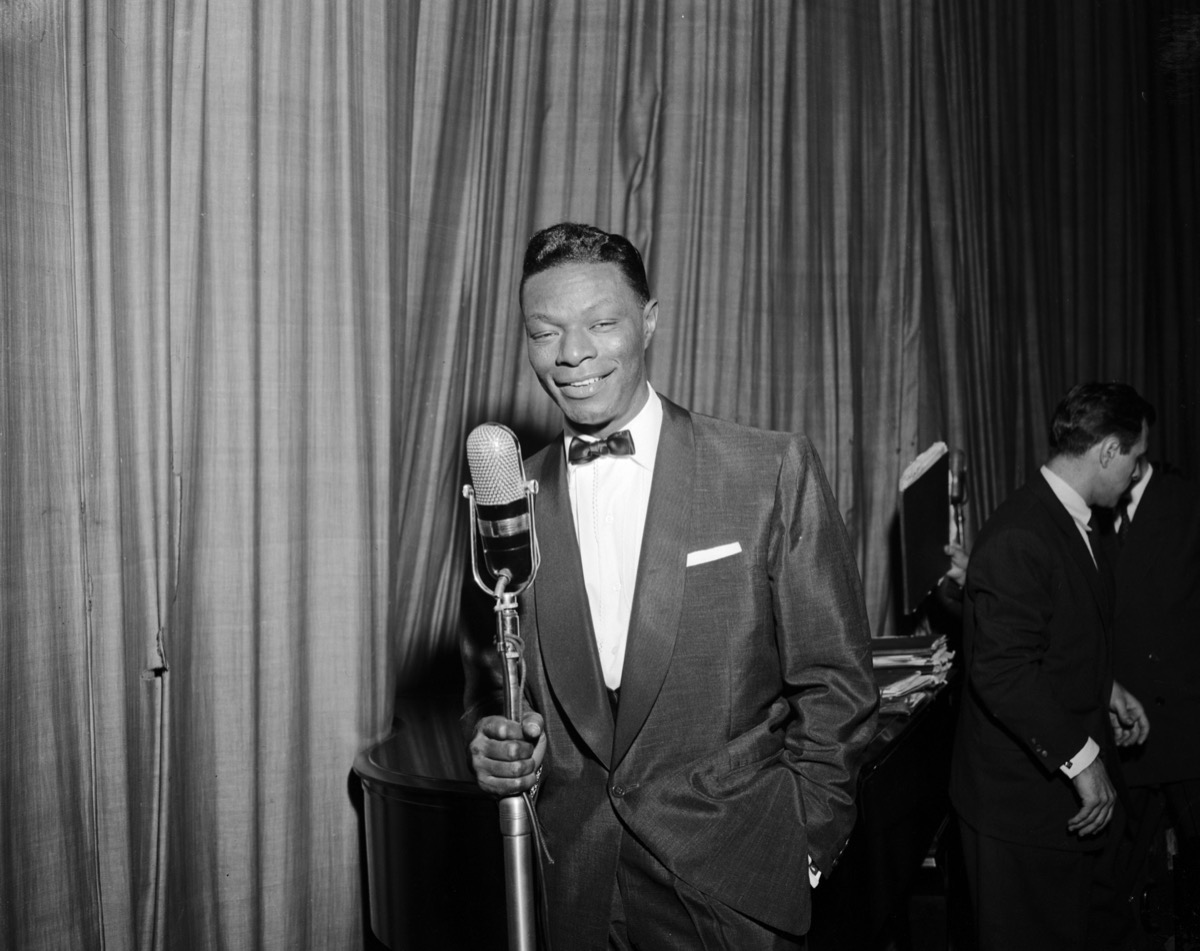
As crusading liberal and New York Post editor James Wechsler hinted at the time of the Cole attack, the incident appeared made to order for future historians grappling with the changing American South’s encounter with the modern civil rights movement. There were, of course, the familiar stock characters and storylines that reflected habit and custom: Prominent and pompous windbags (politicians) hogging the spotlight and abusing the bully pulpit while equally recognizable “peckerwoods” (powerless, despised, and easily revved-up whites from the margins) did the dirty work slyly suggested by their “betters.” A curious turn against type involved the enigmatic behavior of the auditorium’s majority, “hundreds of decent human beings who watched in passive horror” as the ruffians fulfilled their assigned task (and role) and attacked yet another defenseless Black man. In a region long accustomed to entire communities participating in public lynchings, the audience’s inaction or abstention initially may have surprised; eventually, however, its failure to rescue Cole from his assailants hit a moral chord that resonated the loudest.10
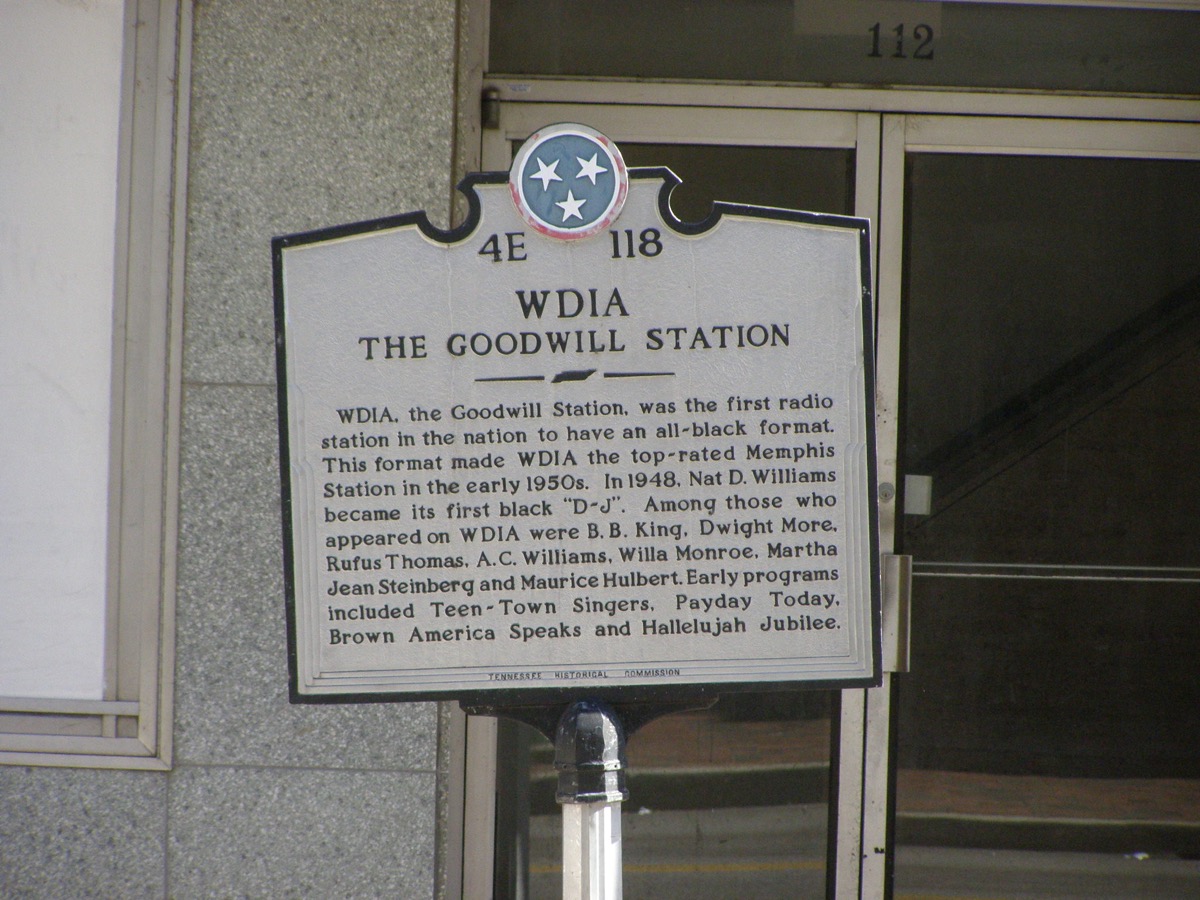
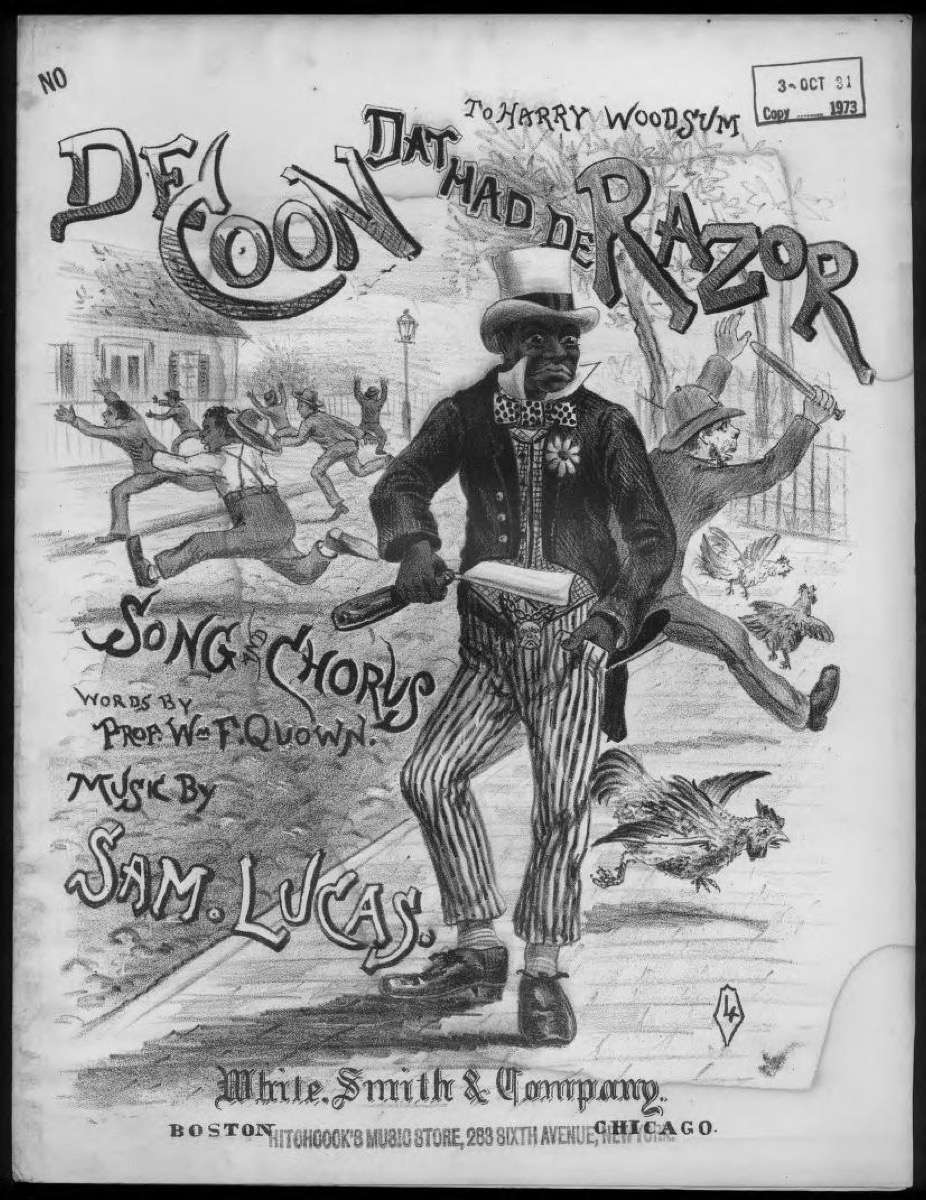
And then there was popular music, the issue arguably at the center of the storm, although much of its historical significance may have escaped widespread contemporary detection. For when one of the assailants shouted, “Let’s go grab that coon,” he was using a racial epithet whose origins harkened to the late nineteenth century “coon song craze.” Indeed, the offensive word’s lineage can be traced directly to the genre of songs that bore its name. The contemptuous term entered everyday vernacular just as the disturbing popular music phenomenon gained consumer traction. Significantly, “coon songs” (along with the anti-Black tag “coon”) emerged simultaneously alongside segregated facilities and spaces and the unprecedented escalation of racial violence, with hit songs like “All Coons Look Alike to Me” providing the rationale, imagery, and vocabulary necessary for African American dehumanization. More than fifty years later, the durable racist slur remained commonplace and potent, its meaning understood by all who heard it shouted in a crowded Birmingham auditorium. Yet the incident also brought attention to the aspersion’s sudden mutability and potentially precarious future. After all, the cried-out command represented a desperate attempt to crush a seemingly irrepressible cultural insurgency initiated by newly instituted Black radio programming and its emphasis on racial dignity, respect, and affirmation. Its progeny, rhythm and blues and rock ’n’ roll, likewise played a large role in countering the jane and jim crow imagery so vital to a segregated society (and earlier radio curricula). To the dismay and consternation of segregationists, the revolt embodied “significant counter-trends” that raised doubts about time-worn racist stereotypes, attitudes, and behaviors. Was it possible that popular music had helped open a door that could never again be completely closed?11
This is the central question raised by the Cole attack and the events surrounding it. It is a query based on the premise that popular music contributes to our understanding of the world around us. Overtly or seemingly unobtrusively, it can help shape or change public opinions and perceptions. Indeed, while there still may be much to unpack, the event’s general parameters accentuated the issue of change that ordinarily drives historical scholarship. Students of the southern past, however, would be hard pressed to find the Cole incident and its “coon song craze” accessory mentioned in general histories of the region. In fact, any inclusion of popular music as a fully integrated feature of the conventional southern historical saga is difficult to locate. It is almost as if it never made a sound.
3A Deafening Silence
To acknowledge the absence of music within the field of southern history proper is not to say that the entire scholarly cupboard on the subject is bare. Not hardly. There is no shortage of people writing seriously about southern music’s past. Many, like Eileen Southern, David Whisnant, Gilbert Chase, and Mark Anthony Neal, for instance, have written outstanding musical chronicles. They and others, however, have done so housed in departments that do not claim Herodotus as a founder. Indeed, representatives from academic disciplines such as Africana studies, American studies, cultural anthropology, English, ethnomusicology, folklore, religious studies, and sociology, along with journalists and record collectors-turned-writers have contributed to an excellent and ongoing narrative that highlights southern music as a historical topic. (While this article has focused for its own purposes on genres affiliated with the descendants of West African and British natives, numerous ethnic pockets that exist across the region—Cajun, Czech, German, Latino/a, and Polish, for instance—have added to the southern medley). The question remains, however. Why has popular music traditionally occupied no more than a peripheral place in southern historiography?12
Those who write southern history, of course, are not unaware of the South’s musical legacies. As Dewey Grantham once wrote, so too have other historians believed: Music was one of the region’s “great natural resources and one of its most valuable exports.” Consequently, there has been a plethora of outstanding historical and biographical monographs on the subject, far too many to list here. Historians such as Bill Malone, Lawrence Levine, Angela Davis, Robin D.G. Kelley, Grace Elizabeth Hale, Brian Ward, and Patrick Huber, for instance, represent only the tip of the proverbial iceberg of those from the discipline who have spent at least part of their careers addressing music. Still, it certainly can be argued that such numbers are relatively small, given the general view that music has been vital to the region’s identity. This outcome is particularly surprising when one considers that the putative, albeit fallen, founder of southern history, Ulrich B. Phillips, wrote somewhat extensively on the subject, even arguably concocting a racist “central theme” to combat forces unleashed by the Jazz Age. At issue here, however, is whether the musical points of reference by Phillips and the others listed and inferred above have been fully integrated into the province’s “official” historical record. Conventional accounts that govern our understanding of the South usually set apart or compartmentalize discussions of music, giving the impression that the issue is nothing more than a trivial appendage. Music exists, but cast as an immaterial outlier; it appears primarily as a matter that does not really matter, a peripheral idiosyncrasy. Such chronicles have failed to include or interrogate its societal implications. What is missing is the seamless weaving of “music history” into the multi-stranded fabric comprising the larger southern story.13
Incorporating popular music into the structure of southern history has always seemed challenging. A well-known mid-1960s Festschrift surveying the published literature chronicling the region’s past put it bluntly: “Historical writing about southern music, aside from some worthwhile volumes on jazz and spirituals, is surprisingly desultory in view of the region’s generally satisfactory performance in this particular art form.” A quarter of a century later, a second historiographical collection included only one passing reference to music in its fourteen essays spread over 548 pages. The next decade produced a similar artifact, in this case, a narrative. The last volume in the prestigious “A History of the South” series, The New South 1945–1980: The Story of the South’s Modernization, published in 1995, suggested that “southern folk music [had] captured the transformation of southern society,” yet in discussing the capturing, devoted barely two pages (out of five hundred) to five genres and their affiliated performers. In 2015, Oxford University Press, for classroom purposes, marketed “a new narrative about the American South” that lumped together in the last few pages of a chapter on the 1950s all commercial music that had emanated from the region in the century’s first sixty years or so. A brief nod to nineteenth-century African American spirituals had occurred earlier in the textbook, while the concluding chapter on the southernization of America included two pages on late musical developments that directly followed a discussion of NASCAR. It was an appropriate placement, signifying the similarities between the lack of progress made by music as a historical topic and a sport whose participants drive a car for miles yet ultimately get nowhere. The work’s expressive-culture-as-apolitical approach resembled that of a 1999 Prentice-Hall textbook that had allocated seven pages to the entirety of the region’s musical history in a “Cultural Riches in the Midst of Poverty” chapter devoted primarily to southern literature. A third historiographical anthology, published in 2020, dedicated no chapters to music, and in over six hundred pages mentioned music a mere five times. The references, if combined, would comprise, perhaps, one solid paragraph. Adding insult to injury, music does not even rate as a “problem,” at least according to the popular classroom tool, Major Problems in the History of the American South. While there are several categories listed in its many editions (broken down as chapters that include primary sources and pertinent essays), music is not one of them. Tellingly, the authors of an authoritative comprehensive chronicle of the region advised in a bibliographical essay (although curiously making no mention of songs, songwriters, performers, or audiences within 781 pages of main text) that historians should pay more attention to the music of the South, “one of its greatest contributions to American and world culture.”14
The Journal of Southern History arguably serves the discipline as a bellwether that for nearly a century has produced, in its own words, “the best scholarship on the American South.” It is somewhat surprising, then, to discover that between 1990 and 2022, the quarterly periodical issued a total of four pieces that specifically addressed popular music. Put another way, over the course of thirty-two years and the publication of 510 articles, only .7 percent of them directly engaged a musical subject. Paradoxically, this was not due to lack of scholarly activity. In the same span the JSH published nearly 140 book reviews on monographs that dealt specifically with popular music topics. And once a year the journal has run a “Southern History in Periodicals” compilation, although music is not one of the various general categories listed specifically. Articles on all musical genres and performers are dropped unceremoniously into a generic “Social, Cultural, and Intellectual” section. While perhaps coincidental, it is telling that a 2023 collection of essays entitled A New History of the American South echoes the JSH’s detached approach. It has no specific chapter on music but does contain an essay on southern religion and southern culture that includes a brief reference to songs and performers. For those hoping to find narratives or interpretative collections that contain fully integrated assessments of popular music, such “new” histories do not appear very new at all.15
4Why Popular Music Goes Missing and Why It Matters
The question that automatically arises from this situation is “why?” Why has there been a relative disregard for music, “one of [the South’s] greatest contributions to American and world culture?” Why, for that matter, have historians habitually referred to music as a cultural resource rather than as a historical one? Or worse, why, as LeRoy Ashby has asked, have so many historians “ignored any reference to popular entertainment on the grounds that it was unimportant fluff, a distraction from the serious and significant?” Similarly, why is the historian’s study of popular music held hostage to charges of “sentimental neo-antiquarianism,” a disqualifying throwback that echoes Eugene and Elizabeth Fox-Genovese’s mid-1970s’ claims that “history, when it transcends chronicle, romance, and ideology . . . is primarily the story of who rides whom and how?” Indeed, why, as David Suisman has inquired as recently as late 2018, might one conclude that music “is still generally understood as peripheral to the ‘real’ work of historians, despite its far-reaching social, cultural, political, and economic power?”16
As such questions indicate, the discipline of history has an aversion to acknowledging popular music as one of the engines that drive the historical process. This is not to suggest that there exists some sort of conspiracy on the part of historians to blackball or exclude popular music as a serious subject. Many who teach and take history classes probably do not even think of popular music as part of the subject matter. General southern history textbooks, as noted above, have not helped in this regard. Nevertheless, this seems a strange omission; in a field relatively amenable to methodological innovation, the hesitancy to delve into popular music is a curious one. While there are several reasons for such hesitancy—including issues of taste, formal musical proficiency and familiarity with music and cultural studies theories or lack thereof, and the subject generally existing outside the historians’ sphere of interest or training—one concern is of particular interest, primarily because it is directly tied to the post–World War II evolution of rhythm and blues and rock ’n’ roll. This postwar development would serve as an obstacle to viewing popular music as a historical resource. It was a concern that would have long-term implications for southern history.17
In the immediate post–World War II era, mass culture debates arose to dominate discussions among both academics and highly visible public intellectuals. Such cultural guardians were anxious about media manipulation, haunted by the still-recent memory of Nazi-fabricated propaganda. Focused largely on the Fascist utilization of the “big lie”—the notion that if you repeat a massive untruth often enough it will become true in the minds of masses of alienated people disconnected from traditional modes of community—cultural guardians were convinced that a similar contrivance was behind the music industry’s exploitation of passive consumers. The contemporaneous rise of Joseph McCarthy and the second Red Scare in the “political realm” only confirmed the fears of contemporaries and future historians about the susceptibilities of a mass audience. This particularly was true regarding the era’s impressionable adolescents.18
Therefore, it is not surprising that the mass culture debates arose in an era of unprecedented national affluence, suburban isolation and anonymity, the market-driven invention of “teen culture,” and the rise and popularity of rock ’n’ roll. To cultural guardians inspired by influential emigrant German scholars of the Frankfurt School, the “culture industry,” a monolithic entity/concept conceived by Theodor Adorno and Max Horkheimer, apparently had foisted upon alienated and unsophisticated teenagers with spending money a monotonous and aesthetically worthless product and convinced them that it was vital to their existence. The rinse and repeat cycle of commercial music production capitalizing on formulaic familiarity corroborated the theory. In the estimation of cultural guardians steeped in high art traditions, the music’s “popularity” indeed was a “big lie.” The argument, and those making it, very much influenced future generations of scholars. As one prominent historian of the postwar United States later wrote, endorsing a mass culture approach to the latest installment of southern roots music, rock ’n’ roll produced nothing more than forgettable songs and disposable consumer culture “heroes.”19
The mass culture perspective, with its emphasis on manipulation, indiscriminate consumerism, and the crowd’s lack of innate sophistication, has been difficult to upend. Three quarters of a century removed from Joseph Goebbels and the Nazi propaganda machine, events surrounding social media, Donald Trump, and the MAGA falsehoods concerning the presidential election of 2020 only make the mass culture argument stronger and more persuasive. Generally, this argument tends to put the emphasis on top-down control of low-information voters. Again, how else could a reality–TV show–manufactured “successful businessman”/charlatanic huckster have gained influence over at least 74,000,000 people/voters? Lost in this equation is the active engagement or motivations of the individuals theoretically being manipulated. This is not to discount the emergent power of the media, social or otherwise, to spread misinformation, which is real and needs to be scrutinized. It is, however, a critique of the presumption that all receivers of mass-produced goods and information are passive pawns. According to the mass culture frame of reference, the proof is in the manipulation, not in any direct connection to the voter’s experiences or aspirations. As applied to popular music, the same framework frequently has held true. The proof is in the marketing, not in the hearts, minds, and lives of consumers. In this reading, the songs and entertainment heroes apparently are not the only “forgettable” and “disposable” entities in the mass culture model. So, too, are those who consume supposedly mediocre and throwaway products. This is the glitch in the mass culture design.20
It is a design that continues to generate misleading perceptions of popular music’s producer/consumer dynamic as a one-sided relationship that necessarily reproduces the hegemonic worldview of corporate power. Accordingly, consumers have no authentic “voice.” They may get to choose through their pocketbooks what represents them, but the choices available to them are determined by corporate entities in the business of mass production, distribution, and promotion. As a commercial product, therefore, popular music reflects business stratagems of efficiency, encroachment, and profit rather than the organic whims, fancies, and desires of “the people.”21
It is possible that this argument might persuade many historians that the real story behind popular music is that of producers and marketers rather than that of its creators and consumers. And if artists and audiences have so little to do with popular music, the impetus to recognize them as serious historical actors becomes less acute. Yet while it is important to scrutinize power relationships as they are governed from the top, it also should be remembered that the popular music industry does not create that which it manufactures and markets. Rather, it depends on the creative energies of working-class artists and audiences that reside under the radar; to revitalize a perpetually saturated market, the “producers” constantly search for new styles, genres, and performers. Novelties “discovered” generally originate in neighborhood communities and represent local interests, concerns, and tastes. When they gain wider attention or show the potential to do so, the larger industry notices and attempts to exploit its freshness. With their financial wherewithal and extensive media connections, major companies within the industry can disseminate music once relegated to underground markets to wider audiences and establish popular trends. To make it palatable to the largest number of record buyers, however, such companies often modify and mitigate their musical commodities. Yet in adapting to working-class sounds “from below,” the popular music industry is engaged in its own makeover and expansion; it constantly changes in response to both artists and audiences, two groups that are frequently interchangeable. It is a symbiotic process that undercuts notions denying the role of “the people” in making and shaping commercial music. Perhaps recording artist William L.C. “Big Bill” Broonzy put it best when asked about the authenticity of “folk music” as opposed to the synthetic character of pop: “I guess all songs is folk songs. I never heard no horse sing ’em.” Broonzy probably did not see many farm animals sitting in the glow of the jukebox relating their lives to the lyrics emanating from coin-operated music machines, either.22
The reasons that historians may not consider popular music as a subject in their scholarship are numerous and complex. Yet the marginalization of popular music (and its societal effects) within general histories of the South or related historiographical works suggests that such volumes are incomplete. As Broonzy reminds us, people comprise a large part of popular music’s process. And yet while historians do pay attention to “the people” inside the electoral arena, the interest does not seem as fervent within the concert hall. This is unfortunate. Eric Foner’s inclusive definition of “politics,” particularly focusing on how power is attained, evokes Abraham Lincoln’s dictum that “our government rests on public opinion. Whoever can change public opinion can change the government.” Accordingly, Foner emphasized that “the political” does not refer solely to ballot box activities, but more broadly to the harnessing of viewpoints or “shaping of opinion within the extended public sphere.” Raymond Williams earlier referred to this process as one constituting a “structure of feeling,” the development of a shared “emotional and cultural atmosphere that characterizes a particular time and place.” Toby Manning recently has employed the concept to his interpretation of popular music, arguing that popular music possesses a societal power, that in its production and reception it works to express “the mood of its era.” It is the mood of both creators and consumers and captures what is being felt as much as what is being thought. At the very least, therefore, popular music acts as a mirror to the society that embraces it; through repetition of listening and consumption, however, it may do even more.23
Consider again, for instance, the rise of racial segregation and violence in the jane/jim crow South and the simultaneous emergence of “coon songs” and sheet music with folio covers that depicted African American males as animal-like and threatening to the larger community. This is a poignant example of popular music reiterating and possibly shaping opinion within the extended public sphere and reflecting the mood of an era. Likewise, in recognizing the unprecedented post–World War II influence of Black personality disc jockeys and popularity of rhythm and blues with the region’s Black and white teens, one can visualize an embattled southern segregationist system betraying cracks in its facade of inevitability. As to a “structure of feeling,” such dynamics (in both eras) captured “the thump and thrum of history, how it feels to people living through it. [. . .] Political change is never only about political change; it is also driven by—and simultaneously drives—changes in popular culture, religion, economics, and many other ‘nonpolitical’ variables.”24
5“The Mudsill Theory”: Popular Music Edition
Southern history and southern music. The two are not mutually exclusive. Understanding one necessarily enhances comprehension of the other. Specifically, examining a society’s past musical activities grants insight into that society’s past.
Andrew Young certainly appreciated the relationship between music and the society that produces and consumes it, as evident in the advice he gave in 1965 to a group of volunteers preparing to launch a voter registration drive in the Deep South. As the civil rights activist instructed the more than twelve hundred Summer Community Organization and Political Education (SCOPE) Project workers, “It helps to be something of an anthropologist. [. . .] I do know that any sensible anthropologist who’s going to study a culture is going to pay very close attention to the music of that culture.” It is telling that Young did not mention historians as song-catchers. Interestingly, he had spoken years earlier to another group of youthful volunteers in the South Carolina Sea Islands. A PhD candidate in history, Charles Joyner, was one of those listening, recalling years later that Young “taught us one of the greatest freedom songs to come out of the movement, a song that lifted our spirits and called us to courage.” Joyner, a music enthusiast from an early age, already was convinced that music and culture were indispensable to his understanding of history, “at least to understand the kind of history I wanted to write about.” To do so meaningfully, however, meant going outside of his chosen discipline, to take the unusual step of obtaining a second doctorate in anthropology, a move Young certainly would have appreciated. As the future mayor of Atlanta told his Mississippi-bound audience, “So, some of your time needs to be spent listening to the records and the folk songs and the church songs of that area.” The young pastor concluded, explaining that it was music that “expresses much of what [marginalized people] can’t articulate in any other way.”25
Young’s (and Joyner’s) emphasis on music was not simply a nostalgic lark down memory lane or venture into “sentimental neo-antiquarianism.” It instead was a reminder that music could serve as a voice for the politically and economically disenfranchised. This was particularly relevant in chronicling and assessing the southern past. Almost from its beginnings, the American South has maintained a rigid hierarchical socio-economic-status system, placing power in the hands of a permanent oligarchy. It was a system whose elite considered the region’s masses to be providentially placed below them. Everyone accordingly understood their “place.” It was “a world defined by hierarchies,” historian Heather Cox Richardson has observed, “where most people—dull, uneducated, black, female, weak, or poor—needed the guidance of their betters.”26
Nowhere was this idea better expressed than through South Carolina planter James Henry Hammond’s mid-nineteenth-century “mudsill” theory, which stressed that every social system needed a permanent underclass upon which a class of “betters” rests and “leads progress, civilization, and refinement.” (An actual mudsill referred to a horizontal shelf-like support driven into the ground as a buttress for a finely assembled building such as a plantation home.) Although Hammond insisted that he was referring to Black slaves as the laboring class forming the perpetual base of southern society, he revealingly told northern congressmen that the “whole hireling class of manual laborers and ‘operatives,’ as you call them, are essentially slaves.” Abraham Lincoln saw through Hammond’s hair splitting and dissembling. As he warned, the South’s privileged viewed all workers as degraded and that the governing gentlemen “assume that whoever is once a hired laborer is fatally fixed in the condition for life, and thence again that his condition is as bad as or worse than that of a slave. This is the ‘mud-sill’ theory.” In short, it was a timeless rationale that obscured racial distinctions among the South’s laboring classes, unless, of course, it was materially expedient to do otherwise. It underwrote white supremacy, Black inferiority, and white impotence. All Blacks may have dwelled on the bottom, the thesis concluded, but not all whites resided at the top. Or even in the middle. A large portion comprised much of Hammond’s underclass. They, too, were mudsills. As Hammond proclaimed, “I repudiate, as ridiculously absurd, that much lauded but nowhere accredited dogma of Mr. Jefferson that ‘all men are born equal.”’27
The mudsill theory and its negation of the Declaration of Independence’s underlying premise did more than reflect the South’s hierarchical tendencies. It also revealed power, disclosing and subsidizing those who had it, and delegitimizing and disenfranchising those who did not. As Hammond’s contemporary, George Fitzhugh noted in 1857, the South’s system of governance was based on a small class of elite adult males (7%) who ran the government without consulting those (93%) below them. “In the county in which we live, there are eighteen thousand souls, and only twelve hundred voters. But we twelve hundred, the governors,” Fitzhugh stated, “never asked and never intend to ask the consent of the sixteen thousand eight hundred whom we govern.” Or, as the delegates at the 1901 Alabama State Constitutional Convention explained in stripping Blacks and poor whites of the franchise and ability to usurp or challenge a status quo that privileged the powerful (following an insurgent Populist Party that threatened to do just that), they sought to keep all governmental power in “the hands of the intelligent and virtuous.”28
Such a belief system traveled far beyond the Civil War and New South eras. In 1965, for instance, William Buckley, the founder of the conservative magazine National Review, alluded to it in response to questions about voter suppression in Mississippi. Buckley, the New York–born and Yale-educated son of a Texas oil man and New Orleans–raised mother steeped in regional racism, was debating writer James Baldwin in a British public forum. Baldwin had noted that it was tragic that white inhabitants of the American South had “surrendered to the notion” that a large portion of the population “was beneath them.” The “Godfather of American Conservatism” countered that African Americans, despite ample opportunity, had squandered their chance to achieve equality. Providing his listeners examples of “Black” depravity, the inveterate paternalist feigned exasperation, voicing the same refrain repeatedly, “What shall we do? What shall we do?” Finally, an audience member replied, “One thing you might do, Mr. Buckley, is let them vote in Mississippi.” The audience applauded enthusiastically. Buckley’s retort was telling: “I agree, I agree. I couldn’t agree with you more.” The gallery exploded in derisive laughter. “Except, lest I appear too ingratiating, which is hardly my objective here tonight,” he continued, “I think actually what is wrong in Mississippi, sir, is not that not enough Negroes are voting but that too many white people are voting.” Again, the assembly howled, certain that its formally attired guest was being facetious.29
Taken aback by the laughter, Buckley put his hands on his hips and surveyed the hall before elaborating upon his latest point in a haughty and unhurried speaking style associated with the well-educated and entitled. He had, of course, been serious. After all, he was not merely a genteel racist; his disdain for those who did not share his elite background and status went much deeper. He once had referred to the southern white working class, for instance, as “crude, coarse, vulgar, and highly objectionable.” These peculiarities were on his mind this night, evidently competing with those he attached to African Americans. Lecturing his hosts, he made it clear that he did not make distinctions between the majority of the South’s Black and white inhabitants. Intuitively harkening back to the antebellum era when only 25 percent of the region’s white families were slaves owners, Buckley deftly made an almost perfect inverse connection: “If I were myself a constituent of the community of Mississippi at this moment, what I would do is vote to lift the standards of the vote so as to disqualify 65 percent of the white people who are presently voting.”30
Buckley had flawlessly echoed Hammond and affirmed another of the South’s “cornerstones.” Indeed, the mudsill theory has provided one of southern history’s major themes, one that very much exists today as the region’s elite seek to keep “their” working-class constituents dependent and available as exploitable cheap labor. Note, for instance, the recent joint letter signed by six governors from Dixie excoriating unionization efforts by native workers, claiming that unions would “threaten the values we live by.” Presumably these are the same values that prevent conservative “right-to-work” state lawmakers from raising the minimum wage or expanding Medicaid coverage to include the poorest of its working citizens. It was an episode that reiterated the South’s historical reliance on maintaining low wages, low taxes, anti-union policies, a weak social safety net, and limited business regulation, all in the name of adhering to the slavery-era concocted mudsill theory. To corroborate, see, also, Kentucky native and long-time US Senate majority leader Mitch McConnell’s advice in a 2025 closed-door meeting with anxious Republicans bent on eliminating Medicaid so that tax cuts for the wealthy could be extended in the infamous “One Big Beautiful Bill.” The well-heeled senators were worried that their vote against the working class might cost them their political careers. McConnell, however, assured his colleagues that their anxieties were misplaced: “I know a lot of us are hearing from people back home about Medicaid. But they’ll get over it.” The dismissive mudsill mindset, it seems, is neither a relic nor theoretical abstraction.31
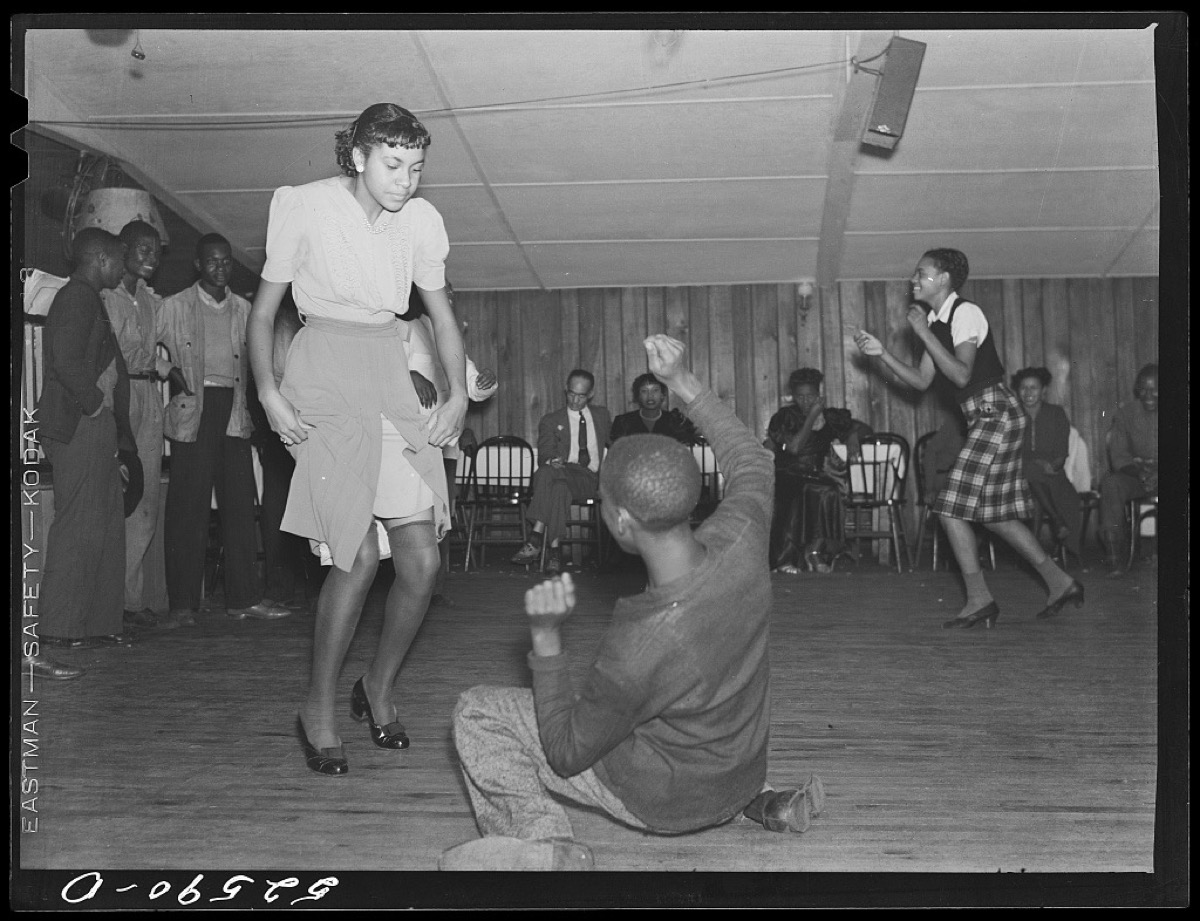
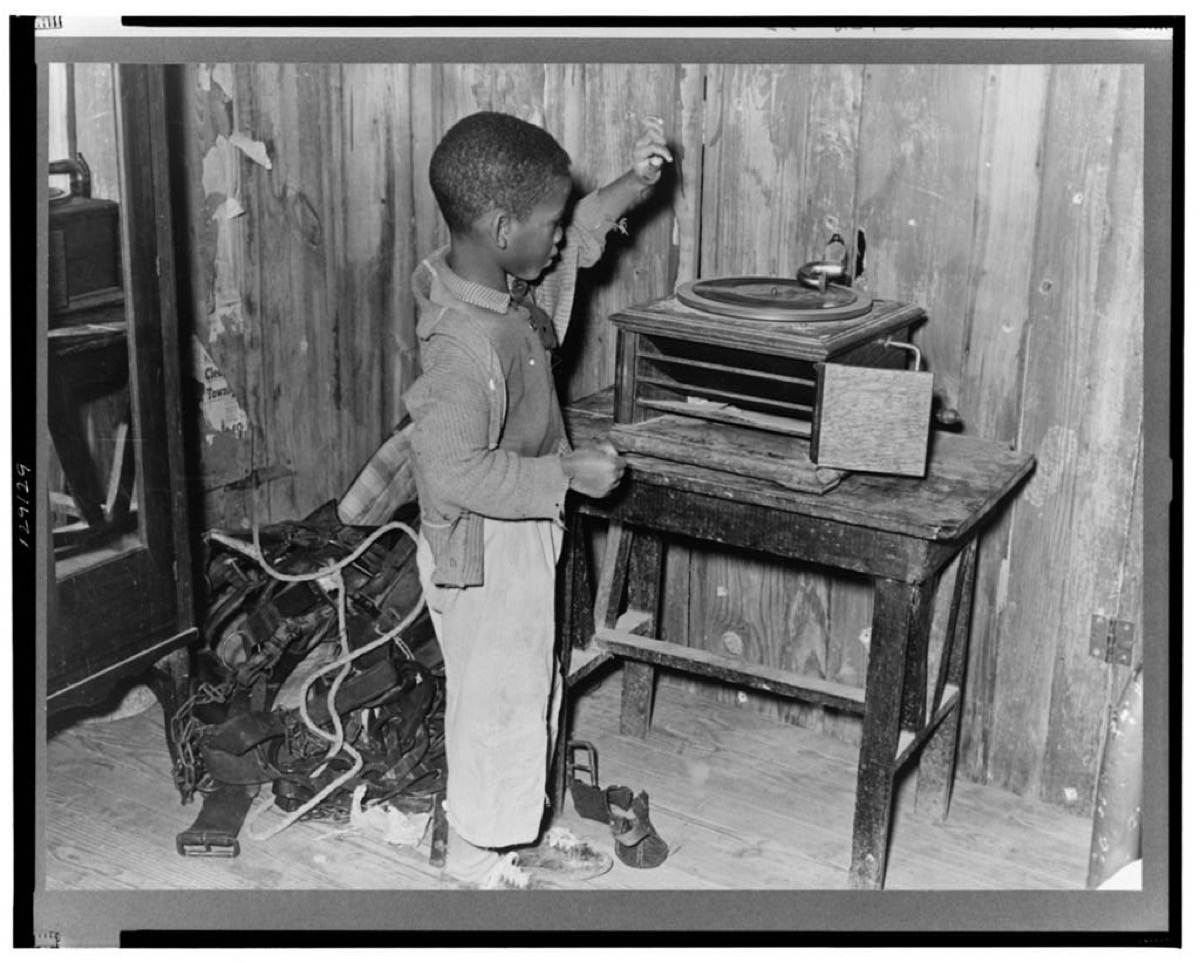
On the contrary, a very real mudsill theory has served as the primary engine driving southern music. As a form of expression generally not tied to wealth, status, or political prerogative, southern music served as a counter to the region’s embrace of hierarchy and oligarchy. At first glance, the connection might not seem obvious. Few readers would link together the Palmetto State’s James Henry Hammond with South Carolina–born soul singer James Brown or fellow southerner and blues singer Bessie Smith. And why should they? History texts generally do not include “political” operatives and “popular music” performers as part of the same historical narrative. Supposedly, they have not shared the same stage. One is a serious historical actor, the other a trivial distraction between acts. A closer look, however, suggests that they were historically joined in a more symbiotic relationship. The latter provided the necessary repudiation of the former. Popular music of the South, broadly defined to include homegrown working-class genres such as the blues, jazz, country, gospel, rhythm and blues, rock ’n’ roll, soul, and hip-hop represents one of the most important cultural tools that so-called “mudsills” have utilized to resist viewing themselves as the helpless and dependent “children” that southern elites have imagined (and wanted) them to be. Whether their songs focused on lost love, found love, or other seemingly apolitical aspects of their daily lives, the music did something very important. It afforded its creators and consumers a medium by which to express how they saw themselves; it confirmed that their lives did matter and that they were more than what their “betters” presumed. As actor, activist, and Georgia-native Ossie Davis once declared in a statement that applied equally to the region’s Black and white inhabitants and the popular music to which they were attached, “Art was at one time the only voice we had to declare our humanity.”32
Such artistic or musical transactions, however, were not always progressive or even humane; popular music was not a foolproof antidote to the viruses of hierarchy, oligarchy, and white supremacy that plagued southern society. Frequently their representations could be tribal. Too often the music could encourage insularity. While songs, performers, and genres did highlight and value the lives of their own audience members, they also could directly and indirectly devalue the experiences of others. Unfortunately, and perhaps not surprisingly, those who resisted their own marginalization often were susceptible to mythologies that demonized and disparaged their neighbors. Thus, despite the relatively short cultural distance that existed between similarly disempowered people, the doctrine of white supremacy worked to disavow the similarities that working-class Black and white southerners shared.33
Still, it was the societal tensions that such transmissions exposed that brought attention to the music. Indeed, it was popular music’s inherent potential to help close the gap between Black and white in the South that has captured the imagination. It was this promise that led the popular music trade paper Cash Box to suggest, in light of the growing popularity of Black radio, rhythm and blues, and rock ’n’ roll, that “the whole movement has broken down barriers which in the ordinary course of events might have taken untold amounts of time to do. How better to understand what is unknown to you than by an appreciation of the emotional experiences of other people? And how better are these emotions portrayed than by music?” This assessment was not unlike an earlier prediction by W. E. B. Du Bois, who declared in 1903 that the “greatest gift of the Negro people” was a musical essence whose “meaning is always clear: that sometime, somewhere, men will judge men by their souls and not by their skins.” Indeed, throughout the twentieth and twenty-first centuries, the “problem of the color line” would come under attack by popular music, battles that civil rights activist and publisher Louis E. Martin claimed had produced a “silent race revolution.”34
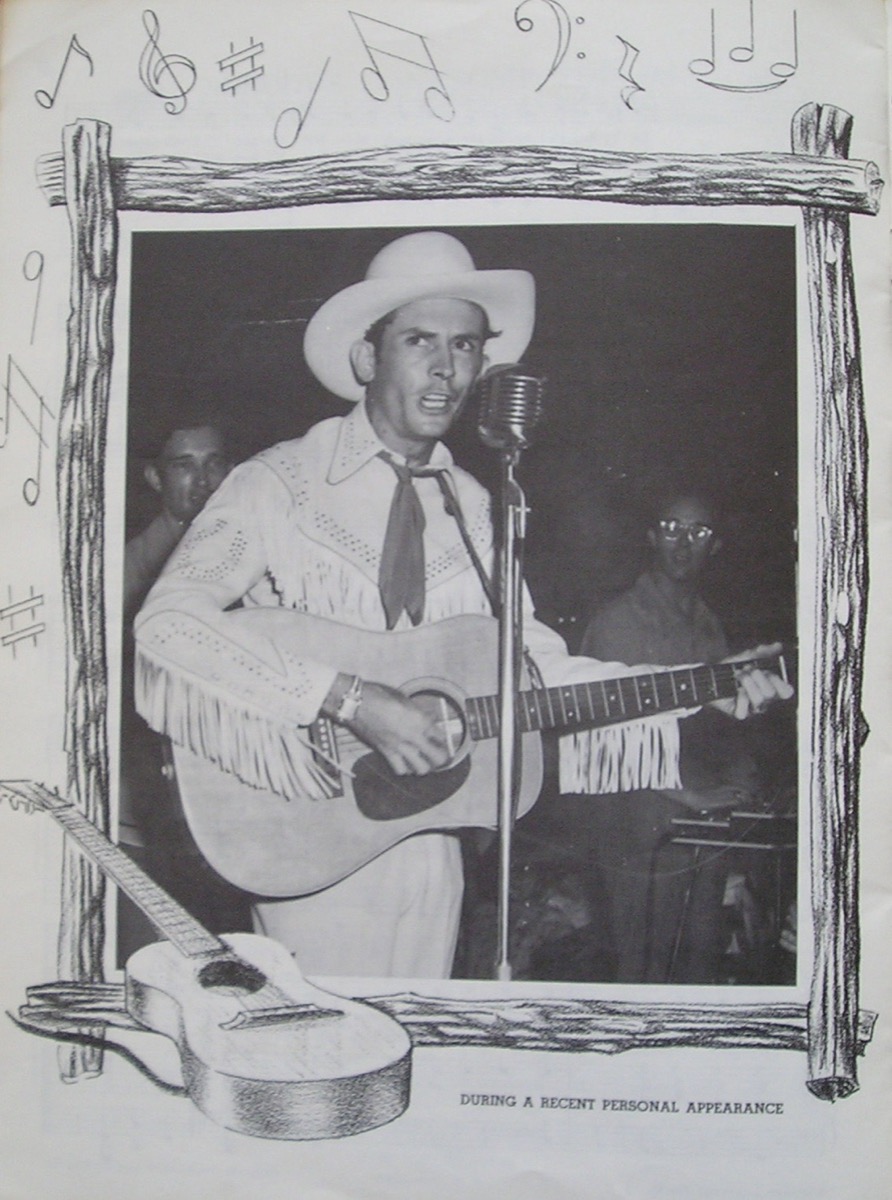
Such assessments and predictions take on greater relevance because of the short cultural distance that existed between Black and poor white inhabitants in the South. There were, of course, mutual characteristics that undoubtedly created racial anxieties within a racially segregated society. Yet there also were traditions shared that markedly separated the working classes from the region’s elite, a scenario that buoyed a “big house” perspective that looked down upon both African Americans and poor whites as not quite the most “intelligent or virtuous.” Yet, in spite of the odds and conditions set against both groups, they persevered, with music providing a major assist. Listen, for instance, to Alabamian Hank Williams, who in 1952 explained what made country singers like him successful:
He sings more sincere than most entertainers because the hillbilly was raised rougher than most entertainers. [. . .] For what he is singing is the hopes and prayers and dreams and experiences of what some call the “common people.” I call them the “best people” because they are the ones that the world is made up most of. [. . .] It’s just that there are more people who are like us than there are the educated, cultured kind.35
Cut to 2020. Atlanta rapper T.I. likewise described a southern experience that he held responsible for incubating his musical expression. He, too, focused on the “common people” who were “raised rougher” because they lived in less-than-ideal circumstances. As he maintained, “Artists create art that is a reflection of their environment. If you don’t like what rappers talk about, you should come see our humble beginnings. You should see what we made it out of.”36
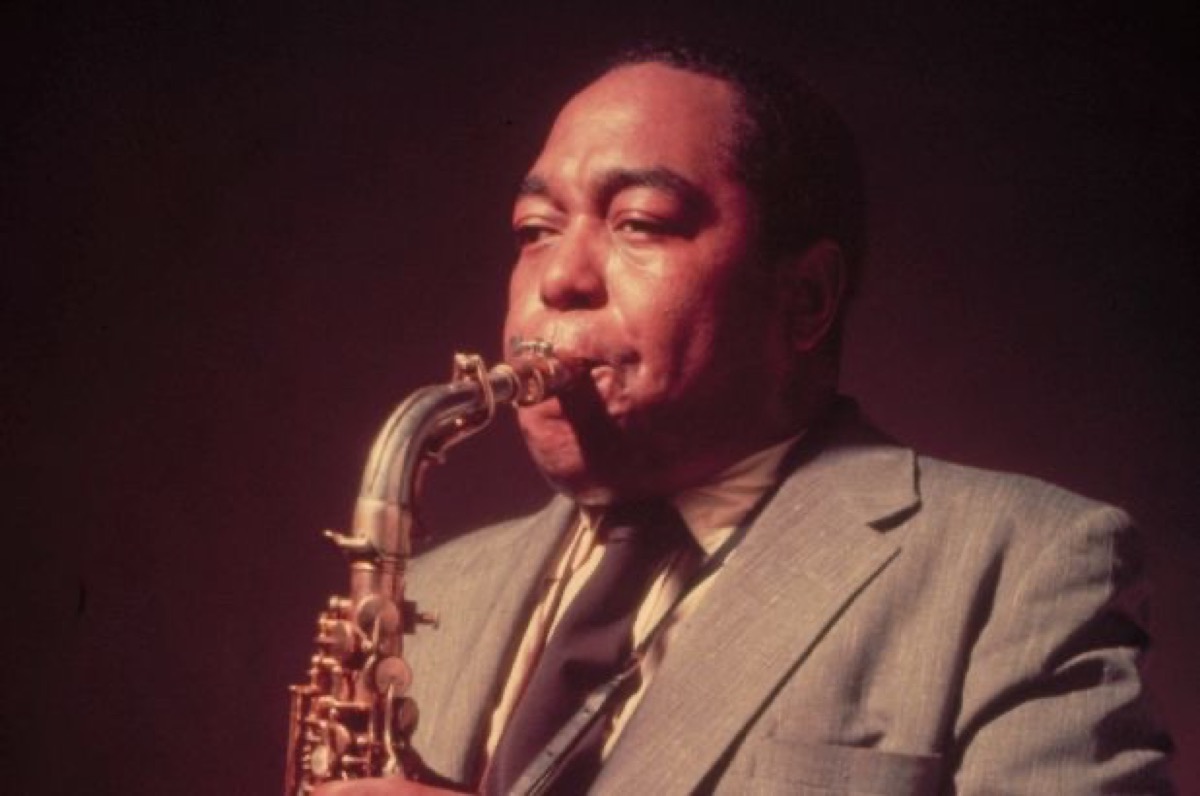
Roughly sixty years separated T.I. from Williams. They lived virtually a world apart. But in many ways, they did not. Both exposed what could be described as “Pictures from Life’s Other Side.” Each fronted a musical genre that alienated and offended much of the larger mainstream. Both engaged in a southern art form to express themselves at a time when their “humble beginnings” limited their opportunities of “being someone” within their society. And although some might point to their racial differences as occupying an unbridgeable divide, the chasm probably was a lot closer than many would have wanted to admit. There is little doubt that James Henry Hammond, William Buckley, and countless conservative lawmakers immemorial would have viewed both T.I. and Williams as “mudsills.” And neither did celebrity or newfound wealth necessarily negate one’s “low” birth or privilege racial difference. When Elvis Presley, a white sharecropper’s son, was drafted into the US Army at the height of a meteoric popular music career, for instance, the director of his draft board proclaimed contemptuously, “We’ve drafted people who are far more important than he is. After all, when you take him out of the entertainment business, what have you got left? A truck driver.” Such examples recall a rejoinder and piece of advice that jazz saxophonist Charlie Parker once gave concerning criticism he received for listening to “hillbilly” records on a jukebox in one of his favorite New York cafes. Replying to a colleague who thought the music was appalling, the polar opposite of jazz, Parker disagreed, hinting that both came from a common cultural reservoir: “The stories, man. Listen to the stories.”37
6Understanding the Southern Past Through Southern Music
Over the years, many historians have actively listened to the songs and the stories they conveyed, incorporating them into monographs addressing the larger societies that produced and consumed them. Not singularly focused on music, these works nevertheless demonstrated how its inclusion could enhance our understanding of the past. Jacquelyn Dowd Hall, James Leloudis, Robert Korstad, Mary Murphy, Lu Ann Jones, and Christopher B. Daly, for instance, in writing Like a Family: The Making of a Southern Cotton Mill World (1987), conducted more than two hundred interviews with women and men who had been textile workers. What they discovered, among other things, was that early country music played a central role in the formation of identity and community. Bolstered by radio, recordings, and their own performances, mill people labored, rested, prayed, and struck against callous companies and brutal and horrid working and living conditions. Leon Litwack’s Trouble in Mind: Black Southerners in the Age of Jim Crow (1998) likewise included musical activities, focusing on their relationship to farming, schooling, praying, and traveling. In addition to using a song track for his book title, the ever-musically conscious Litwack also discussed the blues, gospel, ragtime, and jazz as nuanced responses to ever-present racial violence.38
In his The Southern Diaspora: How the Great Migrations of Black and White Southerners Transformed America (2005), James Gregory ran the gamut from blues and country to jazz, gospel, swing, and seemingly every genre in between and beyond in bringing substance and voice to supposedly invisible and inarticulate peoples experiencing anxious transitions and adversities. Finally, Maurice J. Hobson’s The Legend of the Black Mecca: Politics and Class in the Making of Modern Atlanta (2017) centered the Dirty South hip-hop movement as a running commentary on the issues affecting the daily lives of the Black poor, including their encounters with AIDS, racism, poverty, police brutality, the criminalization of the dispossessed, and the city’s African American leadership. The author concluded that hip-hop provided an important counter-narrative to the conventional business-oriented success story of Atlanta, delving into the often-volatile dynamics between the city’s Black elite and underclass. He convincingly argued that one cannot fully understand politics or class in the twenty-first-century metropolis without addressing popular music.39
In The Southern Way of Life: Meanings of Culture and Civilization in the American South (2022), Charles Reagan Wilson applied a similar perspective to a wider regional canvass. The book is an ambitious chronological synthesis in search of southern regional consciousness. Consequently, it incorporates a vast array of sources, from political treatises to literary texts and musical milieus. Wilson seamlessly integrated his historical actors into one narrative; diverse figures such as Thomas Jefferson, Robert E. Lee, W. E. B. Du Bois, Lillian Smith, William Faulkner, Mary McLeod Bethune, Richard Wright, Lyndon Johnson, Elvis Presley, Martin Luther King, Jimmy Carter, and OutKast all shared the same stage. It is a holistic approach that captures the full breadth and complexity of southern history. Indeed, Wilson has produced a pioneering work that should dispel the notion that history and culture are two separate and autonomous entities. They are, rather, interdependent concepts that occupy two sides of the same coin. History documents what happened in the past, usually focusing on political activities, military engagements, economic developments, and social transitions. Culture refers to the shared values, beliefs, traditions, practices, and behavioral tendencies that informed their time and the events emanating from it. In short, the two constitute a dynamic that asks not only the who, what, when, and where questions, but also interrogates how and why certain outcomes took place against a backdrop that contemplates them from a long or historic perspective. Thus, popular music is, in Wilson’s telling, a cultural practice that reflects societal values, beliefs, and behavior embodying a “structure of feeling” and is a valuable piece of historical evidence.40
Holistic and organic approaches that consider various means of expression take on greater significance when reviewing voting trends in the South. At about the same time that Charlie Parker was giving his advice about listening carefully to diverse voices embodied by popular music, V. O. Key was deducing that low voter turnout characterized politics below the Mason–Dixon Line. As the eminent political scientist concluded in his instant classic, Southern Politics in State and Nation, “while low popular interest in elections is commonly attributed to Negro disfranchisement, as a matter of fact, only a small proportion of the white population regularly votes.” Indeed, for over half of the twentieth century, the southern electorate comprised between one-fourth and one-third of the voting-age population. This corresponded to a Black and white working class that encompassed approximately two-thirds of the region’s inhabitants. Key attributed the poor turnout to voter suppression and a one-party system (Democratic) that engendered “citizen disinterest.” While available statistics reveal that voter turnout in southern states dramatically improved from the late twentieth century onward, they also indicate that the South remains the region with the lowest number of eligible voters actually voting. In the twenty-first century, for various reasons, voter turnout has hovered at fifty percent.41
Electoral politics apparently has not been the sole engine driving southern history. Neither can popular music make such a claim. And that is the point. History is comprised of many voices and vehicles that provide articulation. “History as politics, history as art, history as economics, history as religion,” Frederick Jackson Turner wrote in 1891, “all are truly parts of society’s endeavor to understand itself by understanding its past.” As he continued, “History, I have said, is to be taken in no narrow sense. [It] is the biography of a society in all its departments. [. . .] It is more than past literature, more than past politics, more than past economics. It is the self-consciousness of humanity—humanity’s effort to understand itself through the study of its past.”42
Turner’s message was one that Charles Joyner internalized, focusing on history as music. In 2005, Joyner presented in Atlanta the annual presidential address of the Southern Historical Association. The address, “A Region in Harmony: Southern Music and the Sound Track of Freedom,” was a comprehensive chronicle of various musical genres associated with the South. More than reciting a record catalog, Joyner was proselytizing. As he insisted, southern music appealed to students of the region because it effectively captured many of the contradictions of the region’s history: “our flaunted individualism and our vaunted community, our presumed conservatism and our regular outbursts of radical change, our sensitive literary achievements and our senseless violence, the perplexing chasms between our traditions and our creativity, and between our social segregation and our cultural sharing.” Joyner ended his address with a personal recollection reflecting his belief that southern music was a multicultural response to centuries of racial and class oppression. It served to connect past and present, Black and white, and the region to the world. It emphasized shared traditions and the power to view oneself as part of a larger community. Yet his reminiscence described below does more than delineate music’s attributes. It also makes an analogy that speaks to music’s relationship to history and the possibilities that lay before it.43
Reflecting upon a recent trip he had taken to Brazil, Joyner described how he had witnessed the meeting of the Rio Solimos and Rio Negro just above Manaus. The two rivers, one freshwater flowing from the mountains, and the other blackwater meandering out of swamps and wetlands, initially do not mingle, but instead for miles run side by side, touching but not merging. After rolling some distance apart, the rivers unite to create the great Amazon. As Joyner recounts his view from a boat crisscrossing from one channel to the other before being enveloped into a majestic thoroughfare, this “Meeting of the Waters,” as Brazilians call it, inspires the reader to imagine the symbolism of two great disciplines “no longer separate streams that still divide us, but as a mighty river that unites us.”44

Now imagine a similar scene that consists of two adjacent groups and two stories: civil rights activists, segregationist politicians, city and state leaders, church congregations, preachers, and others occupying one space and disc jockeys, rhythm and blues performers, rock ’n’ roll singers, and countless fans of all three populating the other. Did each group, like geographically detached rivers, remain in their separate channels, running side by side but never meeting, or, like the Rio Solimos and Rio Negro uniting to form the Amazon, did they interact and converge, creating one narrative reflecting a deeper and more complicated and illuminating reality?
Black radio programming, rhythm and blues, and rock ’n’ roll came together in the post–World War II South and presented African American culture in a light that challenged the tenets of jane and jim crow segregation. They did not exist in isolation or in a vacuum. Adolescents both Black and white had to balance on one hand a way of life that went back generations and was continually being referenced as it seemed to be collapsing while pondering on the other a new perspective that in part was responsible for the collapse. How did these young people respond? How did they reconcile the two? For many working-class Black and white southerners who came of age from the late 1940s through the early 1960s, the conflicting messages they received left them, as Ebony noted, “all shook up.” Andrew Young, who in 1965 had advised SCOPE volunteers to immerse themselves in the music of the communities they were working, specifically emphasized that they should engage “rock and roll and rhythm and blues, because this is the folk music of the Negro people and white people, too, right now.” As the pastor and executive director of the Southern Christian Leadership Conference conceded, “I say all of the time that rock and roll did more for integration than the church,” explaining that the musical revolution had constructed an “important cultural bridge between the Negro world and the white world.”45
More than two thousand years earlier, Plato had warned that “the modes of music are never disturbed without the unsettling of the most fundamental political and social conventions.” It was an often-repeated warning whose essence Young and the attackers of Nat “King” Cole understood intuitively. The South and its music indeed had something to say.46
Sounds like a tree may have fallen, doesn’t it?
Notes
- On the events at the gala, including the booing of the duo and André 3000’s declaration, see the video, “The 1995 Source Hip Hop Music Awards,” Internet Archive, March 8, 1995, https://archive.org/details/the-1995-source-hip-hop-music-awards. The awarding of the Best New Artist recipient and its aftermath begin at around the 17-minute mark. For the story of OutKast as told above, see Ernie Suggs and DeAsia Paige, “The Oral History of ‘The South Got Something to Say’: How André 3000 and 1995 Source Awards Planted a Flag and Changed Rap Music,” Atlanta Journal-Constitution, November 2, 2023, https://feeds.ajc.com/life/arts-culture/hip-hop-50/oral-history-1995-source-awards/. Also see Darren E. Grem, “‘The South Got Something to Say’: Atlanta’s Dirty South and the Southernization of Hip-Hop America,” Southern Cultures 12, no. 4 (Winter 2006): 55–73; Regina N. Bradley, ed., An OutKast Reader: Essays on Race, Gender, and the Postmodern South (University of Georgia Press, 2021); Regina N. Bradley, Chronicling Stankonia: The Rise of the Hip-Hop South (University of North Carolina Press, 2021); Maurice J. Hobson, The Legend of the Black Mecca: Politics and Class in the Making of Modern Atlanta (University of North Carolina Press, 2017), 216–28.
- Allen Tate, “A View of the Whole South,” American Review (February 1934): 411. For the quotation on exacting agency, see Matthew B. Karush, “Editor’s Note: Music Histories,” Journal of Social History 52, no. 2 (Winter 2018): 205. On the philosophical adage about a tree falling in the forest, see Tom Chivers, “The Cosmic Endowment,” chap. 2 in The Rationalist’s Guide to the Galaxy: Superintelligent AI and the Geeks Who Are Trying to Save Humanity’s Future (Weidenfeld & Nicolson, Ltd., 2022).
- The Carter quotation can be found in Asa Carter, untitled article, Southerner (September 1956): 3. My rational for using lower case in referencing the South’s segregationist system is based on contemporary usage in the 1950s by some of the radical Black press. See, for example, the periodical The American Negro: “A Magazine of Protest.” In its inaugural issue The American Negro published an editorial that utilized lower case to demystify the tag and the practice to which it referred. My intent is the same. See “Editorial: Statement of Purpose,” American Negro: “Magazine of Protest” (August 1955): 4.
- A full version of the PSA that includes the Presley reference can be found in This Is Elvis, written by Andrew Solt and Malcolm Leo (1981; Warner Brothers, 2007), DVD. Also see “This is Elvis Full Transcript,” https://subslikescript.com/movie/This Is Elvis-83193, accessed March 9, 2026. The final quotation is in C. Vann Woodward, “The ‘New Reconstruction’ in the South: Desegregation in Historical Perspective,” Commentary (June 1956): 507.
- For the meeting at the gas station, see “Police Say 150 Were in on Plans to Attack Entertainer,” Birmingham News, April 12, 1956; “Police Report Plot for Mob to Attack Cole,” Birmingham Post-Herald, April 12, 1956. For the connection between the NACC and the Autherine Lucy mob at the University of Alabama, see Phil Noble, Beyond the Burning Bus: The Civil Rights Revolution in a Southern Town (2003, repr., New South Books, 2013). Brian Ward has provided the definitive account of the April 10 Birmingham Cole attack. See Ward, “Racial Politics, Culture, and the Cole Incident of 1956,” in Race and Class in the American South Since 1890, ed. Melvyn Stokes and Rick Halpern (Berg Publishing, 1994), 181–208. He later returned to the incident in Ward, “Civil Rights and Rock and Roll: Revisiting the Nat King Cole Attack of 1956,” OAH Magazine of History 24 no. 2 (April 2010): 21–24. Also see Gary Sprayberry, “‘Town Among the Trees’: Paternalism, Class, and Civil Rights in Anniston, Alabama, 1872–Present” (PhD diss., University of Alabama, 2003); Gary Sprayberry, “Interrupted Melody: The Attack on Nat ‘King’ Cole,” Alabama Heritage 71 (Winter 2004): 16–24. Finally, see Michael T. Bertrand, “The Search for the Southern Past: A Musical Odyssey,” chap. 2 in Southern History Remixed: Rock ’n’ Roll and the Dilemma of Race (University Press of Florida, 2024).
- “A Preview of the Declaration of Segregation,” handbill circulated at White Citizens’ Council Meeting at the State Coliseum, February 10, 1956, Montgomery, Alabama, in E. Frederic Morrow: Records, 1958–1961, Box 10, Folder, Civil Rights—Official Memoranda, 1956–65, Eisenhower Presidential Library, Abilene, Kansas. Description of the event and the first Eastland quotation is from “Montgomery Protest,” South: The News Magazine of Dixie, February 20, 1956: 13. The final quotation is in J. Edgar Hoover Letter and Cabinet Statement to Maxwell M. Rabb, secretary to the cabinet, March 9, 1956, EPL, https://www.eisenhowerlibrary.gov/sites/default/files/research/online-documents/civil-rights-eisenhower-administration/1956-03-01-hoover-statement.pdf, accessed March 9, 2026.
- White’s quotation can be found in “Musical Treatment,” Southerner (April–May 1956): 5. The Southerner was the semiregular newsletter of the NACC. The quotation “turn on your radio . . .” also is in “Musical Treatment,” 5. The last quotation is from Dan T. Carter, Unmasking the Klansman: The Double Life of Asa and Forrest Carter (NewSouth Books, 2023), 145. Carter did not attribute the quotation but did say that it emanated from a January 1956 meeting of the NACC. One contemporary example of a reference to popular music charts and their relationship to racial segregation is in “Rock ’n’ Roll May Be the Great Unifying Force!” Cashbox, March 17, 1956, 3.
- Eastland speech is in “To All White Men and Women in Jackson,” Winona Times, September 30, 1955.
- For the description of the concert and attack, see Bertrand, “Mr. Cole Don’t Rock ’n’ Roll: The Pivotal Moment in Microcosm,” chap. 1 in Southern History Remixed.
- James Wechsler, “The Bystanders,” New York Post, April 12, 1956, 33. The term “peckerwood” is from Jesse Josiah (J. J.) Breland, the attorney for J. W. Milam and Roy Bryant, the two working-class men accused, tried, and acquitted in the murder of Emmett Till. Breland, a Princeton graduate, leader in the White Citizens’ Council, and respected member of the Mississippi ruling class, called his clients “peckerwoods” and bragged that, “Hell, we’ve got to have our Milams to fight our wars and keep the ni--ahs in line.” Breland is quoted in William Bradford Huie Letter to Jimmy Walters, October 18, 1955, in William Bradford Huie Papers, Spec. Rare. CMS.0084, Box 39, 353c folder, Thompson Special Collections, The Ohio State University.
- On the “coon song craze” phenomenon and its connection to the changing racial environment, see James H. Dormon, “Shaping the Popular Image of Post-Reconstruction American Blacks: The ‘Coon Song’ Phenomenon of the Gilded Age,” American Quarterly 40, no. 4 (1988): 450–71.
- Eileen Southern, The Music of Black Americans: A History (1983; repr., W. W. Norton & Company, 1997); David Whisnant, All That Is Native and Fine: The Politics of Culture in an American Region (University of North Carolina Press, 1983); Gilbert Chase, America’s Music: From the Pilgrims to the Present, rev. ed. (1966; repr., University of Illinois Press, 1987); Mark Anthony Neal, What the Music Said: Black Popular Music and Black Public Culture (Routledge, 1999).
- Dewey Grantham, The South in Modern America: A Region at Odds (HarperCollins, 1994), 322. For instance, see Bill Malone, Country Music USA: A Fifty Year History (University of Texas Press, 1969; Lawrence W. Levine, Black Culture and Black Consciousness: Afro-American Folk Thought from Slavery to Freedom (Oxford University Press, 1977); Angela Davis, Blues Legacies and Black Feminism: Gertrude “Ma” Rainey, Bessie Smith, and Billie Holiday (Pantheon, 1998); Robin D. G. Kelley, Thelonious Monk: The Life and Times of an American Original (The Free Press, 2009); Grace Elizabeth Hale, Cool Town: How Athens, Georgia, Launched Alternative Music and Changed American Culture (University of North Carolina Press, 2020); Brian Ward and Patrick Huber, A&R Pioneers: Architects of American Roots Music on Record (Vanderbilt University Press, 2018). On U. B. Phillips and music, see Bertrand, “Remixing the Master, Restoring the Music: The Central Theme of Southern History Reconsidered,” chap. 3 in Southern History Remixed.
- The first quotation is from Horace H. Cunningham, “The Southern Mind Since the Civil War,” in Writing Southern History: Essays in Historiography in Honor of Fletcher M. Green, eds., Arthur S. Link and Rembert W. Patrick (Louisiana State University Press, 1967), 408. The passing reference to music can be found, appropriately enough, in a footnote in Charles B. Dew, “The Slavery Experience,” in Interpreting Southern History: Historiographical Essays in Honor of Sanford W. Higginbotham, ed., John B. Boles and Evelyn Thomas Nolen (Louisiana State University Press, 1987), 160. The “History of the New South” volume is Numan Bartley, The New South: The Story of the South’s Modernization, 1945–1980 (Louisiana State University Press, 1995). Music references are on 132–34 and 432–33. The classroom text is William A. Link, Southern Crucible: The Making of an American Region (Oxford University Press, 2015), 172, 502–10, 568–70. Music as one of the region’s “cultural riches” is in John B. Boles, The South Through Time: A History of an American Region (Prentice Hall, 1999), 476–82. The third historiographical collection is Reinterpreting Southern Histories: Essays in Historiography, ed. Craig Thompson Friend and Lorri Glover (Louisiana State University Press, 2020), 302–3, 380, 410, 460–61. Although we have examined the first two editions, the series Major Problems in American History is represented here by Major Problems in the History of the American South, vol. 2 of The New South, ed. Sally G. McMillen, Elizabeth Hayes Turner, Paul D. Escott, and David R. Goldfield (1999; repr., Wadsworth Publishing, 2012). Music as one of the region’s “greatest contributions” leads off the second to last paragraph (17 lines) of a 43-page bibliographical essay in William J. Cooper Jr. and Thomas E. Terrill, The American South: A History (Alfred A. Knopf, Inc., 1990), 876.
- The method used to accumulate data involved both perusing paper copies and utilizing JSTOR (1990–2016) and Project Muse (2017–22), search engines that covered the period from 1990 to 2022. The four articles that directly addressed music were: Brian Ward, “Music, Musical Theater, and the Imagined South in Interwar Britain,” Journal of Southern History, 80, no. 1 (2004): 39–72; Charles Joyner, “A Region in Harmony: Southern Music and the Soundtrack of Freedom,” Journal of Southern History, 72, no. 1 (February 2006): 3–38; Colin Anderson, “Segregation, Popular Culture, and the Southern Pastoral: The Spatial and Racial Politics of American Sheet Music, 1870–1900,” Journal of Southern History, 85, no. 3 (2019): 577–610; and Billy Coleman, “Confederate Music and the Politics of Treason and Disability in the American Civil War,” Journal of Southern History, 86, no. 1 (2020): 75–116. Apparently following its own internal method, the journal did publish during this period a catchall article on mass culture that included a mention of popular music. See Karen Cox, “The South and Mass Culture,” Journal of Southern History, 75, no. 3 (2009): 677–90. The last book mentioned in this paragraph is W. Fitzhugh Brundage, ed., A New History of the American South (University of North Carolina Press, 2023).
- LeRoy Ashby, “Not Necessarily Swill Time: Popular Culture and American History,” OAH Magazine of History 24, no. 2 (April 2010): 7. Elizabeth Fox-Genovese and Eugene Genovese, “The Political Crisis of Social History: A Marxian Perspective,” Journal of Social History, 10, no. 2 (Winter 1976): 215, 218–19. David Suisman, “Afterword: Music, Sound, and History,” Journal of Social History 52, no. 2 (Winter 2018): 383.
- On the issue of taste, see Pierre Bourdieu, Distinction: A Social Critique of the Judgement of Taste (Harvard University Press, 1987). On the issue of historians and proficiency in music and cultural studies theories and music being outside the historian’s sphere of interest, see Jeffrey H. Jackson and Jackson C. Pelkey, eds., Music and History: Bridging the Disciplines (University Press of Mississippi, 2005).
- For more on the mass culture debates, see Michael T. Bertrand, Race, Rock, and Elvis (University Press of Illinois, 2005), 125–57. On fascism and the “big lie,” see Frederico Finchelstein, A Brief History of Fascist Lies (University of California Press, 2022). On the “big lie” and Joseph McCarthy, see Milton Howard, McCarthyism and the Big Lie (New Century Publishers, 1953).
- Theodor Adorno and Max Horkheimer, “The Culture Industry: Enlightenment as Mass Deception,” Dialectic of Enlightenment (1972; repr., Seabury Press 1972), 120–67. For the assessment that rock ’n’ roll was “disposable,” see William Leuchtenburg, A Troubled Feast: American Society Since 1945 (1973; repr., Little, Brown and Company, 1983), 65–66. On Frankfurt School interpretations, see Martin Jay, The Dialectical Imagination: A History of the Frankfurt School and the Institute of Social Research, 1923–1950 (1973; repr., University of California Press, 1996).
- On Donald Trump, Joseph Goebbels, and “the big lie,” see Melissa Block, “Can the Forces Unleashed by Trump’s Big Election Lie Be Undone?” NPR, January 16, 2021, https://www.npr.org/2021/01/16/957291939/can-the-forces-unleashed-by-trumps-big-election-lie-be-undone, accessed March 9, 2026; Jennifer Epstein, “Biden Compares Trump to Goebbels, Saying He’s Promoting a ‘Lie,’” Washington Post, September 26, 2020, https://www.washingtonpost.com/business/biden-compares-trump-to-goebbels-saying-hes-promoting-a-lie/2020/09/26/7c062804-0046-11eb-b0e4-350e4e60cc91_story.html, accessed March 9, 2026. On Trump as a manufactured “successful businessman,” see John D. Miller, “We Created a Monster: Trump Was a TV Fantasy Invented for ‘The Apprentice’: NBC’s Former Chief Marketer Regrets Selling an Illusion That Has Had Dire Consequences for the World,” US News and World Report, October 16, 2024, https://www.usnews.com/opinion/articles/2024-10-16/we-created-a-tv-illusion-for-the-apprentice-but-the-real-trump-threatens-america, accessed March 9, 2026. On Trump as a con artist, see David Marks, “Trump Is Just a Con Man from New York, Aljazeera, July 9, 2024, https://www.aljazeera.com/opinions/2024/7/9/trump-is-just-a-con-man-from-new-york, accessed March 9, 2026. On the notion of a disastrous status quo being challenged, see C. J. Polychroniou, “Neoliberal Fascism or Neoliberal Business as Usual?” Common Dreams, November 3, 2024, https://www.commondreams.org/opinion/neoliberal-fascism-election-2024, accessed March 9, 2026.
- For a classic interpretation of popular entertainment that argues that the choices of consumers are constrained by a restricted marketplace, see T. J. Jackson Lears, “Making Fun of Popular Culture,” American Historical Review 97, no. 5 (December 1992): 1417–26. As to the power of consumers to make choices from what is made available to them, see Paul Ackerman’s testimony to a US House Committee on Payola. Ackerman, a well-respected and influential editor of Billboard Magazine, told the committee that in the 1950s, record companies released 130 singles per week. Less than two percent of those ever made the popularity charts. For Ackerman, see “On Payola and Other Deceptive Practices in the Broadcasting Field,” Hearings Before a Subcommittee on Interstate and Foreign Commerce, US House of Representatives, 86th Congress, 2nd Session (Government Printing Office, 1960), 912.
- William L.C. “Big” Bill Broonzy in “Sibyl with Guitar,” Time, November 23, 1962, 60. My understanding of the popular music process is informed by the writing of Karl Hagstrom Miller in Segregating Sound: Inventing Folk and Pop Music in the Age of Jim Crow (Duke University Press, 2010).
- The quotation from Lincoln can be found in Eric Foner, The Fiery Trial: Abraham Lincoln and American Slavery (W. W. Norton and Company, 2010), xvii.
- The quotation is from Rick Perlstein, “The Sound of One Maga Attacking,” American Prospect, September 4, 2024, https://prospect.org/politics/2024-09-04-sound-of-one-maga-attacking/, accessed March 9, 2026.
- Andrew Young, “SCOPE Orientation, June 18, 1965. Discussions of Problems of Understanding,” 0099-6. KZSU Project South Interviews (SC0066). Department of Special Collections and University Archives, Stanford University Libraries, Stanford, California, https://stacks.stanford.edu/file/druid:sh283zt0821/sh283zt0821.pdf, accessed March 9, 2026. The quotations from Charles Joyner can be found in Joyner, “A Region in Harmony: Southern Music and the Soundtrack of Freedom,” Journal of Southern History 72 (February 2006): 3–38, particularly 35–38.
- Heather Cox Richardson, How the South Won the Civil War: Oligarchy, Democracy, and the Continuing Fight for the Soul of America (Oxford University Press, 2020), xiv. For evidence that the southern elite did not make racial distinctions among “mudsills,” see accounts by William Alexander Percy, Lanterns on the Levee: Recollections of a Planter’s Son (Alfred A. Knopf, 1941); Virginia Durr, Outside the Magic Circle: The Autobiography of Virginia Durr (University of Alabama Press, 1985); John Dollard, Caste and Class in a Southern Town (1937, repr., Anchor Books, 1957); and Hortense Powdermaker, After Freedom: A Cultural Study in the Deep South (1939; repr., Athenaeum, 1969). William Faulkner’s short story “Barn Burning” gives the point of view from a sharecropper who feels as if the landowner considers him and African Americans as the same. See Faulkner, “Barn Burning,” in Collected Stories of William Faulkner (1950; repr., Vintage International, 1995), 3–26.
- On the discussion of “mud-sills,” see James Henry Hammond, “Speech on the Admission of Kansas under the Lecompton Constitution, Delivered in the US Senate, Washington, DC, March 4, 1858,” in James Henry Hammond, Selections from the Speeches and Letters of the Honorable James Henry Hammond (John F. Throw, Printers & Company, 318–19); on the “hireling class,” see ibid., 320. Abraham Lincoln, “Address Before the Wisconsin State Agricultural Society . . . September 30, 1859,” Abraham Lincoln Online: Speeches and Writings, http://www.abrahamlincolnonline.org/lincoln/speeches/fair.htm, accessed March 9, 2026. The last quotation is located in Lydia Maria Child, The Patriarchal Institution, as Described by Members of Its Own Family (American Anti-Slavery Society, 1860), Susan B. Anthony Collection, and African American Pamphlet Collection, Library of Congress, Washington, D.C., https://www.loc.gov/item/11006645/, accessed March 9, 2026.
- George Fitzhugh, Cannibals All! Or Slaves Without Masters, ed., C. Vann Woodward (1857; repr., Belknap Press of Harvard University Press), 354. “Alabama Constitution of 1901: Transcription,” Alabama Department of Archives and History, https://digital.archives.alabama.gov/digital/collection/constitutions/id/111/, accessed March 9, 2026. Also see Akiesha Anderson, “Education in Alabama: A Privilege or a Right? What Alabama’s Tax Decisions Reveal about Historical and Intentional K–12 Education Disenfranchisement, and the Unlikelihood of Poor Alabamians Ever Receiving a Proper Education, Harbinger: The New York University Review of Law and Social Change, 41 (2017): 295–314, https://socialchangenyu.com/harbinger/education-in-alabama-a-privilege-or-right-what-alabamas-tax-decisions-reveal-about-historical-and-intentional-k%E2%80%9112-education-disenfranchisement-and-the-unlikelihood-of-poor-alabami/#_ftnref11, accessed March 9, 2026.
- “Editorial: Why the South Must Prevail,” National Review, August 24, 1957, 149. The response of the audience member to Buckley’s question and the rejoinder by both the audience and Buckley can be found in Nicholas Buccola, The Fire Is Upon Us: James Baldwin, William F. Buckley Jr., and the Debate Over Race in America (Princeton University Press, 2019), “Appendix—Transcript,” 396, 274–75.
- Buckley’s description of white working-class individuals is in John Judis, William F. Buckley: The Patron Saint of the Conservatives (Simon and Schuster, 2001), 47. Buckley’s last quotation is in Buccola, Appendix—Transcript, 275. The description of the audience response and Buckley’s demeanor can be located in the Youtube video of the entire debate, “James Baldwin vs William F Buckley: A Legendary Debate from 1965,” https://www.youtube.com/watch?v=5Tek9h3a5wQ, accessed March 9, 2026.
- For the McConnell quotation, see Tim Miller, (@timodc), “Punchbowl Text Alert: Mcconnell Says People Are Upset About Medicaid Cuts but “They’ll Get Over It,” X, July 24, 2025, 2:25 p.m., https://x.com/Timodc/status/1937592913220759999, accessed March 9, 2026. Also see Chandra Childers, “Rooted in Racism and Economic Exploitation: The Failed Southern Economic Development Model,” Economic Policy Institute, October 11, 2023, https://www.epi.org/publication/rooted-in-racism/, accessed March 9, 2026. Also see Harold Meyerson, “The UAW’s Chattanooga Victory: Score One for the North in Our Endless Civil War,” American Prospect, April 22, 2024, https://prospect.org/labor/2024-04-22-uaw-chattanooga-victory-score-one-for-north/, accessed March 9, 2026. On the “One Big Beautiful Bill,” see Michael Mechanic, “Ordinary Republicans Hate Trump’s ‘Big, Beautiful Bill’ Once They Know What It Does,” Mother Jones, June 27, 2025, https://www.motherjones.com/politics/2025/06/trump-big-beautiful-bill-polling-unpopular-republicans-yale-study/, accessed March 9, 2026.
- For quotation, see Ossie Davis to Deborah Work, “A World of Their Own,” South Florida Sun-Sentinel, January 31, 1999. Bill C. Malone and David Stricklin, Southern Music/American Music, rev. ed. (1979; repr., University Press of Kentucky, 2003). Also see Reverend Dr. William J. Barber II, with Jonathan Wilson-Hartgrove, White Poverty: How Exposing Myths About Race and Class Can Reconstruct American Democracy (Liveright Publishing Corporation, 2024).
- Blackface minstrelsy, discussed in this chapter in its “coon song” phase, is one example of popular music being weaponized, for lack of a better term. Barn Dance programs like the Grand Ole Opry regularly highlighted blackface performers. It was an acknowledgment of the African American presence. But acknowledging their presence did not signify that Black people were meaningful members of the community. It did not mean that they were recognized as southerners. The work of barn dance blackface distortions represented an erasure of sorts. It accounted for the Black presence at the same time that it laughed it off, effectively confirming that Black people were outsiders who did not belong in the larger community. From the perspective of “throwed away” southern whites tuning in to the program, it demonstrated that African Americans, despite the evidence, had little to do with country music. For more on this discussion, see Bertrand, “Country Music Goes to War: Southern Identity and the Problem of the Color/Culture Line,” chap. 4 in Southern History Remixed. Popular music historically has emphasized racial and ethnic stereotyping. Listen, for example, to Don’t Give the Name a Bad Place: Types and Stereotypes in American Musical Theater, 1870–1900, Max Morath, et al., New World Records, 1978. For a recent analysis of popular music and reiteration of various identities, see Shantal Marshall and Laura Naumann, “What’s Your Favorite Music? Music Preferences Cue Racial Identity, Journal of Research in Personality, 76 (2018): 74–91, https://cdn2.psychologytoday.com/assets/marshall_naumann_2018_-_whats_your_favorite_music_-_music_preferences_cue_racial_identity.pdf, accessed March 9, 2026.
- “Breaking Down the Barriers,” Cash Box, January 22, 1955, 3. On the “greatest gift” and “meaning is always clear,” see W. E. B. Du Bois, The Souls of Black Folk, ed., David W. Blight and Robert Gooding Williams (1903; repr., Bedford Books, 1997), 192. On the significance of popular music, see Louis E. Martin, “America’s Silent Race Revolution,” Michigan Chronicle, August 15, 1990, 7A.
- Hank Williams to Rufus Jarman, “Country Music Goes to Town,” Nation’s Business, February 1953, 51.
- T.I. to Elliott C. McLaughlin, “How Atlanta Rappers Helped Flip the White House,” CNN, December 30, 2020, https://edition.cnn.com/2020/12/29/politics/atlanta-hip-hop-flip-election-senate-white-house/index.html, accessed March 9, 2026.
- “Pictures from Life’s Other Side” is a reference to a traditional song that Hank Williams as “Luke the Drifter” recorded in 1951 for MGM Records. It can be heard on Youtube here: https://www.youtube.com/watch?v=Ck3FubEJ2CM. Several artists, including Vernon Dalhart, Bradley Kincaid, and Woody Guthrie had recorded earlier versions. The Presley anecdote can be found here: Alan Levy, Operation Elvis (Henry Hold and Company, 1960), 17. Charlie Parker’s advice is in Nat Hentoff, Listen to the Stories: Nat Hentoff on Jazz and Country Music (HarperCollins, 1995), 168.
- Jacquelyn Dowd Hall, et al., Like a Family: The Making of a Southern Cotton Mill World (W. W. Norton & Company, 1987); Leon F. Litwack, Trouble in Mind: Black Southerners in the Age of Jim Crow (Vintage Books, 1998).
- James N. Gregory, The Southern Diaspora: How the Great Migrations of Black and White Southerners Transformed America (University of North Carolina Press, 2005); Maurice J. Hobson, The Legend of the Black Mecca: Politics and Class in the Making of Modern Atlanta (University of North Carolina Press, 2017).
- Charles Reagan Wilson, The Southern Way of Life: Meanings of Culture and Civilization in the American South (University of North Carolina Press, 2022).
- V. O. Key Jr., Southern Politics in State and Nation (Vintage Books), 1949), 489 for quotation. For information within paragraph, see Key, Southern Politics, 489–528. On recent voter turnout, see “Census2: Table A-2. Reported Voting and Registration by Region, Educational Attainment and Labor Force Status for the Population 18 and Over: November 1964 to 2024,” in https://www2.census.gov/programs-surveys/cps/tables/time-series/voting-historical-time-series/hst_vote02.xlsx “Voter Turnout in United States Elections,” Ballotpedia: The Encyclopedia of American Politics, in https://ballotpedia.org/Voter_turnout_in_United_States_elections, accessed March 9, 2026. See also, for instance, Ralph Chapoco, “History: Lack of Competition, Lack of Access Keep Alabama’s Voter Turnout Rate Low,” Alabama Reflector, August 6, 2024, in https://alabamareflector.com/2024/08/06/alabamas-low-voter-participation-rate-a-product-of-history-and-lack-of-competition/, accessed March 9, 2026.
- Frederick Jackson Turner, “The Significance of History (1891),” in John Mack Faragher, ed., Rereading Frederick Jackson Turner: The Significance of the Frontier in American History and Other Essays (Yale University Press, 1998), 18–19, 28.
- Joyner, “A Region in Harmony, 37.
- Joyner, “A Region in Harmony, 37–38.
- The “All Shook Up” reference to the South’s teenagers dealing with a changing South can be found in “All Shook Up”—Photo Editorial,” Ebony, August 1957, 52; Young, “SCOPE Orientation.”
- Plato, Republic, III, 400d-e. Plato, Republic, IV, 323c.